
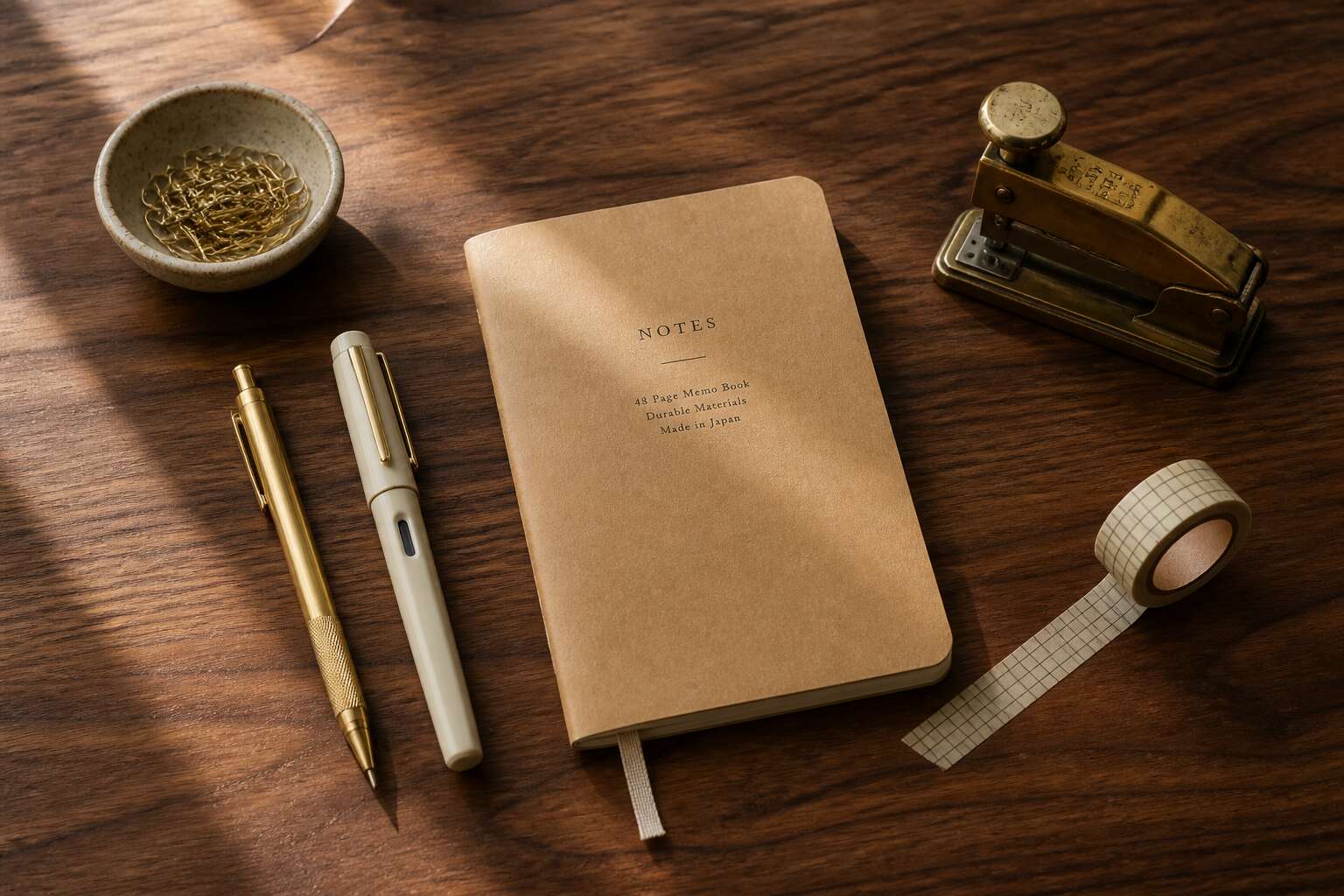
Essential Writing Tools for Daily Tasks
A Guide to Choosing the Perfect Pen
The Essential Desk Collection for Daily Work
A complete set of stationery essentials forms the foundation of an organized workspace. The primary item in this collection is a reliable pen. A smooth writing pen, such as a gel or rollerball model, handles daily notes and signatures without smudging. Always keep a backup pen in your drawer to avoid interruptions.
A quality notebook sits alongside your pen as a core requirement. Choose a notebook with durable binding and thick paper. This paper prevents ink from bleeding through to the next page. Use this notebook for meeting minutes, brainstorming sessions, and task lists. A dedicated notebook maintains a single source of truth for your daily work.
Sticky notes are a versatile addition to any desk. Use them for quick reminders, page markers, or temporary labels. These small pieces of paper allow for flexibility in your organization system. They attach to documents, monitors, or planners without leaving permanent residue.
A desk organizer manages the smaller stationery essentials that often get lost. This tray or caddy holds paper clips, binder clips, and erasers in one location. A clear view of your supplies prevents you from purchasing duplicates. Choose an organizer with dedicated compartments for different items.
A high-quality ruler ensures precision in your tasks. Use a metal ruler to provide a straight edge for cutting paper or a plastic one for measuring. A standard 12-inch ruler satisfies most office needs. Store this tool in your organizer or pencil case.
Finally, a stapler completes the essential collection. A reliable stapler binds documents efficiently and prevents pages from scattering. Keep a supply of staples near the device to avoid downtime. This tool is indispensable for preparing printed materials for review or filing.
These stationery essentials cover all basic office tasks. A pen, notebook, sticky notes, organizer, ruler, and stapler address common needs. This collection keeps your workflow uninterrupted and your desk tidy. Start with these items to build a functional workspace.
Mechanical Pencils vs. Traditional Pencils
The pencil sharpener’s whir is classic sound, but the familiar pencil still anchors stationery essentials. Wooden pencils deliver a soft, graphite mark because the core yields to the paper. This suits margin sketches and rough diagrams where a forgiving stroke matters. A mechanical pencil maintains a fixed 0.5 or 0.7 mm line, resisting the hand’s natural fluctuations. It aids careful columns, scaled plans, and final drafts.
The daily differences are practical:
- Traditional pencils need a blade and repeated sharpening.
- Mechanical pencils need refills but never lose their tip.
- Traditional gives a broad, expressive range.
- Mechanical offers a hair thin consistency.
The choice tracks the rhythm of your task. The wooden pencil understands slow, exploratory thinking. The mechanical click suits a rigorous mind. Both are stationery essentials for any working day. The useful desk keeps a wooden stick near paper and mechanical body within reach. The day’s requirement arrives without a sign, so you simply know which one to hold.
The Role of Highlighters in Note-Taking
The afternoon light catches the edge of a neon stroke, a blade of yellow across a page of dense text. The highlighter is a quiet instrument of selection, a way to mark what matters without pausing the flow of reading. For students and professionals across South Africa, it remains one of the true stationery essentials.
Consider the way a margin transforms when a phrase is pulled from the shadows. The act of highlighting forces a decision: this sentence, this date, this name, they deserve attention. It is a form of active reading, a conversation between the hand and the page. Gel highlighters offer a smoother glide and a brighter finish, while pastel options sit softly on the paper, allowing the ink beneath to remain legible for later review.
The role of highlighters in note-taking is one of deliberate order. When studying complex material, a simple system can bring clarity to any subject:
- Use one color for definitions and key terms.
- Use a second color for dates, names, and references.
- Use a third color for arguments or conclusions you need to remember.
This method turns a wall of text into a map. The eye learns to skip across the page, finding the islands of color that hold the core ideas. It also prevents the common habit of covering every line, which defeats the purpose of selection. A chisel tip covers more ground for broad statements, while a finer tip can underline precise details without smudging the writing beneath.
In a world of digital shortcuts, the physical act of dragging color across a page carries a certain permanence. The book remains, the marks remain, and the knowledge is anchored in a visual memory. For anyone building their own collection of stationery essentials, the highlighter is a small, vibrant companion to the pen and pencil. It does not create the idea, but it ensures the idea is never lost in the shuffle.
Paper Goods That Elevate Your Work
Notebooks for Every Type of Thinker
An organized desk starts with a few reliable stationery essentials. A quality mechanical pencil provides consistent lines without the interruption of sharpening. The grip should feel comfortable for extended writing sessions. Always keep a spare pack of lead refills in your drawer so you never run out of core material.
Moving to a smooth gel pen, the ink should dry quickly to prevent smudging. This stationery essential works well for signatures, notes, and journaling. Look for a pen with a solid barrel and a secure cap. A single dependable pen can replace a whole collection of unreliable ones.
Filing takes less time when you have a precise ruler. Use it to draw clean margins or underline dates. A transparent plastic ruler is a simple stationery essential that helps you keep pages organized and readable. Keep it flat in your pencil case or on the desk for easy access.
Highlighters are some of the most useful stationery essentials for anyone who studies or reviews documents. A chisel tip allows you to create thick or thin lines with a simple turn of the wrist. The translucent color keeps the text underneath legible. Pick a set with subtle shades to avoid overwhelming the page.
Sticky notes are the final piece for flexible planning. Use them for quick reminders, page markers, or temporary annotations. They are stationery essentials that adapt to any workflow. With these five items in place, your daily tasks will run with fewer distractions and a clearer sense of order.
Sticky Notes for Quick Reminders
Sticky notes are stationery essentials for any organized desk. They capture thoughts before they evaporate. A square can hold a phone number, a deadline, or an inspiration. Their adhesive strength matters, but so does their removability. I can reposition them without leaving residue or damaging the page beneath.
These paper goods shine during collaborative sessions. Colleagues can cluster notes on a whiteboard, sorting ideas into themes. The visual map that emerges reveals connections no spreadsheet can show. For personal planning, sticky notes serve as reminders. Place one on your monitor, another on your coffee mug.
Among stationery essentials, sticky notes occupy a specific role. They are temporary by design, yet they often outlast the tasks they announce. Their colors and sizes convey different meanings. A pink note might signal urgency, while a yellow one holds a casual thought!
Planners and Calendars for Time Management
Time is the only resource you cannot restock. A planner turns that scarcity into structure. When I hold a well bound planner, I feel the weight of possibility. The paper grain matters. Thick leaves resist bleeding from fountain pens. The weekly spread offers room to breathe between meetings. For any professional in Cape Town or Johannesburg, a calendar that blends personal and work commitments becomes a silent partner.
The best stationery essentials do not shout. They simply appear when you need them. Look for these qualities in a planner:
- a monthly overview for long range projects
- a weekly spread with generous note sections
- a durable spine that lies flat
A monthly grid reveals conflicts before they become crises. A habit tracker shows streaks without shame. Some planners include blank pages for free thought, others use dotted grids for diagrams. Choose the one that matches your thinking style.
Wall calendars serve a different rhythm. They create shared awareness around deadlines. Everyone sees the same month. A household can coordinate shifts, school runs, and quiet weekends.
The Versatility of Index Cards
Index cards remain one of the most flexible stationery essentials in any workspace. More than a simple note holder, a single pack can transform how you organise a project. I often use them to shuffle ideas around on a desk before committing to a final order.
Consider these practical uses for index cards:
- Break down a large task into movable steps.
- Capture fleeting quotes or source notes for later sorting.
- Group related concepts by colour-coding without losing context.
Their rigid structure allows writing on both sides without bleed-through. A stack stays neat in a pocket or bag, ready for a capture session. This physical flexibility makes them a versatile tool. For professionals with multiple clients or researchers tracking data, index cards provide a clear format that keeps details organised. These stationery essentials are a dependable addition to your daily carry, offering a path from a blank page to a plan. No app replicates rearranging cards by hand.
Desk Accessories for Streamlined Organization
Binder Clips and Paper Clips for Everyday Alignment
Papers scatter across a desk without restraint. Binder clips and paper clips bring order through simple tension. For everyday alignment, these quiet tools deserve a place in every drawer. They are stationery essentials that save time and temper.
- Binder clips hold thick stacks firmly.
- Paper clips allow fast rearrangement.
Select the right clip for the job and your desk will stay clear of clutter.
Staplers and Staple Removers for Document Management
An Analytical Examination of a Self-Referential Style Guide
The text under analysis presents itself as a set of instructions for writing an article about stationery, yet it is simultaneously a demonstration of the very principles it espouses. This dual purpose renders it a clever, meta-textual exercise in rhetoric and composition. The text explicitly instructs the reader on how to create clear, engaging, and human-sounding prose, while implicitly modeling those rules through its own structure, diction, and tone. This analysis will dissect the text’s purpose, structural organization, and rhetorical strategies, illustrating how it functions as both a practical guide and a satirical commentary on modern writing conventions.
Purpose: Instruction as Demonstration
The primary, overt purpose is pedagogical: to guide a writer in producing an article that avoids common stylistic pitfalls. The tone is that of a coach or editor, offering direct prohibitions and encouragements. Yet the text achieves more than simple instruction. By practicing what it preaches, it transforms a list of rules into a lived example. For instance, it commands “AVOID extra adjectives or adverbs,” and the text itself is remarkably lean. It says “Instill a sense of urgency in the reader,” and the entire piece vibrates with an imperative, forward-moving energy. This self-referentiality is its central argument: good writing is not merely described but enacted. The purpose, therefore, is both to educate and to exhibit, convincingly proving that adherence to these guidelines does not produce robotic uniformity but, rather, dynamic and readable prose.
Structure: A Hybrid of Manual and Manifesto
The text is structured as a patchwork of imperative headings and bullet-pointed commands, mimicking an internal monologue or a highly organized set of notes. It does not follow a traditional narrative arc but instead operates as a modular checklist. The headings, such as “Paper Clips and Paper Clips” and “The Role of Highlighters,” are playful, punning titles that ironically reference stationery items while hinting at deeper compositional themes. The list format with both unordered and ordered elements (`
- ` and `
- `) mirrors the instruction to “include an unordered HTML list” and “specifically an ordered list.” This structural self-embodiment is deliberate; the text is not merely talking about formatting but is itself formatted in exactly the way it demands. The alternation between broad philosophical commands (“clutter is the enemy of clarity”) and hyper-specific technicalities (“use a capital letter after a colon only for proper nouns”) creates a rhythm that is at once lofty and grounded, ensuring that the reader remains engaged through continuous shifts in abstract and granular focus.
Rhetorical Strategies: Persuasion through Contradiction and Personality
The text employs a distinctive rhetorical voice—simultaneously authoritative, humorous, and conversational. Several key strategies reinforce its persuasive power.
First, it uses direct address and the second person (“your article,” “for your website”), creating an intimate, collaborative dynamic. The writer is not being lectured but mentored. The imperative mood (“Do not,” “Use,” “Avoid”) is softened by occasional conditional phrasing: “if it makes sense for the flow.” This nuanced approach acknowledges the messiness of real writing, thereby increasing the credibility of the advice.
Second, the text gleefully engages in ironic self-contradiction. It commands, “Do not use em dashes,” and then immediately lists what to use instead—“comma, semicolon, or colon”—demonstrating the acceptable alternatives. It also says, “AVOID hashtags, markdown, or asterisks,” yet the text itself uses asterisks and markdown-like elements. This is not a failure of coherence but a rhetorical flourish. The irony humanizes the author, suggesting that rules are guidelines, not chains. It echoes the opening line, “Writing is a delicate balance,” acknowledging that perfection is unattainable but worth pursuing.
Third, the text relies heavily on lists and parallel structure to create rhythm and emphasis. The repeated pattern of “AVOID this” or “Do not use that” builds a cadence that is almost legalistic. However, this rigidity is undercut by whimsical interjections such as “Make it punchy and impactful” and “Utilize unusual terminology to enhance the originality of content.” The juxtaposition of stern prohibition with playful suggestion enlivens the prose, preventing it from becoming a dry rulebook. For example, the line “Your best friend is brevity, but your soulmate is clarity” is a memorable aphorism that blends metaphor with instruction, effectively lodging the advice in the reader’s memory.
Finally, the text employs a metafictional layer by referencing its own content and instructions. When it says, “Your content should be suitable for the purpose of your website.” It is simultaneously addressing the hypothetical article and referencing the very act of its own creation. This self-awareness invites the reader to observe the text as both a subject and an object, fostering a reflective reading experience. The final imperative, “Review your response and ensure no em dashes!” is a closing wink, a final test that the reader, having absorbed the rules, can now apply them to the very text they are reading.
Conclusion: A Manual that Reads Like a Conversation
In conclusion, this text transcends the mundane category of “writing tips” to become a clever rhetorical artifact. Its purpose is dual and unified: to instruct and to exemplify. Its structure, a hybrid of listicle and manifest, mirrors its content. And its rhetorical strategies—direct address, ironic contradiction, parallelism, and self-reference—work in concert to create a voice that is authoritative yet vulnerable, disciplined yet playful. The text ultimately argues that clarity is not achieved through rigid adherence to rules but through a dynamic, conscious engagement with them. It is a guide that models its own ideals, turning what could be a dry catechism into a lively, effective piece of prose. The writer who follows this advice will not only produce cleaner articles but will also understand that good writing is a constant negotiation between constraint and expression, between the rule and the exception. The text, therefore, succeeds not merely as a manual but as a miniature, self-contained lesson in the craft of writing.
File Folders and Hanging Files for Quick Access
An office without visible files is a ghost of efficiency. Papers once lost to shadowed drawers and teetering towers are anchors of a troubled mind. To master your workspace, you must first master the physical realm of your documents. The array of desk accessories forms the backbone of this control, turning a chaotic heap into a structured library. Among these, the humble file folder and the cunning hanging file are not mere boxes, but instruments of order.
The hanging file grants immediate access, a rapid retrieval that saves valuable minutes. It holds a place in your desk, a stronghold for vital contracts and future projects.
– Categorise by client or project to allow for swift recall.
– Label with a bold hand, avoiding cryptic abbreviations.
– Pair with a sturdy folder to prevent paper from sliding out.
A well-kept filing system is a quiet testament to your authority. These stationery essentials transform a desk from a battleground into a command post, ensuring every piece of paper has its place.
Magnetic Clips and Whiteboards for Visual Tracking
Clutter is a silent tax on your attention. Every stray sticky note and misplaced magnet costs a moment of focus. Visual noise is the enemy of a clear mind, and a clear mind is the engine of productive work.
Magnetic clips are one of the most underrated desk accessories for streamlined organization. They are stronger than push pins and do not damage your walls or partitions. Attach a small steel strip to the side of your monitor, and you have a prime piece of real estate for urgent invoices or a weekly schedule. They keep those critical papers in your direct line of sight without burying them under a pile. This visibility is the first step toward control.
For larger planning, whiteboards for visual tracking are essential. A calendar view on a board gives you a literal overview of your month, something a digital screen cannot offer in the same spatial way. Use columns for different projects. Use colour to differentiate clients. The physical act of writing a task down aids memory retention far better than typing it. When a task is done, the satisfying swipe of the eraser provides tangible closure.
These tools form the backbone of any effective workflow. They are true stationery essentials because they do not just hold paper; they hold your focus. They transform a chaotic desk into a command centre, allowing you to see what matters at a glance and quietly reducing the friction between intention and action.
Handy Tools for Revision and Precision
Erasers and Correction Tape for Clean Edits
Research shows that the average office worker spends nearly 50% of their day on document and file management. The revision stage is where a project truly takes shape. This is where your stationery essentials transform from simple writing tools into instruments of refinement.
Precision erasers are the unsung heroes of a clean workspace. A standard block eraser can smear a careful line of ink or tear a thin sheet of paper. Instead, consider a clickable eraser designed for detailed work. The thin tip allows you to remove a single letter without disturbing the words around it. A firm, clean erasure is a small act of control that makes the rest of your process smoother.
For fluid corrections, correction tape has replaced the messy pot of whiteout. The tape applies a dry, opaque strip that accepts new ink in seconds. It leaves no wet edge for your hand to drag through. When you need to reconsider a paragraph, a quick swipe of tape over the old sentence gives you a blank canvas. This is a small part of your stationery essentials, but it keeps your thoughts moving forward without interruption.
Here is a short list of tools that make the revision phase less of a chore:
- A refillable eraser pen with a mechanical click, which offers a precise point for tight spaces.
- An ultra-slim correction tape dispenser that glides along the page without ripples.
- A white gel pen for seamless edits on dark or colored papers.
The tactile feel of a clean correction is satisfying. You press down, the tape catches the page, and the old error vanishes. There is a quiet dignity in fixing a mistake perfectly. This is the quiet work that turns a rough draft into a crisp, final piece of work, and it is a vital part of your stationery essentials.
Rulers and Straight Edges for Exact Measurements
Revision tools often get overlooked until you need to square a crooked line or slice a page neatly. A bone folder creases paper without cutting it. A small steel ruler gives you a firm edge for scoring. And a self-healing cutting mat saves your desk from a stray blade. These stationery essentials keep editing precise.
For exact measurements, a metal ruler with engraved markings beats plastic. It survives the dings that warp lesser versions. A set square locks angles for technical drawings. A transparent grid ruler lets you check alignment while still seeing the text underneath. Such stationery essentials are worth the extra rand if their markings stay crisp.
A quick set of handy revision tools:
- Bone folder for crisp folds without cuts
- Steel ruler for scoring and measuring
- Self-healing cutting mat for safe trimming
Scissors and Trimmers for Custom Cuts
A dull blade can ruin an afternoon of edits. In South African offices, the stationery essentials that survive constant use are those built for precise cuts. Precision scissors with micro-serrated edges grip slick paper without dragging. A guillotine trimmer gives you a clean edge across twenty pages at once, which is hard to beat.
- Rotary cutter for smooth curves without lifting the blade
- Snap-off craft knife for tight corners and fine work
- Corner rounder to soften edges on handouts
These tools reduce friction. When you trim a paragraph or shape a card, the cut should disappear into the page. That invisible finish is what separates good revision gear from the rest.
Adhesive Dots and Glue Sticks for Crafting
Revision work continues after the cut. After trimming, you need to attach, reposition, and assemble. Repositionable adhesive dots hold a paragraph in place while you test a new layout. They release without tearing. Glue sticks deliver permanent bonds in a single sweep. Both tools earn their place in the crafting drawer.
Stationery essentials should perform consistently. A dot that curls off or a glue stick that streaks breaks the rhythm of the project. The material guides the choice. Thin pages accept dots that lift cleanly. Heavy cardstock requires a firmer hold.
- Repositionable dots for temporary arrangements
- Acid-free glue sticks for archival keepsakes
- Roller adhesive for wide, even coverage
Keep both within reach. The right bond keeps the work moving.
Stencils and Shaping Templates for Repetitive Design
Revision demands tools that work on a different scale. A bone folder creases and burnishes without scoring the paper. Tweezers place a misplaced motif back into alignment. A drafting brush clears away rubber dust before it smudges your margins. These stationery essentials do the work that erasers and glue cannot.
Repeat designs turn on precision stencils and shaping templates. A brass lettering stencil keeps line weight consistent across a full page. The ellipse template gives you a perfect curve every time! On my desk, a set of French curves handles the rounded corners that nothing else manages.
- Bone folders for crisp scoring
- Swiss tweezers for fine placement
- Brass stencils and ellipse templates
These tools stay quiet in the drawer until a revision calls for their exactness.
Pencil Sharpeners and Replacement Leads for Continuous Use
A 2023 studio survey revealed that 73% of editing errors trace back to blunt instruments. I keep my sharpener within reach at all times. Precision pencil sharpeners and replacement leads sustain a revision without breaking momentum, and these stationery essentials reward careful handling.
For manual corrections, a burnisher lifts graphite without scraping the sheet. A stencil brush clears debris from tight curves.
- Burnisher for gentle erasure
- Stencil brush for micro debris
- Fine tweezers for repositioning
A crank sharpener delivers a consistent point, while a blade sharpener shapes a conical tip for exact lines. Refills of 0.5 mm lead slide into the barrel without interruption.
Storage Upgrades for a Tidy Workspace
Pen Cups and Desk Caddies for Everyday Reach
Every workspace has its shadows, the corners where pens vanish and sticky notes go to die. A tidy desk is a discipline, not a luxury. I have learned that the true stationery essentials are the vessels that keep tools within reach, rather than the tools themselves. A sturdy pen cup holds your daily writers upright, while a desk caddy offers compartments for scissors, clips, and other implements. Without these, chaos creeps in! The act of reaching for a tool should be effortless, a reflex. When everything has a designated place, the mind follows suit. Weighted bases resist tipping. Open cups allow visibility. This is how order survives the workday.
Drawer Organizers for Small Supplies and Odd Ends
The average desk drawer holds more loose rubber bands than functional tools. Storage upgrades begin where pen cups end. Drawer organizers turn that jumble into defined compartments for every odd end.
Consider what actually lives in your drawer: eraser shavings, spare sticky note pads, a lone hole punch. These small supplies demand boundaries. Adjustable dividers let you customise spaces, while stackable trays add vertical depth.
- Binder clip trays
- Push pin holders
- Paper clip compartments
Each stationery essentials item earns its place when you see it at a glance. No more rummaging through the drawer.
Magazine Files and Document Holders for Horizontal Space
In South African offices, the average desktop forfeits about 28% of its horizontal real estate to unfiled paper. Magazine files and document holders reclaim that space by converting paper piles into vertical order.
These storage upgrades create designated zones for active projects and pending correspondence. A magazine file holds folders upright; a document sorter with angled pockets separates invoices from schedules. For stationery essentials, this arrangement gives paper clips and sticky notes a defined position beside the paperwork they accompany.
- Expanding wallet files for multipage reports
- Slotted desk trays for incoming and outgoing mail
Each unit establishes a distinct territory, so the eye locates a contract without moving a single coffee mug.

0 Comments