
The Enduring Charm of Physical Stationery
Why Paper Still Matters in a Digital World
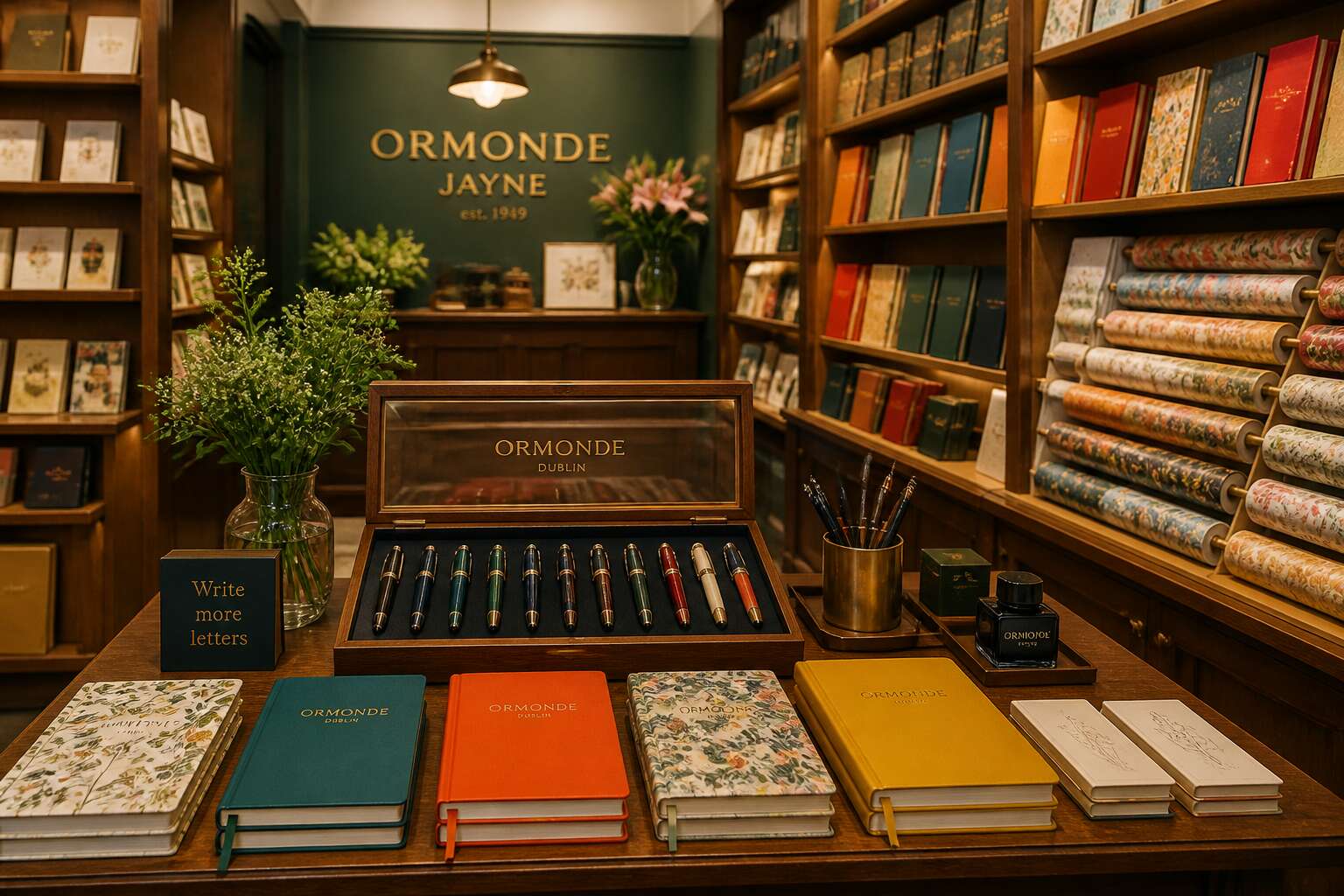
A blank sheet of paper holds 100% of your attention, something no notification can claim. I felt this at a stationery shop ormonde, where stacked notebooks and cotton fibre sheets waited on wooden shelves. The physicality changes how we write. Your hand moves slower. Thoughts find a different rhythm!
Paper creates a tangible archive. Letters and margin notes become artefacts you can revisit, feeling the ink ridges under your fingers. A keyboard turns everything into identical bytes. Paper preserves texture, weight, and intention.
That is why paper still matters. It does not compete with technology. It complements it, giving us a place to think with our hands.
The Psychology of Handwriting
Handwriting activates the brain’s reticular activating system, the filter that decides what deserves your attention. That is why scribbling a note with a notebook from stationery shop ormonde feels weightier than tapping out a text. The ink dries slowly. Your hand cramps. The page holds the indentation of your pen. Physical stationery offers a charm no screen can replicate: it makes mistakes visible, erasures messy, and thoughts tangible.
The psychology of handwriting is rooted in deliberate pacing. You cannot outrun your own pen. Consider what a notebook does to your thinking:
- It demands prioritisation.
- It engages muscle memory.
- It leaves a permanent record.
Every loop, cross, and smudge leaves a physical trace. In a world of autosave, that fragility is the appeal. There is no undo. There is only the next line, waiting for you to write it.
Collecting Vintage Writing Tools
A 1960s lever-filler fountain pen, found for R50 at a Milnerton flea market, will probably outlive its owner. I have yet to see a modern pen with that ambition. Vintage writing tools were built for permanence. Collecting them is not nostalgia. It is a deliberate rejection of disposable design.
Physical stationery collecting rewards attention. You learn to read the striations of a Parker Vacumatic barrel. You learn why Sheaffer’s snorkel filler was considered audacious engineering. At stationery shop ormonde, these treasures share shelf space with new notebooks, a reminder that good tools endure.
The collector’s eye sorts what matters:
- Original boxes and packing material
- Intact nibs and filling mechanisms
- Partial provenance, a name in pencil on the box
- Uncommon colourways that never sold well in their day
The search is the value. The object is the evidence. Finding it, handling it, and adding it to your own history, that persists!
The Rise of the Modern Desk Aesthetic
The modern desk has stopped apologising for paper. Video calls fill the calendar, but the surface now carries objects with weight: a brass letter opener, a leather pencil sleeve, one good notebook. Physical stationery brings a quiet tactility that screens cannot imitate. That shift defines the modern desk aesthetic.
At stationery shop ormonde, the display cabinets mirror this change. Shoppers leave with a refillable pen in their pocket. Nobody rejects technology outright. They simply want a workspace that feels finished, with tools that respond to pressure.
The current desk style favours a short list:
- A single solid rollerball over a packet of disposables
- A daily carry tray with one pen and one sharpener
- Textured paper with visible deckle edges
The charm persists because it is physical. A screen gives information. A pen leaves a mark you can feel under your fingertip!
Curating a Personal Stationery Collection
Essential Pens for Every Budget
Building a personal stationery collection is an exercise in restraint. The stationery shop ormonde stocks hundreds of options, yet a considered set of ten pens serves better than a drawer of mismatched impulse buys. I start with function. A reliable ballpoint for daily forms, a rollerball for fluid note-taking, and a fountain pen for signatures and slow correspondence. Budget dictates the rest.
For under R100, the Pilot V7 and the Platinum Preppy offer consistent ink flow. Between R100 and R300, the Parker Jotter and the Lamy Safari deliver durability and a satisfying click. Above that, you are paying for nib precision and body materials, and the difference is real!
A curated collection follows a simple rule:
– Choose pens that share one ink type
– Match barrel weight to your grip
– Limit yourself to three daily writers
The stationery shop ormonde allows you to test each model before committing. That tactile trial is the only reliable method. A personal collection should feel inevitable, not excessive.
The Anatomy of a Quality Notebook
A notebook’s worth lies in its anatomy, not its cover. At the stationery shop ormonde, paper weight, tooth, and binding decide how your thoughts settle. I have seen 100gsm sheets bleed and 70gsm sheets hold ink cleanly. That contradiction rewards careful inspection.
– Grain direction determines whether pages lay flat.
– Thread binding allows a full 180 degree opening.
– Ruling style changes how quickly you write.
The best notebooks hide their construction. Some favour a stitched spine over a glued one. Others demand acid free paper for archival quiet. A quality notebook disappears beneath your hand, leaving only the line. That tactile truth is why you test before buying.
Washi Tape and Embellishments
Washi tape holds a curious social position in modern correspondence. Some treat it as mere packaging, while others curate it with the gravity of a sommelier. I have seen a hand painted roll elevate a tax invoice into conversation. That is the power of embellishment, though it demands restraint.
Consider the tactile peculiarities of your collection. A patterned tape can signal loyalty to a brand, or betray a love of kitsch. The right pairing feels effortless. The wrong one shouts.
- Washi tape with transparent sections for layering.
- Embellishments that honour the paper weight.
- Metallic accents for much needed contrast.
Every roll you choose says something about your attention to detail. Let the stationery shop ormonde guide that silent judgement.
Fountain Pens for Beginners
A fountain pen is the first instrument you must slow down for. The nib flexes according to your pressure, the ink flow responds to your haste. For a beginner, this negotiation feels foreign, even uncomfortable, but it teaches a deliberate hand.
A personal collection begins with questions rather than purchases. The variables are many:
- Nib sizes range from extra fine to broad and stub.
- Filling systems include cartridges, converters, and piston mechanisms.
- Grip sections vary in thickness, length, and material.
A stationery shop ormonde in Johannesburg lets you handle these options before committing. No online review conveys how a pen behaves in your particular grip. A specialist can watch your writing angle and suggest a nib width that suits it. That personal attention shapes a collection with intent instead of impulse.
Archival Storage for Keepsakes
Once the writing instruments find their place, the collection demands a home. Archival storage for keepsakes is not an afterthought. It is the framework that keeps a personal collection alive. A stack of letters, a half-used notebook, a pressed flower left between pages. These objects matter, and they need protection from light, humidity, and careless handling.
Acid free boxes, archival sleeves, and pH neutral tissue paper form the basic toolkit. At stationery shop ormonde, storage options match the beauty of what they hold. The ritual of sorting and storing becomes part of the pleasure.
- Letters and postcards sorted by sender
- Wrapping paper and ribbon kept flat
- Stamps and ephemera filed in clear sleeves
The goal is not a sterile archive. It is a living collection that you can revisit, touch, and add to without guilt.
Stationery as a Tool for Productivity
Bullet Journaling Methods
The average office worker loses six weeks per year to disorganisation, yet a simple notebook and a reliable pen can change that. I have seen it happen in my own life. Bullet journaling is not about artistic spreads. It is about capturing tasks, events, and notes in a structured way. The system relies on rapid logging, where each line carries a bullet symbol.
At a stationery shop ormonde, you can find the exact tools to make this method work. A dotted notebook, a fine liner, and a ruler are enough. The key is consistency, not complexity. For beginners, start with these methods!
- Rapid logging to record thoughts as they come.
- Monthly migration to review unfinished tasks.
- A future log for plans beyond the current month.
These steps keep your mind clear. The physical act of writing forces you to prioritise. I use a habit tracker each week, and it shows me where my energy goes. Productivity is not about doing more. It is about seeing what matters.
Planner Systems for Busy Schedules
The most efficient professionals I know rely on a physical planner. A busy schedule demands structure. The right notebook holds meetings, deadlines, and personal commitments in one place. At a stationery shop ormonde, you will find planners built for this exact purpose! The layout matters less than the habit you build around it.
A functional system requires deliberate choices. Thick paper prevents ink bleed. A lay-flat binding allows quick access. A pocket for loose receipts keeps everything together. Many busy people prefer a daily planner over weekly layouts, though a combination of views often works best.
- A monthly spread for long-term deadlines.
- A weekly overview for appointments.
- Daily pages for task-level detail.
These components give a simple object real value. The physical act of writing clarifies what deserves your attention. Visit a stationery shop ormonde and find a planner that matches your workflow.
Note-Taking Strategies for Students and Professionals
Many professionals assume typing notes is faster. Yet studies show handwritten notes improve conceptual understanding. The physical choice of notebook matters. A good note-taking system depends on your context. Students need to capture lectures quickly. Professionals need to record decisions and action items. Both benefit from structured methods. One approach is the Cornell system, which divides the page into cues, notes, and summary. Another is mind mapping, which works well for brainstorming sessions. For quick meetings, a simple outline suffices.
- Use a separate notebook for each project.
- Date every page.
- Leave margins for annotations.
At a stationery shop ormonde, you can find notebooks with page numbers and index pages. These features create a searchable archive. The stationery shop ormonde offers a range of paper weights and ruling styles. Choose a grid layout for diagrams. Choose a dotted layout for flexible spacing. The act of selecting your tools is part of the strategy, so choose deliberately!
The Role of Stationery in Digital Detox
A screen demands constant attention. It fractures focus into fragments. A notebook makes no such demand. It simply waits, a silent surface for thought. When the phone goes dark and the page opens, the mind slows down. Productivity is not measured in notifications cleared. It is measured in the clarity left behind. A pen forces thought through the wrist before it reaches the page. This is the mechanics of a digital detox, and it works because the body participates.
The right tools matter. A visit to a stationery shop ormonde yields thick paper that does not bleed, binding that lies flat under pressure, and ink that dries fast enough for restless hands. This is where the detox takes shape, in the deliberate choice of weight, ruling, and nib.
Creating a Command Centre at Home
A home command centre begins with the physical objects that anchor a working day. Screens manage logistics, but paper holds intention. I have found that a considered desk setup transforms scattered ambition into a sequence of tangible actions.
A visit to the stationery shop ormonde provides implements that make this system deliberate. A ruled A4 pad for priorities, a calendar that opens flat, and a tray for active documents.
A functional command centre requires:
- A writing surface free of digital devices
- Archival grade paper for notes that must survive
- Pens that start first time, every time
Preparation matters! When the workspace is arranged with purpose, the work itself becomes more focused.
Elevating Correspondence Through Stationery
The Etiquette of Handwritten Letters
In an age of instant replies, the handwritten letter remains a deliberate act. The choice of paper, the weight of the pen, the space left at the margins. These details communicate respect for the recipient. A visit to a stationery shop ormonde reveals the depth of thought behind this quiet ritual.
- Address the recipient by the correct honorific.
- Date each letter clearly.
- Match the formality of the paper to the occasion.
- Keep the handwriting legible and the tone sincere.
A thank you note written after a weekend visit carries more warmth than any email. A condolence letter, however brief, becomes a kept object. The physical letter offers something permanent. The stationery shop ormonde provides the fine paper and the proper instruments, but the sentiment remains entirely yours.
Choosing the Right Paper for Letters
Choosing the right paper for letters takes more than picking a pretty design. I have learned to look for three properties before buying letter paper:
1. Weight. A 100gsm sheet arrives with presence; a 70gsm card stays casual.
2. Cotton content. High cotton paper accepts a clean line without feathering.
3. Finish. The surface texture sets the note’s formality.
The stationery shop ormonde arranges its shelves around these same properties, so the decision is easier. A 120gsm cotton sheet keeps a fountain pen line crisp and resists creasing in the post. A laid finish adds a subtle ridge that catches the light. Those details are what separate a considered letter from a hurried one.
Wax Seals and Calligraphy
A sealed letter holds a weight that no digital ping can imitate. The wax cools into a fragile proof of intent. At the stationery shop ormonde, I always stop to check the brass stamps beside the bottles of vermilion and aged bronze.
- Brass monogram dies in florid and gothic cuts
- Sealing wax sticks in oxblood and iron grey
- Small cloth satchels for storing finished letters
Calligraphy completes the ritual. A broad-edged nib splits the ink into thin and thick strokes. The shop carries oblique pen holders and iron gall inks that dry to a faint, permanent shadow. I have not found a faster way to make a note feel significant.
Crafting Invitations with a Personal Touch
An invitation announces the character of an event. At the stationery shop ormonde in Johannesburg, this principle guides every choice. The shelves present textured cotton papers, envelope liners, and printing blocks. These materials allow a host to construct a card that reflects the gathering precisely.
When I craft invitations, I begin with a colour palette drawn from the season. Then I select a typeface matching the occasion’s formality. The staff at stationery shop ormonde provide practical advice on ink and paper combinations. They respect your vision while steering you away from mismatched elements. This collaboration makes the process enjoyable.
A personal detail might involve a hand-drawn border or a custom emblem pressed into the corner. The shop also carries silk ribbons for tying each suite. That final touch makes an invitation memorable without being ostentatious.
Eco-Friendly Envelopes and Cards
Correspondence carries intention. The envelopes and cards selected at stationery shop ormonde reflect that intention through material choices. Consider the tactile weight of recycled cotton fibre, or the subtle texture of a card embedded with wildflower seeds. These are not novelty items; they are considered selections for forwarding a message with care.
Plantable paper serves a second purpose. After the recipient reads the note, they plant the card in soil. The paper decomposes, leaving only a small patch of blooming life. This transforms the act of writing into an environmental contribution.
- Recycled kraft envelopes with minimal bleaching
- Seed-infused cards in seasonal colourways
- Biodegradable cello wraps for protective packaging
The staff at stationery shop ormonde explain the differences between acid-free recycled stock and tree-free alternatives made from sugarcane or bamboo. Each option reduces the demand for virgin pulp. For the writer who values permanence and planet alike, these selections maintain the ritual of letter writing without the residue.
Gifting Stationery to Others
Ideas for Writers and Journalers
Writers and journalers accumulate habits. When you choose a gift for someone who writes, you are honouring a private ritual. A visit to a stationery shop ormonde reveals objects that exist to be filled with thought. Consider a leather pen sleeve, a brass bookmark, or a refillable rollerball. Wrap them in kraft paper and the gesture feels deliberate.
For a more structured present, try one of these:
1. A set of washi tape in muted tones for indexing entries
2. A portable writing board for journaling outdoors
3. A wax seal kit with a single initial
Each item serves a specific purpose, and that matters more than novelty. The person who journals daily values consistency. The writer who drafts by hand values flow. A gift from that same stationery shop can respect both.
Kits for Aspiring Artists
A blank sketchbook can intimidate. For many aspiring artists, the barrier is not talent but tools. A thoughtful kit from a stationery shop ormonde removes that friction. You choose items that let someone begin without judgment. Watercolour pencils, a palette of half pans, and a soft eraser fit inside a sturdy pencil case. These three pieces offer range. They respect the artist’s own direction.
Consider the tactile experience. A smooth Bristol board differs from textured cartridge paper. In the shop, test the weight of each pad. Gift graphite sticks in varying hardness. Add a kneaded eraser and a sharpener with a lid. The kit becomes a quiet encouragement.
What matters is intention behind each piece. A stationery shop ormonde curates supplies for beginners and experienced makers. The best kits avoid clutter. One quality brush, one notebook, one palette. That is enough.
Desk Accessories for Colleagues
Gifting desk accessories to colleagues is a quiet gesture of respect. A brass paperweight or a leather pen pot acknowledges their work without words. A stationery shop ormonde carries accessories that serve a purpose and last. The right gift sits beside a monitor and becomes part of a routine.
Consider the practical angles. A colleague who handles many calls needs a desktop organiser. One with a slot for a phone, another for sticky notes. Or a lacquered tray for loose paperclips. These objects bring order, and they never feel like performance.
Here is a short list of what works well:
- A terrazzo coaster set for coffee rings.
- A mechanical pencil with a knurled grip.
- A magnetic clip for invoices.
Each piece from a stationery shop ormonde shows you noticed how they work. That is the point of giving.
Personalised Notes and Cards
A card given without expectation carries more meaning than any digital greeting. When you select a personalised note from a stationery shop ormonde, you handle paper with a specific grain and weight. The recipient senses that care. They notice the difference between a generic print and something chosen for them alone.
For your next gesture, consider these items:
- A blank card with a torn edge for a handwritten message.
- A set of correspondence cards embossed with a monogram.
- A sealing wax kit to close the envelope with intention.
The ritual of writing, folding, and addressing becomes part of the present. A stationery shop ormonde supplies the materials for that deliberate act. Your words, placed on quality stock, create a memory that endures far longer than the moment itself.
Creating a Gift Hamper of Assorted Supplies
A gift hamper built from assorted supplies becomes a practical present. When you choose each item from a stationery shop ormonde, you consider how the recipient works, dreams, and corresponds. The result is a box that supports many activities.
For a thoughtful assortment, include:
- A refillable rollerball pen inked with a deep blue
- A stack of blank index cards for quick ideas
- A roll of kraft paper for wrapping small treasures
- A set of brass paperclips that gleam on a desk
Each piece serves a different impulse, from drafting a to-do list to mailing a thank-you note. The act of assembling a hamper forces you to study someone’s habits. That attention turns a collection of objects into a message. Visit a stationery shop ormonde and you will find the exact balance of practicality and delight. The gift says what you cannot: your routines matter to me.
Caring for Your Stationery Stash
Proper Pen Maintenance
A neglected pen invites its own decay. Left unattended, the nib becomes a channel for clotted pigment and dust, turning a fluid instrument into a relic. I have seen such casualties in many an office drawer, victims of the dry Highveld air, an ailment your stationery shop ormonde sees often.
Devote time to your pens as a sombre ritual. Separate the barrel from the grip section. Use lukewarm water, never hot, and let the nib soak until the remnants surrender. Patience allows the solvent to work!
- Rinse the feed until clear.
- Dry the nib with a lint-free cloth.
- Store the pen horizontally or nib-upward.
For your broader stationery stash, keep paper away from light. When you need replacements or a durable case, the stationery shop ormonde provides the tools. A routine of care prevents the macabre finality of a cracked feed or a stained blotter.
Preserving Paper from Age and Dust
The Highveld sun is merciless to paper. Ultraviolet light bleaches ink and turns margins brittle. Dust settles like a fine shroud, embedding itself into fibres. I have rescued letters from farmhouse attics where the only survivor was the one tucked inside a tin. That is the reality of paper.
Your stationery shop ormonde offers archival boxes, acid-free tissue, and cotton gloves for handling heirlooms. Store sheets flat, never rolled. Separate coloured papers from white ones. A silica gel sachet wards off damp, but check it monthly.
- Keep storage temperatures below 22 degrees Celsius.
- Use buffered folders for long-term safekeeping.
- Digitise fragile items before they degrade further.
Organising a Growing Collection
The average collector acquires eleven new pens for every one they finish. That arithmetic explains the drawer that no longer closes. A growing collection shifts from impulse to inventory. Daily writers rest on the desk. Special occasion items sit in a dedicated tray. Everything else belongs in labelled boxes.
Sorting by type works best. Group by material, era, or function.
- Pens and pencils in one compartment.
- Paper pads and loose sheets in another.
- Washi tape, stickers, and embellishments in a third.
For paper, vertical filing prevents curling. For delicate items, the stationery shop ormonde carries conservation-grade sleeves. A twice-yearly review reveals what serves the collection and what merely fills it. Seasonal stock rotates to the front. The system holds as the collection grows.
How to Store Washi Tape and Stickers
Washi tape and stickers are small but vulnerable. They curl, lose adhesion, and fade when exposed to light and dust. A drawer kept cool and dry works for most. Long term care demands a system!
Store washi tape flat, never stacked too high. The weight of rolls deforms the paper core. Stickers lie face up in acid free boxes, separated by glassine sheets. Vertical filing for decorative sheets prevents bending.
- Washi tape kept away from direct sunlight retains colour.
- A divided container holds loose stickers by theme or size.
- Humidity levels matter; moisture makes adhesive weep.
For curated pieces, the stationery shop ormonde offers storage boxes with pH neutral dividers. The stationery shop ormonde also stocks refillable tape dispensers. This keeps the stash organised and ready.
When to Use Archival vs Everyday Materials
Most stationery suffers from overprotection. We treat a R5 notebook like a museum relic, and the habit drains both space and joy. The real question is not how to preserve everything, but when preservation actually matters.
Everyday materials, like a spiral bound memo pad or a ballpoint pen, need minimal care. Keep them dry, away from direct sun, and within reach. Archival materials, however, demand separation from acid, lignin, and moisture.
The stationery shop ormonde stocks both categories, so you can match storage to intent. If a piece has personal, historical, or legal value, invest in archival sleeves. If it exists for daily use, let it live freely.
0 Comments