
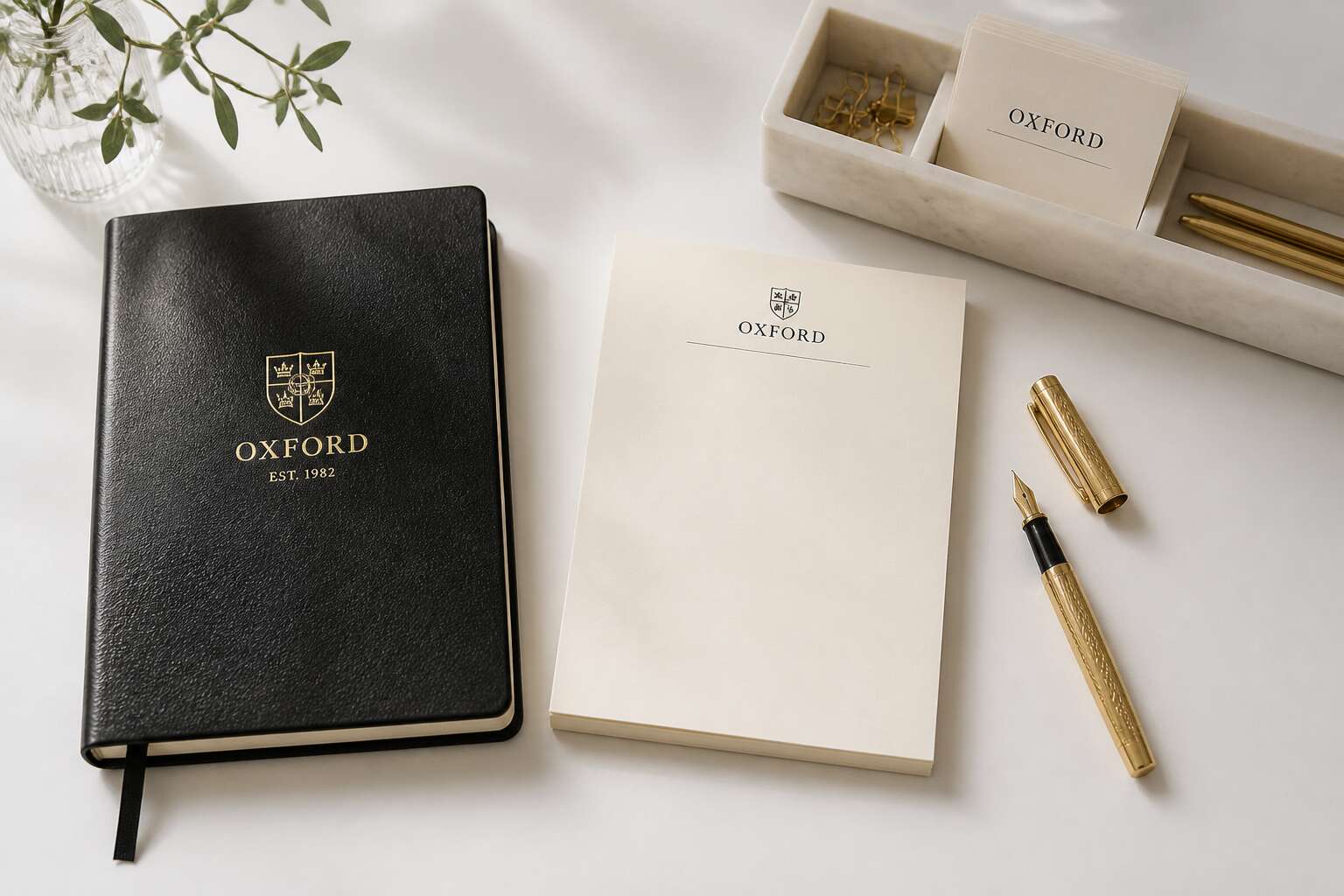
History and Heritage of Oxford Stationery
Origins of the Oxford Brand
For generations, the name Oxford has been synonymous with the sturdy exercise book that has weathered countless school years. The history of this iconic brand is a story deeply rooted in the industrial transformation of Europe, reflecting a time when paper production shifted from a handmade craft to a booming commercial enterprise. The origins begin not in a quaint English village as the name might suggest, but with a forward-thinking paper manufacturer who recognised the growing need for affordable, high-quality writing materials in the early 20th century.
The brand quickly gained a reputation for durability, largely due to its commitment to using specially formulated paper that resisted ink bleed. While the core mission was always practical, the design language evolved to become a familiar sight from Cape Town to Pretoria. As the decades passed, the product range expanded beyond the classic notebook to include:
– Writing pads and legal pads for professional correspondence
– Ring binders and lever arch files for office organisation
– Durable hardcover journals for personal reflection
– Exercise books tailored for specific academic subjects
By the latter half of the 20th century, the brand’s heritage became intertwined with academic achievement across the globe. In South Africa, these products became a staple for countless learners, representing a reliable companion in the pursuit of knowledge. The story of this brand reflects a consistent commitment to enabling clear thought on paper. Its enduring presence in stationery aisles today is a legacy built on trust. When you pick up a product bearing this name, you are holding a piece of that legacy, a direct line to the classrooms of the past. The influence of this company remains significant, with its products continuing to bridge the gap between traditional writing and modern learning demands.
Evolution of Stationery Designs
The quiet evolution of oxford stationery is visible in details most people never notice. Early exercise books had simple red margins and feint lines suited to fountain pens. As ballpoint ink grew thinner and faster drying, the paper surface had to change to prevent feathering.
Designers responded with tighter manufacturing tolerances. They studied how children hold pens, how much pressure they apply, and where pages wear out first. The result is a layout philosophy that feels intuitive without shouting for attention.
- Heavier paper stock for gel pens and markers
- Micro perforated edges for clean page removal
- Colour coded covers for quick subject identification
- Wider line spacing for foundation phase handwriting
Walk into any South African classroom and you will see these choices at work. The grid patterns, margin widths, and binding strength all respond to real classroom conditions. That is the quiet genius of the brand. It does not chase trends. It listens to how learning actually happens, one page at a time.
Iconic Products Through the Decades
The heritage of oxford stationery is a record of quiet persistence. I have opened old catalogues from the 1960s, their pages brittle and discoloured. Each product answered a classroom need, not a passing trend.
- The foolscap exercise book, a staple of the 1950s
- The stitched notebook, durable through decades of ink
- The examination pad with ruled lines for final answers
Through the decades, these tools kept their solemn character. Covers shifted hue, bindings grew stronger, but the core remained. That is the heritage every student inherits with each new notebook.
Oxford’s Role in Education
In South Africa, oxford stationery has sat on school desks for decades. Teachers in rural and urban classrooms rely on its pages for spelling drills and final examinations. The paper holds ink without bleeding. The ruling guides handwriting. These are the quiet details that support daily learning.
The role of this brand is practical. It gives learners a reliable space to practise and make mistakes. A child’s first sentence often appears on a page with the Oxford name. That trust develops through years of consistent performance.
Specific ways this brand supports education:
- Exercise books sized to fit standard school bags
- Pages that accept ink and pencil without bleed
- Durable covers that survive a full term
Every completed book becomes a personal record of progress.
Popular Oxford Stationery Products
Notebooks and Journals
The most honest space on a desk is an open notebook. It has no façade. For South Africans navigating the grind of client meetings and the chaos of load shedding, the physical act of writing remains a defiant anchor. Oxford stationery understands this relationship better than most manufacturers. Their notebooks are not merely products; they are fortresses for fleeting thought.
The construction invites a certain reverence. The paper holds ink without ghosting, a rare trait in a market flooded with tissue-thin pages. I have found the heavier stock to be a stern, reliable companion during long strategy sessions. It accepts the pressure of a ballpoint and the wetter kiss of a fountain pen with equal grace.
Consider the specific features that matter for our climate and workflow:
– Paper weights above 80gsm prevent bleed through
– Perforated sheets allow for clean removal of meeting notes
– Durable covers withstand backpack abuse and Durban humidity
The page rules deserve scrutiny. The layout is not a suggestion; it directs the flow of argument. For journaling, a blank canvas offers limitless rebuke, while the discipline of a grid imposes order on chaotic tangents. Every aspect is a calculated response to the user’s silent demand for reliability. This is daily equipment, not a decorative trinket.
Writing Instruments and Pens
In a country where the lights flicker without warning, the humble pen becomes an instrument of resilience. The act of committing words to paper is a quiet rebellion against the digital chaos. Oxford stationery pens are built for this daily defiance, offering a weight and grip that feel reassuringly permanent in the hand.
The ink flow from these instruments deserves particular attention. It is neither hesitant nor overly generous, striking a balance that allows for quick notation during a power cut. I find the gel variants glide with a satisfying smoothness, while the ballpoints offer a firm, precise line that does not skip on cheaper paper. The dry time is critical, especially in our humid coastal cities, and these pens perform admirably without smudging across the page.
– The triangular barrel design reduces finger fatigue during extended writing sessions
– A tungsten carbide tip provides consistent line width from the first stroke to the last
– The snap cap mechanism ensures a secure seal, preventing the ink from drying out
Beyond the standard click, there is a tactile pleasure in the mechanical pencil offerings. They house leads that resist crumbling under the pressure of a heavy hand, a common trait among those of us accustomed to writing on softer surfaces. The eraser is often overlooked, but a good one can salvage a page of meeting notes. It lifts graphite without leaving a ghostly grey scar across the paper.
The true test lies in longevity. A good pen is not a disposable commodity but a partner in your daily work. It survives being tossed into a bag with keys and a hardhat, and it still writes the moment you need it. This reliability is the core of the oxford stationery promise. When the load shedding hits and the laptop dies, the simple, unbreakable flow of ink from your hand remains the most direct line to your own thinking. The act is primitive, yet the tool is quietly sophisticated.
Organizers and Planners
The power might fail, but your plan should not. An Oxford weekly planner gives you a physical structure for the days ahead, and I have found that writing tasks by hand commits them to memory faster than any app. The muted paper tones reduce glare under a desk lamp.
Popular organizer styles include:
- Academic diaries aligned to the school term, not the calendar year.
- Compact pocket planners for site visits.
- Laminated wall charts for tracking projects.
The binding on these oxford stationery products allows a full 180 degree opening, so you can write near the spine without resistance. Month views alternate with weekly spreads, offering both overview and detail. For South African professionals, the built-in contact sheets and time zone tables prove useful! When you flip back through months of entries, you see progress measured in paragraphs and checkmarks.
Paper Pads and Loose Leaf
A plan is only as good as the surface you scribble it on, and here is where the humble paper pad earns its keep. Anyone who has suffered a pool of cheap biro ink bleeding through to the table knows that paper is notoriously choosy. Oxford stationery pads, by contrast, use a dense, reactive paper that keeps signatures crisp and prevents that ghostly shadow from ruining the page beneath. The tear-off perforation is clean, so you can detach a page without turning the edge into a map of the Kalahari. For those who prefer a more tactile feel to their loose leaf, the octavo and A4 sizes are the standard for a reason.
The loose leaf range offers a flexibility that a designer binder cannot match. You can shuffle your notes, insert errant ideas, and remove the rant you wrote about load shedding. The six-hole punching on Oxford stationery fits their own range of folders, and the 80g, 90g, and 120g weights cater to everything from a quick shopping list to a heavy ink pen. The grid and ruled options are clearly printed, reducing eye strain during long writing sessions.
– A4 for the office.
– A5 for the tote bag.
– Pocket-sized for the field.
The paper resists curling in the humid Durban summer, and the robust cardboard backing keeps your car door filing system viable. For the South African writer, the SABS-approved quality is a quiet relief. The hard-wearing surface accepts pencil erasure without shredding, and the corner binding stays flat, making every page easy to use. These are problem solvers, not just receptacles for the day’s chaos.
Desk Accessories and Storage
Some South African desks hold an unsorted collection of cables, sticky notes, and loose pens. The oxford stationery desk accessories and storage range solves that problem with a modular system. The desk tray modules interlock in a stable stack, and the polymer construction resists the afternoon sun. You can expand the stack without moving surface area.
Storage follows the same logic. The lever arch files have a reinforced metal spine and a simple label tab. The document boxes have a clear identification slot and a sturdy handle that holds when full. These boxes stack neatly in a garage, the boot of a bakkie, or the storeroom of a school.
A practical compact setup includes:
- A two tier paper tray for daily paperwork
- A lever arch file for important records
- A document box for spare parts
I keep that stack in my office corner, and the oxford stationery system supports the setup.
Art and Craft Supplies
Art and craft supplies demand a quiet precision that writing tools never require. The oxford stationery offer includes cutting mats with printed grid lines, steel rulers with non slip backing, and adhesives that dry clear. These are instruments for repetition without error. A child cutting shapes for a geography project learns that a dull blade creates instant frustration. The same applies to an adult restoring a frame or assembling a school display.
The principle here is consistency.
– A self healing cutting mat protects both table and blade.
– A glue stick with a controlled tip avoids mess.
– A pair of sharp scissors with comfortable grips reduces hand fatigue.
Each tool answers a specific failure. That is why artisans and teachers in South Africa keep a dedicated drawer, separate from daily paperwork, for this set.
How to Choose the Right Oxford Stationery
Understanding Paper Quality and Weight
The difference between a reliable notebook and one that bleeds ink lies in a number you rarely see: the grammage. When choosing oxford stationery, paper weight dictates how much ease your pen feels, how long the page remains crisp, and whether a filled bag turns into a creased mess.
For everyday cursive, 80 gsm serves well, but fountain pen users should reach for 90 gsm or higher. Heavier sheets resist show-through and survive erasing without tearing. That tolerance has real value in a classroom or home office. Still, weight alone is an incomplete measure. You also want a surface that coordinates with your writing tool.
- 70 to 80 gsm: standard print and quick note taking
- 90 to 100 gsm: fountain pens and repeated erasing
- 110 gsm and above: heavy ink, markers, or mixed media
Brightness and a pH neutral, acid free structure matter just as much, especially if you intend to store your work for years. Pick your oxford stationery not by looks alone, but by its texture and density. That is how you find a page that matches your hand and your daily pace.
Selecting the Right Notebook Size and Binding
Choosing the right notebook size and binding often feels like a minor decision until you are halfway through a semester with a bag that weighs more than your textbooks. Size dictates how the notebook fits into your daily routine. A5 options slide into most bags without fuss, making them ideal for quick notes between meetings. A4 pages offer more real estate for detailed diagrams or long-form notes, but they require a larger carry system. B5 strikes a middle ground, giving you generous space while remaining manageable on a standard desk.
The binding method determines how the notebook lies flat when you write. This matters more than most people expect, especially if you write near the edge of the page. Spiral bindings allow pages to fold back completely, which is practical for single-hand use. Perfect binding gives a clean, book-like aesthetic, but the spine can crack over time. For heavy use, stitched sections are a wise investment. They hold up to repeated opening and closing without shedding pages.
Consider these points when comparing options:
– Look for stitched bindings for long-term durability.
– Choose spiral or wire for flexibility when space is tight.
– Select A5 for portability, A4 for comprehensive notes, or B5 for a balanced layout.
Oxford stationery includes all these formats, so you can match the construction to your specific needs. A notebook with the right size and binding feels invisible in your hands. It becomes a tool that supports your thinking rather than a source of frustration. Whether you prefer the rigidity of a hardcover or the flexibility of a softcover, the best choice is the one that disappears into your workflow and lets you focus on the content itself.
Matching Stationery to Your Needs (School, Office, Personal)
Selecting oxford stationery for school, office, or personal use starts with the environment. Schoolwork involves constant handling, so reinforced polypropylene wallets and tough refill pads are sensible. Office tasks require order; index dividers and punch pockets keep loose documents accessible. Personal writing benefits from a hardcover notebook with a lay-flat spine, which provides comfort during long journaling sessions.
- School: durable wallets and refill pads.
- Office: index dividers and punch pockets.
- Personal: hardcover notebooks with lay-flat spines.
The oxford stationery range covers all three contexts without forcing you to change brands. A single purchase decision can address the daily demands of a classroom, a cubicle, and a quiet study at home.
Considering Sustainability and Eco-Friendly Options
Every sheet of paper carries a hidden cost. Choosing oxford stationery with sustainability in mind means confronting that cost directly. The brand offers FSC certified paper pads and recycled polypropylene wallets. These materials match the durability of conventional lines while reducing demand for virgin resources. For the buyer, this shifts the decision from habit to intention.
Consider the lifecycle of each item. A refill pad made from recycled fibre still performs well under heavy ink. A punch pocket from recycled plastic still protects documents for years. The environmental cost is lower without sacrificing function.
The range includes:
– FSC certified paper pads
– Recycled polypropylene wallets and dividers
– Minimal packaging with reduced lamination
The quiet satisfaction of choosing oxford stationery lies in knowing that order and responsibility can coexist.
Budgeting and Value for Money
Budgeting for oxford stationery requires looking past the price tag. A cheaper pad may seem economical, but if pages feather under ink or the cover curls within a week, the real cost climbs. Value is measured by durability and usability, not initial outlay.
I have watched South African students buy replacements twice a term because they saved a few rand on a loose leaf folder. A better approach is to treat stationery as an investment. Heavy gauge plastic wallets and premium paper pads from oxford stationery cost more upfront, yet they survive a full academic year.
- Compare cost per month of use, not just purchase price
- Check whether refills are available for binders
- Buy multipacks to lower the unit cost
Identify which items receive daily handling and allocate your budget there. A writing pad for notes deserves better paper. A desk organiser that sits untouched does not. Matching expenditure to frequency of use stretches every rand.
Oxford Stationery for Students and Professionals
Study Essentials: Note-Taking and Revision
Two hours of rereading notes is an exercise in finding new ways to render yourself unconscious. The real work of studying happens the first time you put pen to paper, which is why the right gear makes a measurable difference. Your oxford stationery setup should do more than hold text; it should structure your thinking. A quality notebook with a sturdy cover and smooth, heavy paper allows for a fast writing rhythm that cheap pads interrupt with bleed-through and tearing.
The system matters as much as the tools. For complex subjects, I’ve found that separating the initial capture from the later review is the only effective approach. Your first pass is a messy, raw dump of information. The second pass, your revision, needs a different format to force the brain to re-engage with the material. You are not transcribing; you are translating.
Here is the core of it: the act of condensing a lecture into a single page of concepts is where the learning sticks. Use the margins for triggers and connections, not for adding more text. This process of active recall is far more effective than any highlighter. The key is to structure your revision around the gaps you find, not just the notes you have. A little upfront organization during note-taking saves you from a chaotic scramble before exams.
Office Must-Haves: Organization and Productivity
It is a familiar scene in lecture halls across the country: a student hunches over a desk, rifling through a bag for a pen that works. They find one, but the page in their notebook is flimsy. The ink bleeds through, leaving a ghostly impression on the next page. This small friction, repeated daily, adds up to a significant drain on focus.
Your stationery choices are the silent partners in your academic performance. Quality tools do not just make the task of writing easier; they reduce the cognitive load required to perform it. When you are not worried about smudging or tearing, your mind is free to process the lecture’s content. This is where oxford stationery demonstrates its worth. Their notebooks and pads use heavier paper stock that withstands the pressure of a fast-writing hand.
A dedicated system is more than a collection of office supplies. It is a framework that supports your study habits from the first day of term through final exams.
Why the physical format matters:
– Reduced Distraction: A smooth, consistent surface prevents your pen from catching or skipping, keeping you in a state of flow.
– Longevity: A sturdy cover protects your notes, ensuring that your semester’s work remains intact for revision sessions.
– Legibility: Good paper quality prevents the “ghosting” that occurs with cheaper brands, keeping your annotations clear and readable weeks later.
The act of revisiting your notes is where understanding is built. If you invest in a reliable binder or notebook, you are investing in the clarity of your revision material. Cheaper alternatives might save a few rand today, but the cost of lost information during a crucial study session is far higher.
Consistency is another factor. Using oxford stationery for every subject creates a uniform system. You know exactly where your biology notes are because they are in the same style folder as your history notes. This organisation reduces stress during exam season. The paper is also treated to handle archival ink, which means your hard work will not fade into illegibility by the time the final exam rolls around. For students who prefer to work on loose paper, their range of padded options provides that same level of quality with the flexibility to rearrange your thoughts.
Creative Uses and DIY Projects
For students and professionals in South Africa, choosing oxford stationery means investing in quality paper that withstands fast writing. The notebook pages prevent ink bleed and ghosting, keeping your notes clear. This reduces distraction during lectures and meetings. Durable covers protect your work for the entire semester or project. Smooth writing surfaces allow your pen to glide without catching. This helps you maintain focus and efficiency. Oxford stationery supports your academic and professional productivity. It offers a reliable system for note taking and documentation. Your hard work remains legible and organized for later revision.
Tips for Maintaining and Extending Product Life
An oxford stationery notebook serves well for months when kept in a cool, dry place. South Africa’s heat and humidity can warp pages, so store pads flat and avoid stacking heavy objects on them. Pens and markers need recapping after every use to keep ink flowing and tips aligned. These habits preserve the paper’s surface and the binding’s integrity.
- Use a soft eraser to remove pencil marks without tearing the page.
- Keep loose leaf pages in a sealed folder to block dust and moisture.
- Rotate planners weekly to distribute wear across all sections.
Such maintenance keeps the writing experience smooth and your notes legible. When the oxford stationery you rely on stays in good condition, your academic or professional workflow proceeds without interruption.
Sustainability and Quality in Oxford Stationery
Environmental Initiatives and Materials
When we talk about Oxford stationery, the conversation often begins with fountain pens and premium paper. But a deeper look reveals a brand that takes its environmental footprint as seriously as its craftsmanship. The connection between quality and sustainability is not an afterthought here; it is a core design principle. For the South African market, where logistics and climate put pressure on materials, this commitment to durable goods means fewer trips to the stationery store and less waste heading to landfills. A notebook that survives a year of heavy use is inherently more sustainable than a cheap alternative that falls apart in a month.
The material science behind Oxford products focuses on responsible sourcing. You will find a significant portion of their range utilising FSC-certified paper, ensuring that the fibres originate from well-managed forests. Furthermore, the brand has moved toward water-based adhesives and soy-based inks. These choices reduce the release of volatile organic compounds into the atmosphere. For the environmentally conscious consumer in Cape Town or Johannesburg, this provides a way to maintain high professional standards without compromising on ecological values.
To outline their current strategy, consider the following environmental initiatives:
– Recycled Content: Many of their pulp-based products now contain a significant percentage of post-consumer recycled fibre.
– Carbon Neutral Printing: Several manufacturing facilities have invested in carbon offset programmes to neutralise the emissions from production.
– Reduced Packaging: The shift to minimal, recyclable wrapping has cut down on single-use plastics across their core lines.
This focus on eco-friendly materials does not sacrifice the tactile experience. The paper remains smooth and resistant to ink bleed, while the card covers retain their rigidity. By investing in these technologies, Oxford ensures that your purchase is an asset that lasts, rather than a disposable commodity. It is a practical approach to sustainability that aligns with the long-term thinking required for both academic success and corporate efficiency.
Durability and Longevity of Products
Most stationery fails from the spine outward. A cheap notebook sheds pages by the third month. Oxford stationery holds its binding because the manufacturing process reinforces stress points. Durability is not accidental here. The result is a product that survives a full academic year or a demanding quarter at the office.
Longevity reduces replacement cycles. A stronger folder or a pad that resists tearing cuts down on waste from repeated repurchasing. This is where sustainability meets practical engineering. A longer product life means fewer resources consumed over time.
Common durability features include:
– Reinforced spiral bindings that resist snagging.
– Tear-resistant covers for backpacks and briefcases.
– Water-resistant coatings for rainy commutes.
These features make Oxford stationery a sound investment in the South African climate. The cost per use drops significantly. Buying well once beats buying poorly many times.
Customer Reviews and Brand Reputation
The true test of any stationery brand is not found in a single flawless page, but in the quiet trust it builds over years of daily use. When you read through customer reviews for Oxford stationery, a clear pattern emerges that speaks to something deeper than just product specifications. People talk about the feeling of opening a fresh notebook that lies perfectly flat, or a pen that delivers a consistent line without skipping, session after session. That consistency is the bedrock of a solid brand reputation, one that South African students and professionals have come to rely on.
Sustainability is woven into this reputation through considered choices. Oxford has moved toward using materials from responsibly managed sources, and the recyclability of their products is a genuine priority. In a country where environmental awareness is growing, knowing your purchase aligns with those values matters. Customers aren’t just looking for a stationery solution; they are looking for a responsible partner in their daily tasks. The feedback often highlights that the quality remains high even as the environmental standards improve, a balance which is difficult to achieve and rarely overlooked.
This commitment translates into tangible benefits that buyers can feel and see.
– The paper weight is often praised for preventing bleed-through, which is a common frustration with cheaper brands.
– The durability of the binding, especially in spiral notebooks, is a frequent point of praise, with many noting their notebooks survive a full academic term intact.
– Users also value the fade-resistant inks and sturdy card covers, which keep work looking professional from the desk to the boardroom.
These specific mentions in reviews confirm that Oxford is listening to its audience. Brand reputation is built on these small, repeated moments of satisfaction. When a product performs as expected, without fanfare or failure, it becomes the quiet choice that people make without second thought. You see this loyalty in survey after survey where consumers consistently rank Oxford high for dependability and value. By focusing on the essentials and executing them flawlessly, Oxford has created a niche that is both sustainable and deeply rooted in quality, ensuring their place in the hands of those who value substance over style.
Comparing Oxford with Other Brands
While many brands chase trendiness, oxford stationery grounds itself in material integrity. Rival products often thin their paper to cut costs, but Oxford’s thicker stock resists ink bleed across long writing sessions. Sustainability sees a similar divergence. Other manufacturers wrap products in single use plastics, whereas Oxford commits to recyclable packaging and responsibly sourced pulp. The difference appears in daily handling. A student in Pretoria might notice that cheaper notebooks tear near the spine after a week. Oxford notebooks hold their stitching for months.
Environmentally conscious buyers check labels, and Oxford’s clarity stands apart. Here is what reviewers frequently mention.
- Recycled paper options maintain opacity without sacrificing texture.
- Binding uses less adhesive and more durable sewing.
- Covers avoid laminated coatings that complicate recycling.
These choices feel quiet, but they shape long term trust. Comparing Oxford with standard supermarket brands reveals a philosophy of durability over disposability. The price point sits slightly higher, yet the cost per use often falls lower, a fact that office managers across Gauteng appreciate.
Future Trends in Stationery
Roughly 80 percent of a product’s environmental footprint is fixed before it reaches the shelf. Oxford stationery treats that statistic as a design brief. Thicker paper, sewn bindings and recyclable covers are upstream decisions. A notebook that endures a full school year is the sustainable choice by default.
Future trends in stationery point toward closed loops. The industry is moving toward refillable systems and fibres sourced from agricultural waste.
- Covers pressed from sugarcane residue.
- Pen cartridges designed for reuse.
- Bindings that separate easily for recycling.
These changes reward manufacturers with patience. Oxford stationery has always built for longevity, so the transition feels natural. For South African students and professionals, the future is not disposable. It is durable, repairable and honest.
0 Comments