
Understanding Stationery in Accounting
Definition of Stationery in Business Context
Every month, South African businesses spend an average of R2,500 on consumable office supplies, a figure that often catches finance teams off guard. Understanding how to classify these costs in your books starts with grasping what stationery actually represents in a business context. Stationery refers to the tangible items your operations consume to function, from pens and paper to printer cartridges and envelopes.
In accounting terms, these items fall under operating expenses because they are used up within a single accounting period. This classification is crucial when determining whether stationery is debit or credit, as the answer hinges on the expense recognition principle. You do not record stationery as an asset on the balance sheet, unless you purchase it in bulk and keep it in a storeroom. In that case, you might initially capitalise it as inventory, only to expense it once issued to departments.
When you make the journal entry, consider what stationery typically includes:
- Writing instruments such as pens, pencils, and markers
- Paper products, including notebooks, copier paper, and sticky notes
- Desktop accessories like staplers, hole punches, and tape dispensers
- Printer consumables, specifically toner cartridges and ink ribbons
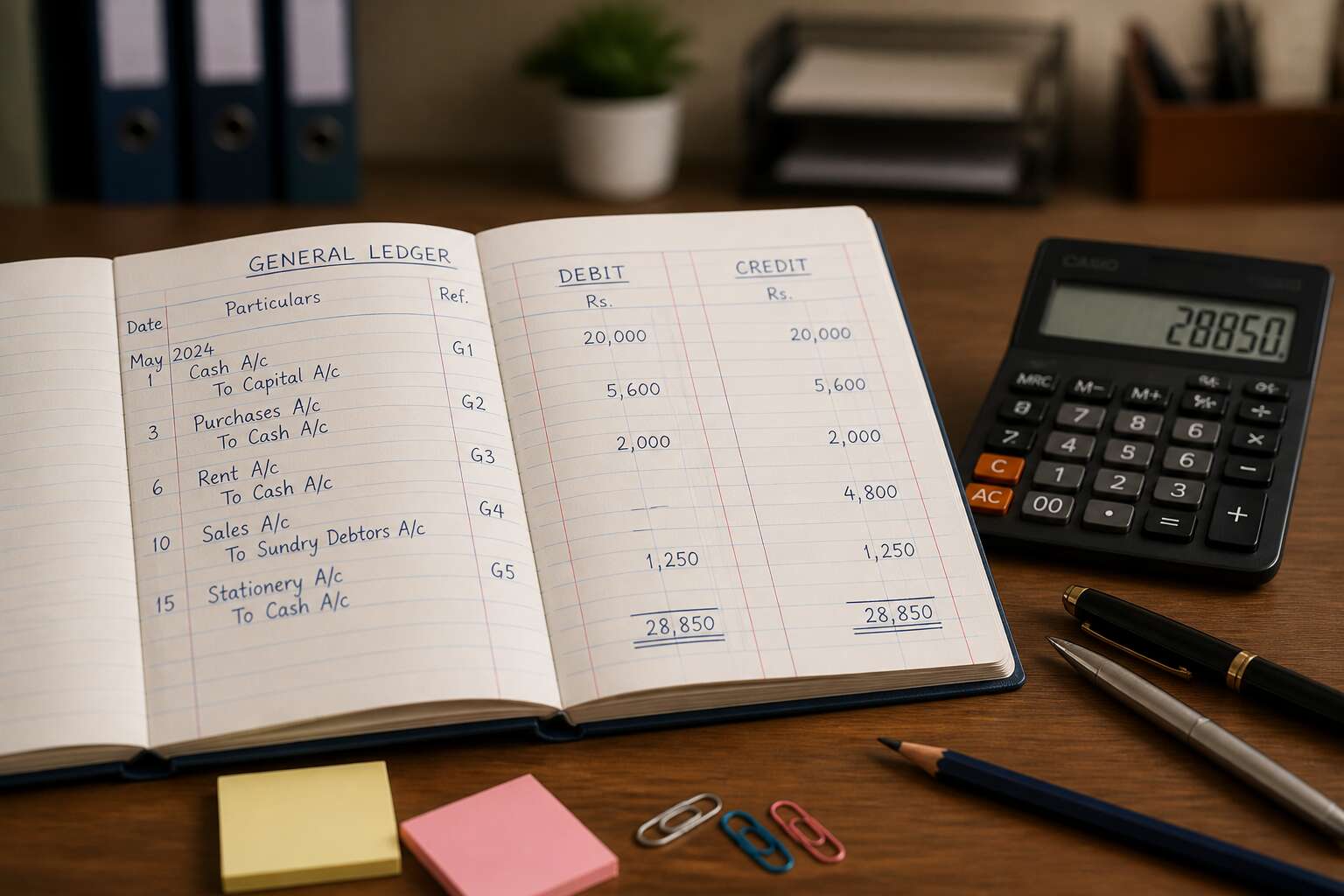
The practical reality for most small and medium enterprises is that stationery is consumed rapidly, making it impractical to track individual items as assets. This is why the default treatment leans toward an immediate expense, which directly influences how you apply the rules of debit and credit. When you purchase stationery for R1,000 in cash, the stationery expense account increases with a debit entry, while the cash account decreases with a corresponding credit. This movement reflects the outflow of economic value from your business.
However, the question of stationery is debit or credit becomes more nuanced if you prepay for a large consignment of office materials at year-end. The portion that remains unused belongs on the balance sheet as a prepaid expense, which is an asset. This asset carries a debit balance, shifting the focus from pure expense recognition to accurate period reporting. Understanding this distinction ensures your profit and loss statement reflects only the stationery actually used during the month, not the total amount you paid upfront.
Classification: Asset or Expense
The ledger does not forgive ambiguity. When stationery sits in a storeroom, untouched, it holds a different nature than the pen already marking signatures. The question of whether stationery is debit or credit depends entirely on which side of consumption it finds itself.
Unused stock remains an asset, a prepaid expense carrying a debit balance, waiting for the moment it is issued. Once released to departments, it transforms into an operating expense, still a debit but now flowing through the profit and loss statement. The question of whether stationery is debit or credit shifts with every requisition form signed.
For South African businesses, this distinction carries weight. A storeroom full of paper and toner is not yet an expense. It is a dormant asset, one that becomes a cost only when actually used.
Impact on Financial Statements
The true measure of a stationery cupboard is not its capacity, but the moment of release. When a requisition form is signed, a box of pens ceases to be a dormant asset and becomes a living expense. This movement determines where a transaction appears in the financial statements, and the nature of its impact on fiscal health.
On the balance sheet, unused stationery holds its place as a current asset, quietly influencing liquidity ratios. It is money tied to the shelf, waiting for a purpose. Once distributed, the value shifts to the income statement, where stationery is debit or credit becomes a managing decision with real consequences for net profit.
– The balance sheet presents unissued stock as an asset, not a reduction of earnings.
– The income statement records consumption as an operating cost, reducing taxable income.
This shift from asset to expense produces a direct effect on your reported profitability. South African businesses must observe this transition carefully, as the assertion that stationery is debit or credit, without context, is an oversimplification. Proper accounting treats every allocation as a separate event that influences the bottom line. The numbers only tell the truth when the consumption is measured, not when the purchase is made. This distinction separates accurate reporting from conjecture, giving your stakeholders a clear view of the resources actively used to generate revenue.
The Debit and Credit Rules
Debit vs Credit Basics
Accountant Luca Pacioli codified double entry in 1494, and the system has barely changed since. Every journal entry still carries at least one debit and one credit, with totals that must always match. The practical question of whether stationery is debit or credit becomes clearer once you grasp this foundational tension.
Debits increase asset and expense accounts. Credits increase liability, equity, and revenue accounts. Consider a typical stationery purchase:
- The stationery expense account receives the debit.
- The cash or accounts payable account receives the credit.
- The entry stays balanced, preserving the accounting equation.
When someone asks whether stationery is debit or credit, the accurate response depends on which side of the transaction you are recording. The expense side takes the debit. The funding source takes the credit. Reversing the sides would distort the ledger entirely.
Why Stationery is Debited
Understanding why stationery is debit or credit starts with the rule itself. A debit is not a judgement, it is a direction. Expenses grow on the debit side, and stationery is an expense. When the cashier hands over R150 for a box of pens, the expense account receives the value while the cash account gives it up. One side cannot move without the other.
Here is how the rule works in practice:
– The stationery account records the debit because expenses increase on the left.
– The bank account records the credit because assets decrease on the right.
– The totals must balance to keep the ledger true.
Many small business owners worry when they see a debit in the stationery account, assuming a debit means money is owed. That assumption ignores the nature of the account. The stationery is debit or credit question resolves itself when you remember that every account has a normal balance. Stationery lives on the debit side. Cash lives on the debit side too, but it shrinks with a credit. That is the rule!
When Stationery Could Be Credited
The meticulous dance of accounting allows for a reversal, a quiet turning of the tide. While the stationery account is a natural home for debits, specific instances demand a credit entry. This occurs primarily when correcting errors or processing refunds. If an invoice was overstated and the supplier issues a credit note, the stationery account is credited to nullify the excess expense.
Consider the moment an accountant discovers a double-charged purchase. The sequence of events is precise:
1. The original payment inflated the expense balance.
2. The supplier rectifies the error with a refund.
3. The stationery account receives the credit to offset the initial debit.
This treatment ensures the business does not overstate its expenses for the period. A credit here is a correction, not an income event. It is a return to equilibrium. Refunds are not magical windfalls; they are the ledger breathing out after an overeager intake. Thus, the perpetual question of whether stationery is debit or credit finds its answer in the purpose of the transaction. A credit is the shadow that follows the debit, ensuring no false value lingers in the books.
Role of Golden Rules of Accounting
In South African bookkeeping, the golden rules of accounting settle whether stationery is debit or credit with precision. Stationery belongs to the nominal account family, where expenses naturally live on the debit side. The rule is unequivocal: debit every expense and loss! Meanwhile, the bank or creditor supplying the value earns the credit. Every transaction tells this two-sided story.
These golden rules strip out personal bias. They force the accountant to name the account type first, then assign the correct side. Consider a stationery purchase in Johannesburg:
- Classify stationery as a nominal expense.
- Debit the account to reflect consumption of resources.
- Credit the bank for the outflow of value.
This duality anchors the entire ledger. The question of stationery is debit or credit resolves cleanly when the golden rules map each transaction to its proper lane.
Modern Accounting Approach
Old school bookkeepers needed photographic memories. Modern software needs a decent internet connection. The stationery is debit or credit puzzle now solves itself the moment a purchase hits the bank feed.
I have watched small business owners in Pretoria stare at their screens while the system quietly categorises their stationery expenses. The software studies past transactions and learns your habits. It flags anomalies!
- Bank feeds import transactions automatically
- The system matches the purchase to a supplier profile
- The expense account is booked without manual intervention
The underlying rules remain unchanged. Stationery is debit or credit still means debiting the expense account and crediting the bank. Modernisation just makes the process faster and more reliable.
Journal Entries for Stationery Transactions
Purchasing Stationery for Cash
When the cashier hands over R150 for a box of pens, the transaction barely registers as a financial event! Yet that simple exchange requires a double entry. Purchasing stationery for cash produces a journal entry with two sides: debit the stationery account, credit the bank account. The cash payment forms the credit side; the stationery received forms the debit side.
In South Africa, a VAT registered supplier changes the shape of this entry. You split the amount into:
- Debit stationery, exclusive of VAT
- Debit VAT input
- Credit bank, the full amount paid
This journal entry is where the rule of stationery is debit or credit becomes concrete. The debit side represents the cost of running your office, while the credit side shows the shrinking bank balance.
Purchasing Stationery on Credit
“Procrastination is the thief of time,” but for the accountant, a business credit card is the thief of peace of mind. When you purchase stationery on credit, the immediate cash outflow isn’t there to anchor the transaction, which means the suspense of “stationery is debit or credit” often gets answered incorrectly out of sheer confusion about the missing bank movement. This is where your ledger stops pretending to be a simple diary and becomes a formal promise to pay.
The double entry shifts its weight. Instead of crediting the bank, you credit a liability account, typically labelled as Accounts Payable or Creditors Control. This reflects a debt owed to the supplier, not a reduction in your current assets. The entry composition is straightforward, yet it carries a psychological shift. You are no longer seeing money leave your account; you are seeing a promise accumulate on your books. For a business using the accrual basis, this recognition is crucial, as it records the expense in the period the stationery was received, not when the cash finally departs.
For a VAT registered entity, the entry mirrors the cash purchase in terms of tax treatment, but the destination of the credit side changes.
- Debit the stationery account with the amount exclusive of VAT to recognise the consumption of office supplies.
- Debit the VAT input account with the tax portion, which you will later claim back from SARS.
- Credit the Creditors Control account with the total amount owing to the supplier, inclusive of VAT.
The liability grows on the right side of the equation while your expenses increase on the left. This dynamic clarifies why the rule of stationery is debit or credit remains intact regardless of the payment method. The product still carries the debit nature; only the source of the funding changes. The credit side simply records your obligation to the supplier, holding the fort until the bank account is finally depleted and the promise is fulfilled.
Recording Stationery as Consumable Inventory
Imagine stationery as a stockpile, not an immediate expense. That changes everything. When you record stationery as consumable inventory, the journal entry defies the instinct to expense it all at once. The answer to whether stationery is debit or credit becomes a two stage process.
First, you debit an inventory asset account for the stationery’s purchase cost, excluding VAT. You credit either bank or creditors, depending on payment terms. This moves the value onto your balance sheet as a current asset.
Then, as the pens and paper are issued to departments, you execute the second entry:
- Debit the stationery expense account for the consumed portion.
- Credit the inventory account by the same amount.
This gradual recognition keeps the stationery is debit or credit rule intact while preserving accurate monthly profit.
Adjusting Entries for Unsold Stationery
“According to a 2023 survey, nearly 60% of small businesses misstate their monthly profit by incorrectly handling consumables.” This is where the elegance of adjusting entries saves your balance sheet. When the month ends, you must reconcile the physical stock on your shelf with your ledger. The entire debate about whether stationery is debit or credit hinges on this moment of truth.
You see, the initial purchase entry is merely a formality. The real narrative unfolds when you count the remaining boxes of pens and reams of paper. You must perform a physical stocktake. Then, you calculate the value of what was actually used. That value moves to the expense column. The portion that sits idle in the cupboard stays as a current asset. This is where the stationery is debit or credit principle becomes a matter of degree, not kind.
Here is how the adjustment procedure flows:
1. Determine the value of the stationery consumed during the period.
2. Debit the stationery expense account for that calculated amount.
3. Credit the stationery inventory account to reduce the asset to its remaining value.
This process prevents the profit and loss statement from taking a full hit for items that still hold future value. It is a discipline of accurate valuation, ensuring that the answer to whether stationery is debit or credit always reflects the economic reality of your stockroom. This transforms a mundane office supply into a precise financial instrument.
Practical Examples and Scenarios
Office Stationery Purchase Example
Picture a small legal practice in Cape Town unpacking its monthly stationery delivery. Boxes of pens, stacks of paper, and a fresh toner cartridge cover the reception desk. The accountant looks at the invoice and asks herself whether the stationery is debit or credit. On one side, the bank is lighter by R2,400. On the other, that paper will be shredded into client notes by Friday. The correct move is a debit to office supplies expense.
I always find this moment oddly hopeful. The purchase represents work that will happen, ideas that will be typed, signatures that will ink contracts. Consider the items in that box:
- A4 printer paper for pleadings
- Black gel pens for the senior partners
- Post-it notes for urgent reminders
Every one of them succumbs to ordinary use within days. So the debit stands. Credit the cash account, debit the expense. No inventory sits on a shelf. No future benefit lingers. The stationery becomes part of this month’s cost, neatly tucked into the income statement.
Stationery for Resale Example
Picture a stationery retailer in Durban receiving a shipment of branded notebooks and artisan pens. The bank account drops by R8,500, but the accounting treatment differs from the office scenario. Here, the stationery is debit or credit depends on intent. This stock is an asset, not an immediate expense. The accountant debits a trading inventory account, with a corresponding credit to the bank. The expense only materialises when a customer buys the pen or notebook.
Selling this stock changes the accounting narrative. The inventory account shrinks, and the cost of sales rises on the income statement. Consider what happens to those branded notebooks over a quarter: some sell quickly, others linger on shelves, and a few may be returned by clients. Each event moves the balance. The original transaction stays simple. The stationery is debit or credit as inventory on the purchase date, then becomes an expense upon sale. The distinction keeps the profit picture accurate. Without this separation, the business would overstate its assets or misstate its monthly costs.
Stationery Used in Manufacturing
In the realm of manufacturing, stationery transforms into an input of production, a raw material that fuels the machinery of administration. Consumables like printer cartridges, production labels, or packing slips become the sinews connecting the factory floor to the ledger. The accounting treatment here says stationery is debit or credit as part of the manufacturing overhead, weaving the cost into the tapestry of the final product’s price.
Consider the cost inputs for a packaging plant. These items are not expensed the moment they enter the loading bay. Instead, they sit as inventory on the balance sheet until the production process claims them.
– Pre-printed safety labels for heavy machinery
– Barcode stickers for pallet tracking
– Chemical-resistant pens for quality control stations
A printer in Johannesburg uses thousands of A4 sheets daily. The purchase of a pallet of paper is not a single administrative event. It is a contribution to the goods being produced. The stationery is debit or credit as an asset in a raw materials account. The credit goes to the bank. This mirrors the inventory treatment of retail, but the lifecycle is different. The paper’s value is transferred to the work-in-progress account as it is fed into the printing presses.
The true cost emerges when the goods are sold. Only then does the material portion of the expense surface on the income statement. This principle protects the business from a distorted view of production efficiency. If a batch of labels is wasted due to a machine malfunction, the loss is recorded separately, not buried in a general office expense. This precision clarifies the true cost of each unit produced. The question of whether stationery is debit or credit in this context is a matter of timing, ensuring that assets and profits are measured with unerring accuracy.
Periodic vs Perpetual Inventory Systems
Picture a Cape Town design agency. It buys a pallet of A4 paper. With a periodic inventory system, the entire cost is expensed at purchase. The stationery is debit or credit? Debit to supplies expense, credit to bank. Yet three quarters of that pallet remains untouched. The profit figure is distorted until a year end stocktake reveals the truth.
Perpetual inventory changes the game. Every ream is scanned, every sheet tracked through a raw materials account. Consider these practical scenarios where the choice matters:
- A printing press tracking each job’s paper usage
- A courier company monitoring dispatch labels
In perpetual mode, the stationery is debit or credit as an asset until consumed. The timing of expense recognition becomes surgical, not accidental.
Handling Stationery Returns and Damages
The accounting treatment for returned or damaged stationery is a moment of truth that reveals whether your bookkeeping matches physical reality. When a supplier accepts a return of unused goods, the stationery is debit or credit as a reversal. You credit the stationery expense account to reduce the cost, and debit the bank or accounts payable. Consider a law firm that returned a box of premium pens because the ink dried out. The supplier’s credit note transforms a previous expense into a reduction of that expense, not an income event.
Damage presents a different conundrum, especially under a perpetual system. Suppose a courier company discovered that a water leak ruined a batch of dispatch labels. These labels were booked as an asset. Now they must be written off. The stationery is debit or credit to a loss account, with a credit to the inventory asset. The movement looks like this:
1. Debit the stationery expense or loss account for the damaged value.
2. Credit the stationery inventory account to remove the asset.
3. Review the write-off for insurance claims, but do not anticipate recovery in the ledger.
The damage creates a debit to a loss account, reflecting a decrease in profit. The distinction matters because a return involves an external party, while damage is an internal resignation. Both scenarios demand documentation. Without the supplier’s credit note or a signed damage report, you cannot support the entry. So the next time you step over a ruined ream of paper in the storeroom, remember that the stationery is debit or credit based on your evidence and your system.
Effect of GST on Stationery Entries
A Johannesburg agency buys stationery for R1,150, VAT included. The invoice splits the amount. The stationery is debit or credit as an expense of R1,000, while input VAT of R150 is debited separately. The creditor is credited for R1,150. This distinction matters because the VAT portion never touches the expense line.
Take a Cape Town school purchasing exam paper on credit. If the school is VAT-registered, the stationery is debit or credit at the VAT-exclusive value. The VAT account absorbs the tax. A non-registered entity records the full invoice as expense.
For VAT-registered businesses:
– Debit the stationery expense net of VAT.
– Debit the input VAT account.
– Credit the supplier for the total.
The stationery is debit or credit at the net amount, keeping the profit and loss statement accurate. Mistakes here create reconciliation headaches later.
Common Mistakes and Best Practices
Misclassifying Stationery as Fixed Asset
A single box of pens can complicate an entire audit. Many South African businesses mistakenly classify stationery as a fixed asset, inflating asset values and misrepresenting expenses. The rule is straightforward: stationery is debit or credit in the expense account, never as capital equipment.
Best practices begin with a clear classification policy. Set a monetary limit for immediate expensing. Track consumption rates to identify bulk purchases that require inventory treatment. Educate staff on the difference between consumables and long lived assets.
- Review the threshold annually.
- Separate bulk stock for inventory tracking.
- Keep receipts for every stationery purchase.
Ignoring Closing Stock of Stationery
Ignoring closing stock of stationery is a recurring accounting error. I have seen audits where every packet of paper is expensed, yet the unused boxes sit untouched in a cupboard. That oversight inflates the expense account and understates your asset position. The phrase stationery is debit or credit becomes meaningless when you fail to account for what remains.
Best practice demands a physical count at year end. Schedule it before you close the books. Count the A4 packets, the notepads, the toner cartridges. Count every last one! Then reconcile the value with your records. I promise you, skipping this step distorts your financial statements. A simple stock take saves you from an inflated expense line and a complicated audit.
Best Practices for Recording Stationery
Stationery accounts fail more often from sloppy habits than from complex accounting rules. The question of whether stationery is debit or credit should never be answered in the moment. It must be answered by policy. Set your policy once and apply it every month.
Common mistakes surface when people improvise. One person codes a toner purchase to marketing. Another books notepads to entertainment. Both are wrong. These errors accumulate and make your expense reports unreliable.
Best practice is simple. Create a dedicated stationery expense account. Require every purchase to pass through it. Then reconcile that account against supplier statements at quarter end. I promise you, that one habit fixes most recording errors!
- Approve all stationery orders before purchase.
- Match the invoice to the delivery note before posting.
- Review the stationery account monthly for anomalies.
Do this consistently and the stationery is debit or credit decision becomes routine. Your records stay clean and your auditor stays quiet.



0 Comments