
Why Giving Writing Supplies Matters
Impact on Classroom Readiness
A single missing pen or a broken pencil might seem trivial, but for a learner, it can halt progress entirely. When a child spends half the lesson asking to borrow a ruler or waiting for a turn to use a classmate’s scissors, they lose valuable instruction time. This constant negotiation for basic tools creates a barrier between the learner and the curriculum. A stationery donation removes this daily hurdle, allowing the focus to shift from survival to scholarship.
The impact on classroom readiness is immediate and measurable. Learners who arrive with their own supplies are more likely to participate in written exercises and engage with the lesson plan. They are not sitting in a state of anxiety, wondering how they will complete the task at hand. This readiness extends beyond just having the item, it also influences the learner’s perception of their own place in the classroom. Being equipped signals that they belong in the learning environment.
Furthermore, a teacher’s ability to manage the class improves drastically when resources are plentiful. Without a stationery donation, educators often spend their own money or improvise with outdated materials, which limits the complexity of the tasks they can assign. A fully stocked classroom allows for dynamic group work and individual assessments without the logistical headache of sharing.
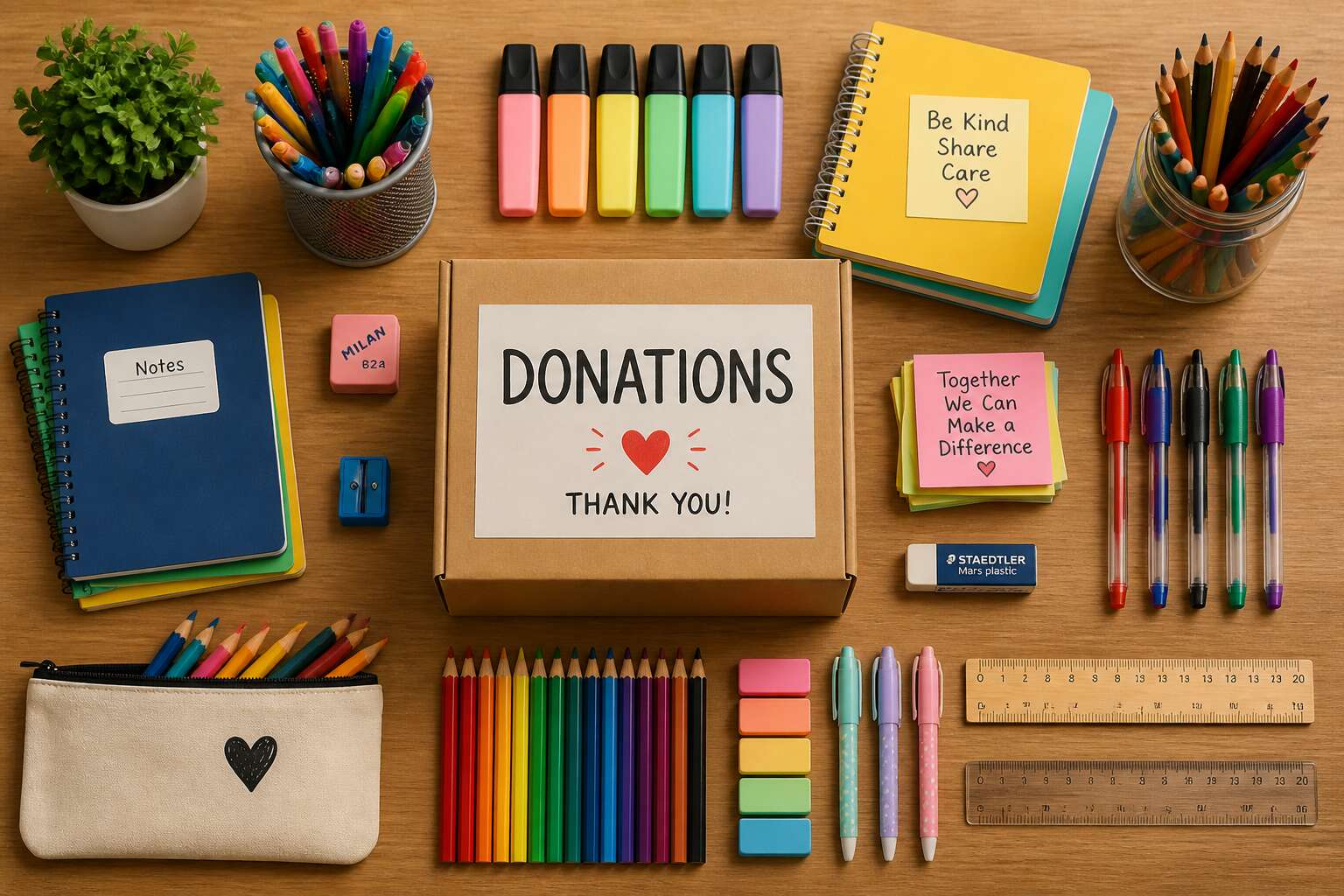
A proper stationery donation covers the essentials that many take for granted:
– Pens and pencils that write consistently
– Erasers and sharpeners that are actually functional
– Exercise books with unspoiled pages for note-taking
When these basics are present, the cognitive load on the learner decreases. They are not worried about their pencil lead snapping or their book being full. This mental space is then free to be used for critical thinking and comprehension. It is a quiet but profound shift, transforming a space of lack into a space of potential. The simple act of giving supplies speaks directly to the dignity of the learner, affirming that their education is a priority worth investing in.
Boosting Student Confidence
A blank page can be intimidating. For a learner without a pen, it is a wall. Confidence in the classroom is built on small certainties. Knowing your pencil will not run out of ink. Knowing your eraser will actually erase. A stationery donation provides these certainties.
When a child writes without hesitation, they take risks with their ideas. They raise their hand. They show their work. The shame of being unprepared disappears. That shame is heavy. It tells a child they are not serious about their future. A stationery donation removes that weight in one clean gesture.
Writing supplies are tangible proof that someone values their effort. A new notebook says more than a lecture about ambition. It says, we expect you to succeed. That expectation becomes part of the learner’s self-image. They begin to see themselves as someone who belongs at a desk, with a voice worth recording.
Environmental Benefits of Reuse
Every year, millions of plastic pens and pencil shavings end up in South African landfills. A single pen takes centuries to decompose, while its plastic casing leaches microplastics into the soil. Stationery donation interrupts this cycle before the waste begins.
When you donate a barely used notebook or a half-full pack of pens, you spare the environment the cost of producing replacements. Manufacturing requires virgin plastic, wood pulp, and water. Reuse means fewer trees felled and less energy burned.
- Extends the lifespan of existing materials
- Reduces demand for new plastic and paper
- Keeps non-biodegradable waste out of burial sites
I have seen how a single act of giving extends the usefulness of items that would otherwise decay. Keeping functional objects in circulation reduces the need for new production. That is a tangible benefit to the environment.
Choosing the Right Items to Donate
Essential Supplies Teachers Request
Avoiding common pitfalls matters as much as generosity. From conversations with educators across South Africa, I have noticed that many well-meaning collections miss the mark. Teachers request what learners actually use daily. A stationery donation succeeds when it reflects real classroom routines.
The most requested essentials follow a familiar pattern:
- Lead pencils and pencil sharpeners
- Rulers and erasers that survive heavy use
- Exercise books with margin lines
- Glue sticks and colouring pencils
These items disappear quickly, not because learners waste them, but because they represent the tools of every lesson. A stationery donation guided by teacher input avoids surplus items that sit unused in cupboards. That practical focus makes the whole effort worthwhile.
Quality Standards for Used Materials
A box of half-used crayons belongs in the bin. Quality outweighs quantity in any stationery donation! Used items must pass one test: they should still work properly for a full term of classes.
I check every item against practical criteria. Pencils need enough lead left to sharpen at least ten times. Erasers should not be cracked or rock-hard. Exercise books require at least 70% blank pages with intact bindings. Glue sticks must not be dried out.
What I reject:
- Pencil cases with broken zips
- Notebooks with torn margins
- Dried-out markers or pens
- Bent rulers or rusted sharpeners
Donations meeting these standards respect both the giver and the learner.
Specialty Items for Art and STEM
Walk into any school art room and you will see the same quiet desperation. Crayons arrive in glorious boxes, but the colours that matter, magenta, turquoise, burnt sienna, vanish first. A stationery donation that includes only standard pencils misses the point entirely. What sparks a child’s imagination is the unusual. Watercolour pans, modelling clay, compass sets, geometry stencils. These specialty items for art and STEM turn a routine lesson into a discovery session.
Consider what teachers actually lack:
– Architectural scale rulers
– Safety compasses with blunt tips
– Acrylic paint pods
– Digital calipers for measurement projects
These tools allow learners to build, measure, and create. Your stationery donation gains real power when it moves beyond the basics. Think about the grade level too. A fraction set for Foundation Phase looks different from a protractor for Senior Phase. Match the material to the curriculum, and those items will see daily use until the last page is filled.
Cultural Appropriateness and Inclusivity
South Africa has 11 official languages and one very tricky stationery donation request list. A box of black pens works everywhere. A set of crayons labelled ‘flesh’ does not. That colour name fails before a child can draw. Inclusivity means looking past the product to how it will be used. Glue sticks and scissors are universal. Ruled paper differs by province. The Western Cape uses a specific line spacing. A donation ignoring that forces teachers to adapt.
- Pencil cases printed with Christian holidays
- Workbooks with English-only instructions
- Erasers shaped like food items that confuse younger learners
These details matter. A stationery donation that respects local language and curriculum joins the classroom routine. It becomes a tool, not a foreign object.
Where to Bring Your Donated Supplies
Local Public Schools and After-School Programs
Your old notebooks and half-used pens still hold value. The nearest public school is the obvious place to start a stationery donation.
The school secretary usually handles these enquiries. Staff can tell you exactly what they lack and whether they accept used items. Many schools in South Africa keep a collection box near the entrance. After-school programmes, especially those run from community halls, rarely have finances for basic writing tools.
- The school secretary’s office during term time
- A registered after-school care centre
- A local church that hosts a homework club
A child will not sit empty-handed during class. That is a meaningful outcome for one small parcel.
Nonprofit Organizations and Homeless Shelters
Statistically, a homeless shelter’s lost and found bin holds more pens than a stationery shop on a Monday. That statistic is invented, but the need is real. Nonprofit organizations and homeless shelters across South Africa run skills workshops, CV writing sessions, and adult literacy classes. They require writing tools for people rebuilding their lives.
Your stationery donation can land in a career centre’s resource box. These places accept half-used notebooks, odd pencils, and even that lone highlighter with one working end. Most shelters have a coordinator who sorts donations. They will tell you what they cannot use.
- Biro pens that still roll
- Pads with at least twenty clean pages
- Crayons for children waiting with parents
One box of scrap paper supports a person drafting a job application. That is a transaction worth making.
Community Centers and Public Libraries
Community centers and public libraries act as gathering points for neighborhood life. In South Africa, these venues host adult literacy classes and career advice sessions. A stationery donation left at their front desk reaches a coordinator who immediately sorts it into learning kits.
Most centers maintain a donation bin. You can also hand supplies directly to staff. Consider these common drop-off areas:
- Reception counters with clear signage
- Librarian workstations during open hours
- Community hall offices next to meeting rooms
Libraries often keep a free resource shelf for job seekers. Library staff can state their current needs, such as pens or notebooks. This direct route ensures your supplies go to someone typing a CV or reading a skills manual.
Corporate and Office-Based Collection Drives
One corporate tower in Sandton produced 40 kilograms of notebooks in a single week. That is the power of office based collection drives. When a stationery donation box appears beside the printer, pens and paper are collected instead of discarded. Colleagues often contribute better when they know exactly what is needed. During a successful drive, you will typically see:
- Pens and pencils collected in coffee mugs.
- Reams of unused paper from old projects.
- Bags of erasers and rulers from desk cleanouts.
Sorting this haul into learning kits takes an hour. The effort fills three backpacks for adult literacy classes. That means a single floor of a modest office can supply a whole workshop. No other collection point turns unused materials into structured learning tools so efficiently.
Online Platforms and Direct Delivery Options
The journey of a single pen from a Sandton office drawer to a learner in a Khayelitsha classroom is rarely a straight line, but the pathways are becoming more defined. Even with the proven efficiency of corporate drives, the digital landscape has fundamentally altered how we channel these resources. A quick search for a stationery donation in your city will surface a patchwork of registered charities, community upliftment projects, and educational trusts, each with a distinct logistical preference. Online platforms have streamlined the connection, allowing you to verify the legitimacy of a cause before committing to a drop-off. Many smaller organisations maintain a real-time wishlist, updating their needs weekly rather than relying on static, often outdated, lists.
This digital evolution does not negate the power of physical proximity. Direct delivery options offer a tangible accountability that screens cannot replicate. When you hand a box of pencils to a programme coordinator, you witness the storage constraints, the immediate needs, and the sheer gratitude of the recipients. For those operating in Johannesburg, Pretoria, or Cape Town, the logistics often involve a short drive to a central depot or a scheduled meet-up at a public market. Some NPOs prefer this method to avoid the administrative burden of managing online storefronts or courier services. Here are a few practical paths to consider when arranging your drop-off:
– Check the NPO’s social media pages for a physical address and their preferred drop-off hours, as many operate from private homes or community halls.
– Use a courier service that allows you to pay for the delivery directly to the organisation, bypassing the need for them to cover postage costs.
– Partner with a local church or mosque that runs a weekly feeding scheme, as they often act as informal collection points for surrounding neighbourhoods.
The most effective stationery donation often hinges on a simple phone call. A five-minute conversation with an administrator at a rural school near Pretoria can reveal whether they need new exercise books or if their storeroom is already overflowing with them. The inclination to declutter is strong, but the discipline to match your surplus with a specific, communicated lack is what creates genuine utility. For the independent donor, this direct line of communication cuts through the noise, turning a random act of giving into a precise intervention. The controllers of these programmes appreciate the courtesy, and the learners ultimately receive materials that will actually be used, not merely stored.
Organizing a Collection Drive at Work or Home
Setting a Clear Goal and Timeline
Organizing a collection drive at work or home demands a clear goal. Decide exactly how many items you wish to gather. For example, a target of 150 pens or 80 rulers gives the effort direction. A timeline turns intention into action. Two weeks works well for a home setting, while a corporate drive often requires a month. Announce the start and end dates, then share progress.
The stationery donation becomes a shared responsibility. When colleagues or family members see the deadline approaching, they respond. Mark the dates on a shared calendar. Keep the goal visible. That simple act channels scattered goodwill into a steady supply.
Partnering with a Beneficiary Organization
The best collections begin with a conversation. I recall phoning a school principal in Soweto who told me exactly what her learners needed. That specificity anchored the entire effort. After selecting a beneficiary, ask for their wish list, their delivery hours, and their storage capacity. These details shape your drive.
A partner organisation verifies your stationery donation reaches the intended hands. They issue receipts, which many South African companies request for BBBEE reporting. Some schools send photographs of children using the supplies. That correspondence matters long after the boxes are unpacked.
Any stationery donation requires coordination. Confirm who signs for the delivery and what condition they expect. The arrangement between collector and school usually settles on a few details:
- Boxes labelled with the school name and date.
- An inventory list sent in advance to the principal.
- A single drop-off point at the school gate or office.
Promoting Your Drive Through Social Media
Once your beneficiary is confirmed, turn your attention to the physical act of collecting. At work, place a labelled box near the printer or staff room. At home, a spare container by the front door works. The key is visibility. People forget donations that hide in cupboards.
Social media extends your reach far beyond your immediate circle. Post a photograph of your collection point with the school’s name and deadline. That single image can turn a passing thought into a stationery donation. Ask colleagues and family members to share your post. A short video of a full box, ready for delivery, creates momentum. Tag the partner organisation to widen the audience.
A simple rhythm keeps the stationery donation flowing:
- Set a weekly reminder to check the box.
- Snap one progress photo each Friday.
- Post updates with the running total.
That steady presence online mirrors the consistency of the collection itself.
Sorting and Packaging Best Practices
Running a collection point takes a little planning. Choose one accessible spot, whether that is a breakroom table or a hallway shelf. Label it clearly so nobody mistakes your stationery donation for free supplies. A simple sign with the school’s name and deadline keeps everyone focused.
Sorting happens before packing. Check every pencil for sharpness and every pen for ink. Remove broken items. Group similar materials into labelled bags, then secure them in sturdy boxes. A short checklist on the side of the box helps you track what came in and what still needs attention.
A simple system keeps things orderly:
– Sort into categories like writing tools, paper goods, and art supplies.
– Wipe down plastic items with a damp cloth.
– Seal boxes with tape and write the contents on the outside.
Your effort turns scattered pens into something useful for a classroom. Every tidy box saves a teacher time later.
Tracking and Delivering Contributions
Home drives start on a kitchen counter. Work drives often begin near the staff room. A labelled box with the school name prompts participation. Weekly email reminders sustain the effort without pestering.
A spreadsheet tracks every item. The date, the donor, and the quantity all appear in separate columns. This prevents duplicate deliveries and shows which supplies remain scarce. Count everything again when the closing day arrives.
- Collected goods sorted by category
- Missing items noted for the next drive
- Boxes packed with the beneficiary’s name
Deliver the boxes in person when possible. Meeting the teacher who receives your stationery donation confirms the value of the work! We always ask for a signed receipt before we close the log.
Celebrating Results and Recognizing Volunteers
A successful collection drive ends not with the packed boxes, but with a moment of recognition. The quiet hours spent sorting pencils, the persistent emails sent to colleagues, and the careful counting of erasers all converge into a single, tangible result. We have seen drives gather over 500 individual items, a number that speaks to the community’s shared effort. This is the time to celebrate the achievement and reflect on the journey.
The emotional reward becomes clear when you deliver the goods. Seeing the classroom shelves fill with fresh supplies, or watching a child’s eyes light up at a new notebook, confirms the purpose behind every contribution. It transforms a simple act of giving into a shared memory for the entire team or family. The energy from that success often seeds the next project.
Celebrating the contributors is essential, as they are the engine of the operation. A simple, sincere acknowledgment goes a long way in sustaining momentum for future drives. Consider these actions to show your appreciation:
– A handwritten card signed by the team members.
– A public mention in a workplace newsletter or community bulletin.
– A small tea or coffee gathering to close out the effort.
Recognizing volunteers validates their time and effort. It affirms that their attention to detail, from sorting used textbooks to organising a stationery donation box, has not gone unnoticed. This gratitude builds a reliable network of helpers who are willing to step up again, ensuring that the cycle of generosity continues for the next school term.
Tax Deductions and Other Perks for Donors
Getting Proper Receipts and Fair Market Valuations
Many donors overlook the financial recognition available for their generosity. In South Africa, a stationery donation to a registered public benefit organisation can qualify for a tax deduction, provided you obtain a Section 18A receipt. This receipt must state the fair market value of the goods, not the price you originally paid. For used items, that valuation requires an honest assessment of current condition. A box of pristine notebooks holds more value than a scrawled-in exercise book, and SARS expects that distinction.
The perks extend beyond tax relief. Some companies match employee donations, doubling the impact of your stationery donation. Others offer recognition programmes that highlight community contributors. Proper receipts and fair market valuations protect both donor and recipient. They create a transparent record that satisfies SARS and builds trust between givers and schools. That clarity turns a simple act of giving into a mutually beneficial exchange.
Recognizing Community and Team-Building Benefits
The value of a stationery donation extends beyond tax deductions. The tangible perks include workplace giving programmes. Some employers match employee contributions, effectively doubling the value of what arrives at a school. Others run recognition initiatives that highlight community involvement. These programmes build morale and reinforce a culture of giving.
That culture has a social dimension. A stationery donation drive creates a shared purpose across teams. Colleagues collaborate to sort supplies, pack boxes and deliver goods. These tasks require coordination and communication, and they break down silos in a way that structured team-building exercises often cannot. Employees work toward a common goal outside their usual roles, which builds trust and familiarity.
Participating in a drive also shifts perspective. Employees see the needs of local schools and the practical realities of underresourced classrooms. That awareness can shape future volunteering decisions and deepen engagement with the community. The benefits of a stationery donation extend beyond the gift itself, touching both the workplace and the wider neighbourhood.



0 Comments