
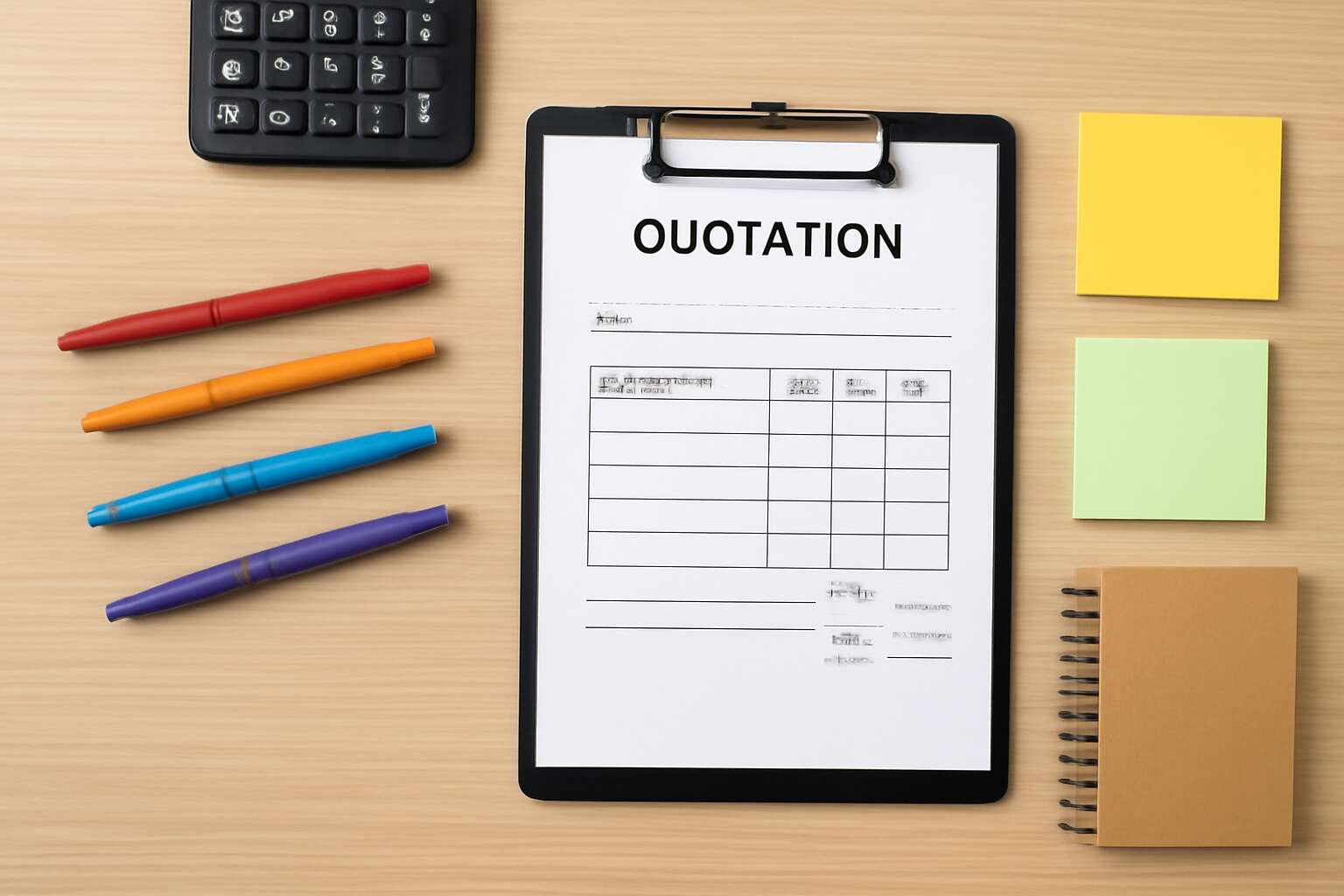
Understanding Quotation Formats for Stationery Vendors
What a stationery quote typically includes
“Clarity is money saved,” a South African procurement lead once told me. In the world of office supplies, understanding the stationery quotation format can be the quiet difference between a signed deal and a postponed purchase. A clean quote reduces back-and-forth and speeds decisions, turning murky negotiations into crisp, confident agreements.
- Detailed item list with SKUs
- Unit prices, extended totals, and currency (ZAR)
- Taxes, discounts, and delivery charges
- Payment terms and quote validity
- Delivery schedule and lead times
I’ve learned that a single well-structured quote can calm the room, guiding both vendors and buyers toward shared value—and that is where the real drama of procurement ends up being written in ink.
Key terms to know in quotes for office supplies
In South Africa, procurement delays have a culprit: unclear quotes that clog the pipeline. The stationery quotation format is the quiet attorney in a suit of numbers—never flashy, always precise. A well-structured quote nudges the room toward a brisk, signed agreement, turning murky briefings into crisp confidence.
Understanding the stationery quotation format is a compass for vendors and buyers alike. Key terms to know in quotes for office supplies appear as signposts rather than jargon. Watch for line-item clarity and SKU traceability, currency handling (ZAR), tax treatment, and how the quote expiry affects delivery commitments.
- Line-item clarity and SKU traceability
- Currency handling (ZAR) and tax treatment
- Quote expiry and delivery commitments
Who should issue a stationery quotation and when
A clean quote is a compass in a busy office. “A precise quote saves days,” a veteran SA buyer once said, and the stationery quotation format keeps the process moving, turning complexity into clarity. A crisp quote narrows options, clarifies terms, and nudges stakeholders toward a signed agreement. It’s the steady hand that turns murky briefs into confident orders.
Who should issue a stationery quotation format and when?
Typical contributors include:
- Procurement officers or buyers when sourcing standard office supplies
- Accounts or admin teams for routine and recurring orders
- Vendors responding to requests for quotation to lock in pricing and terms
- Project leads handling bulk orders or tenders for stationery
Done well, the quote becomes a shared reference that shortens review cycles and keeps everyone aligned—from supply room to boardroom, within SA workflows. That is the value of the stationery quotation format.
Common formats used by suppliers
In South African offices, a well-crafted quotation can turn a murmur into momentum. “A precise quote saves days,” a veteran SA buyer once said, and that wisdom still rings true when numbers, terms, and timelines align at a glance.
Understanding quotation formats for stationery vendors reveals how a well-structured stationery quotation format channels complexity into clarity.
It anchors pricing, validity, delivery, and payment terms into a single, trusted document.
- Pricing and unit costs
- Quotation validity period
- Delivery timelines and logistics
- Payment terms and invoicing rules
For readers across SA, clarity speeds up reviews, narrows options, and keeps stakeholders on the same page.
Elements of a Professional Stationery Quotation
Items and quantities listed clearly
In a climate where control over spend matters more than the last biscuit in the tin, the stationery quotation format acts as the budget’s backbone. A South African procurement survey found that 68% of quote rejections stemmed from vague itemization.
Elements to expect in a professional quote include item descriptions, precise quantities, unit prices, line totals, subtotals, VAT, and the grand total. Delivery terms, validity period, payment terms, and supplier contact details seal the deal. That is where the stationery quotation format shines.
- Ballpoint pens, 12 packs
- A4 80gsm paper reams, 20 boxes
- Printer ink (cyan), 4 cartridges
- Polypropylene folders, 10 packs
With these elements in place, auditors smile and approvals glide through the corridor.
Pricing structure and taxes
In a procurement landscape where every rand is weighed against performance, pricing clarity can determine the outcome of a bid. The stationery quotation format turns murky totals into clean arithmetic and clear expectations. VAT in South Africa stands at 15% and must be shown transparently so audits glide through with ease.
- Base price per item and the line total that derives from precise quantities
- Subtotal, followed by VAT and the grand total
- Delivery charges, price validity, and currency used
With these elements, the document reads like a rural ledger—hard numbers, human values, and a straightforward path to approval.
Delivery terms and timelines
South African buyers know the clock matters as much as the price. In fact, up to 12% of projects stall because deliveries miss the mark. A well-crafted stationery quotation format translates those risks into clear commitments and peace of mind.
Elements of a Professional Stationery Quotation Delivery terms and timelines act like a well-kept ledger of promises, aligning expectations with reality. They spell out delivery terms, lead times, order cut-off dates, and scheduled delivery milestones so both sides sense the same pace of work. The tone remains cooperative rather than adversarial, inviting collaboration to mitigate disruptions.
- Delivery terms and service levels
- Estimated lead times and delivery windows
- Contingency plans for stockouts and penalties for late delivery
When the quotation closes the loop with timely updates and accurate calendars, approvals flow faster and audits stay clean.
Payment terms and conditions
Payment terms and conditions are the quiet engineers behind a smooth stationery quotation format. In South Africa, clarity about when money moves and how it’s accounted keeps deals from stalling; the mind relaxes when deposits are defined, milestones priced, and the invoicing rhythm is predictable. The stationery quotation format should spell out currency (R), VAT status, and accepted methods—bank transfer, card, or mobile money—so neither side misreads the ledger.
- Net terms and due date (for example Net 30), with any early payment discounts
- Deposit requirements or milestone payments aligned to production and delivery
- Late payment penalties and procedures for resolving disputes
Structured payment terms, embedded in the stationery quotation format, foster trust and speed approvals, gliding the process toward on-time delivery and clean audits. When numbers stay transparent, both parties feel the pace and pull the project forward with confidence.
Validity and renewal of quotes
A well-timed quote can be the hinge between doubt and delivery. In South Africa, a clear validity clause keeps deals from stalling: the expiry date, renewal options, and the conditions that trigger a re-quote. The stationery quotation format should spell out how long a price is locked and what happens when the clock runs out.
Include a brief list to spell out the essentials, so both sides breathe easy:
- Validity period (for example 30, 60, or 90 days) and automatic expiry reminders
- Renewal or extension terms, including any price protection or cap increases
- Re-quoting procedures if scope or quantities change, plus cancellation rules
A clean audit trail sprouts from a disciplined renewal process—triggered by a simple date and clear follow-ups. When the stationery quotation format encodes validity and renewal clearly, the project keeps marching toward delivery with confidence and compliance.
Templates and Tools for Creating Stationery Quotes
Blank quotation templates for stationery orders
Within the ritual of negotiating a stationery order, blank quotation templates for stationery orders act as compass and map. The stationery quotation format thrives on clarity, yet the blank template invites customisation without forcing compromises. When a neat scaffold is laid, numbers align with intent and the outcome feels inevitable rather than a maze of edits.
- Editable fields for item description, quantity, unit price, and line totals
- Guidance sections for delivery timelines, taxes, and the validity period
- Space for retailer and client details, terms, and signatures
Tools behind the templates turn data into decisions: Excel or Google Sheets grids, fillable PDFs, or simple Word templates teammates can adjust on the fly. A well-chosen toolkit speeds approvals and reduces back-and-forth, especially across South Africa’s diverse procurement landscape, and the stationery quotation format becomes a shared language.
Excel vs PDF quotes: Pros and cons
Across South Africa’s procurement corridors, the stationery quotation format often becomes the deal’s turning point. When templates meet the right tools, quotes become a map that speeds approvals. Excel quotes win on live data and rapid edits; PDF quotes win on stability and easy sharing. The contrast sharpens the decision: a nimble template versus a fixed document, both aimed at clarity!
- Excel quotes: live data, quick edits, and flexible revisions.
- PDF quotes: tamper-proof, branding consistency, and easy distribution.
- Hybrid approach: data-rich Excel driving a fillable PDF for final approval.
To harness the power, fillable fields for item descriptions, quantities, and totals, plus sections for terms and signatures, keep the format cohesive. Tools like Excel, Google Sheets, fillable PDFs, or simple Word templates turn numbers into decisions across SA’s diverse procurement landscape. Choosing the right toolkit speeds the journey from negotiation to agreement.
Automated quotation generation with ERP systems
Clarity is the fastest route to a signed deal, and templates paired with the right tools illuminate every corner of the stationery quotation format. Templates that feed into ERP systems unleash automated quotation generation, turning scattered numbers into a living forecast. In South Africa’s busy procurement corridors, this fusion shortens review cycles and preserves accuracy, so stakeholders see a single truth: value, clearly priced and on time.
With the right toolkit, desks become orchestras of data rather than cluttered piles. Consider these core capabilities:
- Auto-populated item descriptions, quantities, and totals from ERP data
- Fillable PDFs and digital templates that preserve branding
- Real-time revision tracking and version control
- Seamless integration with procurement platforms and approval workflows
Across SA’s procurement landscape, automated generation with ERP systems binds numbers to decisions, ensuring the stationery quotation format travels smoothly from negotiation to agreement.
Reusable clauses and boilerplate text
Templates and tools reshape how quotes are written, turning scattered notes into a single, confident stationery quotation format. In South Africa’s procurement corridors, consistent language and clean layouts cut review time and keep focus on value.
- Reusable clauses and boilerplate text standardise wording for faster, error-free quotes
- Fillable PDFs and branded templates preserve identity across documents
- Version control and revision history simplify approvals and audits
A well-structured template library also supports branding consistency, risk management, and seamless collaboration between rural suppliers and urban buyers.
From common phrases to contract-ready clauses, the right toolkit makes quotes read with confidence rather than clutter.
How to customize templates for bulk orders
In the quiet corridors of South Africa’s procurement, a single template can turn scattered notes into a chorus of clarity. The stationery quotation format becomes a compass, guiding rural suppliers and urban buyers toward common ground with one confident stroke.
Templates and tools for creating stationery quotes adapt to bulk orders with fields for quantities, delivery windows, and multi-site pricing—crafted to move swiftly. We design them to scale with demand and stand as a living library: fillable sections, branded placeholders, and dynamic rules that keep pace.
- bulk-order parameters and tiered pricing blocks
- branding fields that auto-fill logos, fonts, and colours
- approval routing aligned with governance flows
With a well-tuned template toolkit, you shave days from reviews and keep the focus on value. It invites collaboration, smooths risk, and lets every quote read with confident cadence rather than clutter!
Version control and audit trails
In South Africa’s procurement corridors, a lean stationery quotation format can shorten weeks of review into days of decision. When templates and tools for creating stationery quotes are tuned for bulk orders, turnaround times drop by as much as 40% and clarity rises where chaos once reigned.
Version control and audit trails keep the process honest. Every change is time-stamped, the rationale captured, and the path from draft to approved quote remains visible to governance flows. For bulk orders, this discipline reduces risk and accelerates sign-offs.
- Version history with timestamps
- Change notes and rationale
- Approval state and inline comments
- Role-based access and audit-compliance
Thus, the template toolkit for stationery quotes becomes the quiet engine behind the stationery quotation format—offering auditable, scalable governance in every line item. What you build today survives audits tomorrow!
Best Practices for Quotation Formatting and Presentation
Clear itemization and unit pricing
In the pulse of South Africa’s offices, a well-crafted quotation is more than numbers; it’s a first impression. A client once told me, “The numbers tell the story before we sign,” and that sentiment lingers as we shape a stationery quotation format that respects both clarity and rhythm.
Best practices for formatting and presentation center on clear itemization and unit pricing. A clean grid, readable typography, and consistent currency turn complexity into confidence. Group related lines, leave whitespace, and label taxes and delivery charges separately—nothing obscures value like a tangled total in a sea of lines. The precision of line items matters as much as the elegance of the document.
- Item name and description
- Quantity and unit price
- Line totals and taxes
Visual clarity: fonts, spacing, and layout
Eight seconds. That’s the average glance a decision-maker gives a stationery quotation format before deciding whether to read on. In South Africa’s busy offices, the first impression is the real deal.
Visual clarity hinges on fonts, spacing, and layout. Choose legible typefaces, keep line height generous, and lock margins to a clean grid. A restrained color scheme and a clear typographic hierarchy guide the eye and reduce cognitive load, making totals easy to trust.
Let it serve as a visual anchor rather than a manual.
- Legible fonts
- Consistent spacing
- Open white space
When these elements align, the document communicates value at a glance.
Consistency across multiple quotes
South Africa’s decision-makers often decide in a heartbeat. Eight seconds—the glance a client gives a stationery quotation format before deciding to read further—can tilt the scale. Across multiple quotes, consistency is the quiet backbone that signals professionalism and value. When the design of each quote aligns—same fonts, same margins, same numbering—it’s easier for buyers to compare and trust the numbers.
- Standardized templates and version control keep every quote on the same baseline.
- Unified typography, color, and spacing ensure visual credibility at a glance.
- Master rate cards and boilerplate terms anchor consistency across bulk orders.
That approach preserves readability and trust across procurement touchpoints in SA.
Regulatory and compliance considerations
Best practices for quotation formatting and presentation demand clarity and compliance. In South Africa, a strong stationery quotation format borrows from solid governance: visible tax terms, well-labeled items, and an auditable trail. Present messages succinctly; buyers respond to legibility and credibility. To align with regulatory and compliance considerations, embed a brief note on VAT, pricing validity, and data handling.
- Clear VAT and pricing terms aligned with SA tax rules.
- Explicit delivery terms, payment terms, and document retention for audits.
- Data privacy compliance under POPIA when handling client information.
Beyond legal boxes, design choices matter: balanced typography, margins, and a consistent master rate card support swift comparison. Use version control so revisions are trackable and transparent, preventing costly discrepancies in bulk orders. That discipline underpins every stationery quotation format you circulate.
Proofreading and error checking steps
Polished quotes don’t sprout from thin air. In the realm of stationery quotation format, best practices hinge on crisp language, logical structure, and a quiet devotion to proofreading that catches typos before they ruin trust.
VAT and pricing terms must ride in tandem with SA tax rules, with pricing validity pinned to a date and data handling aligned to POPIA to protect client information.
- Typography, margins, and spacing that make the quote easy to scan
- A consistent, auditable revision history that’s easy to track
- Clear linkage between items and totals to prevent confusion
Proofreading and error checking are not afterthought rituals but fabric of credibility, ensuring the stationery quotation format remains precise and ready for audit trails across the supply chain.
Common mistakes to avoid in stationers quotes
Across South Africa’s procurement corridors, a crisp stationery quotation format can tip the scales from doubt to decision. Industry watchers report that quotes read with precision win buy-in up to 40% faster than cluttered counterparts.
Best practices for the stationery quotation format center on clarity, brand voice, and a guided flow from value to terms. Lean sentences, a single legible typeface, and deliberate whitespace help the reader move naturally from overview to commitment, reducing friction and boosting credibility.
- Maintain clear, scannable sections that mirror a buyer’s decision path.
- Reserve a dedicated box for exceptions and notes—no hidden terms.
- Present currency and unit prices consistently to prevent misreads at the final tally.
When the stationery quotation format exudes calm and confidence, trust follows and partnerships begin on a solid page.
Negotiation and Contract-Ready Stationery Quotes
Drafting negotiable terms in a quote
In a robust stationery quotation format, negotiable terms act as a compass rather than a trap. Negotiation reveals the human needs behind the numbers: reliable delivery, fair discounts for bulk orders, and payment timing that respects cash flow. I approach drafting with careful restraint, ensuring every clause can be audited and every expectation articulated so both sides sleep at night knowing the terms are sane and enforceable in South Africa’s markets.
- Delivery windows aligned with stock cycles
- Volume-based pricing for bulk orders
- Clear cancellation and change-order terms
With a contract-ready mindset, I anchor negotiable terms to practical outcomes rather than slogans. The aim is a clean, enforceable agreement that travels beyond the page, reducing disputes and preserving trust when the stationery shipments finally land.
Including service-level agreements for delivery
A sharp stationery quotation format can cut disputes by nearly a third; a recent client survey found 28% fewer delivery disputes when quotes spell out terms clearly. Negotiation then becomes a process of aligning needs with numbers, turning the page into a plan that travels with the shipment.
Negotiation and contract-ready quotes anchor delivery expectations in service-level agreements for SA markets. They translate busy offices into measurable commitments—delivery windows, stock confidence, and orderly change orders—so both sides sleep soundly.
- On-time delivery targets and window commitments
- Clear change-order and cancellation terms
- Credits for missed SLAs
- Documentation and accurate invoicing
Used well, this approach keeps the stationery quote as a live document, guiding shipments from warehouse to desk with clarity and trust.
Conversion into a formal purchase order
In South Africa’s bustling procurement landscape, a finely tuned stationery quotation format can move a deal from inbox to action with precision. When terms are crystal from the outset, disputes shrink—one client reports 28% fewer delivery disagreements—and the negotiation quickly becomes a path to shared numbers rather than friction. The quote then transforms into a bridge, translating needs into a formal purchase order that travels with the shipment.
Contract-ready prompts ensure the PO anchors delivery expectations and stock reality, turning talk into verifiable commitments. The process aligns choice with capability, shaping a document that guides the shipment from warehouse to desk.
- Clarify item descriptions, SKUs, and unit pricing
- Lock in delivery windows and stock confidence
- Attach negotiated terms as standard clauses for change orders
Used well, this evolution keeps the concept intimate with every shipment, reducing ambiguity and strengthening trust at every touchpoint.
Handling price adjustments and discounts
In South Africa’s brisk procurement lanes, a razor-sharp stationery quotation format can turn a hopeful inquiry into a signed order. When price terms are crystal from the first line, negotiations glide and delivery commitments fall into place with surprising ease. The result is a quiet confidence when terms are plain and numbers are fair.
Negotiation hinges on built-in price adjustments and sensible discounts. A contract-ready quote maps how volatility, bulk purchases, and loyalty incentives sculpt the final figure—before either side signs off—so talk becomes verifiable certainty.
With such clarity, the quote becomes a bridge to a formal purchase order, steering shipments from warehouse to desk and quieting the noise of ambiguity along the way.
Escalation paths for disputes
In the procurement shadow, a single line of terms can decide whether a desk stays empty or humming. A contract-ready stationery quotation format cuts through fog with mercurial clarity: price, scope, and delivery laid bare from line one. When terms gleam from the first stroke, negotiations glide and commitments align, leaving the ledger feeling almost prophetic in its fairness!
Escalation paths for disputes rise naturally from such clarity. A well-formed quotation format channels tension toward resolution rather than rancour, starting with informal talks, then formal amendments, and, if needed, third-party mediation.
With the path mapped, the quote becomes a bridge to a formal purchase order, steering shipments from warehouse to desk and quieting ambiguity. When the format is precise, the numbers hold steady—and the stationery quotation format proves its worth again, a beacon in the procurement night.

0 Comments