
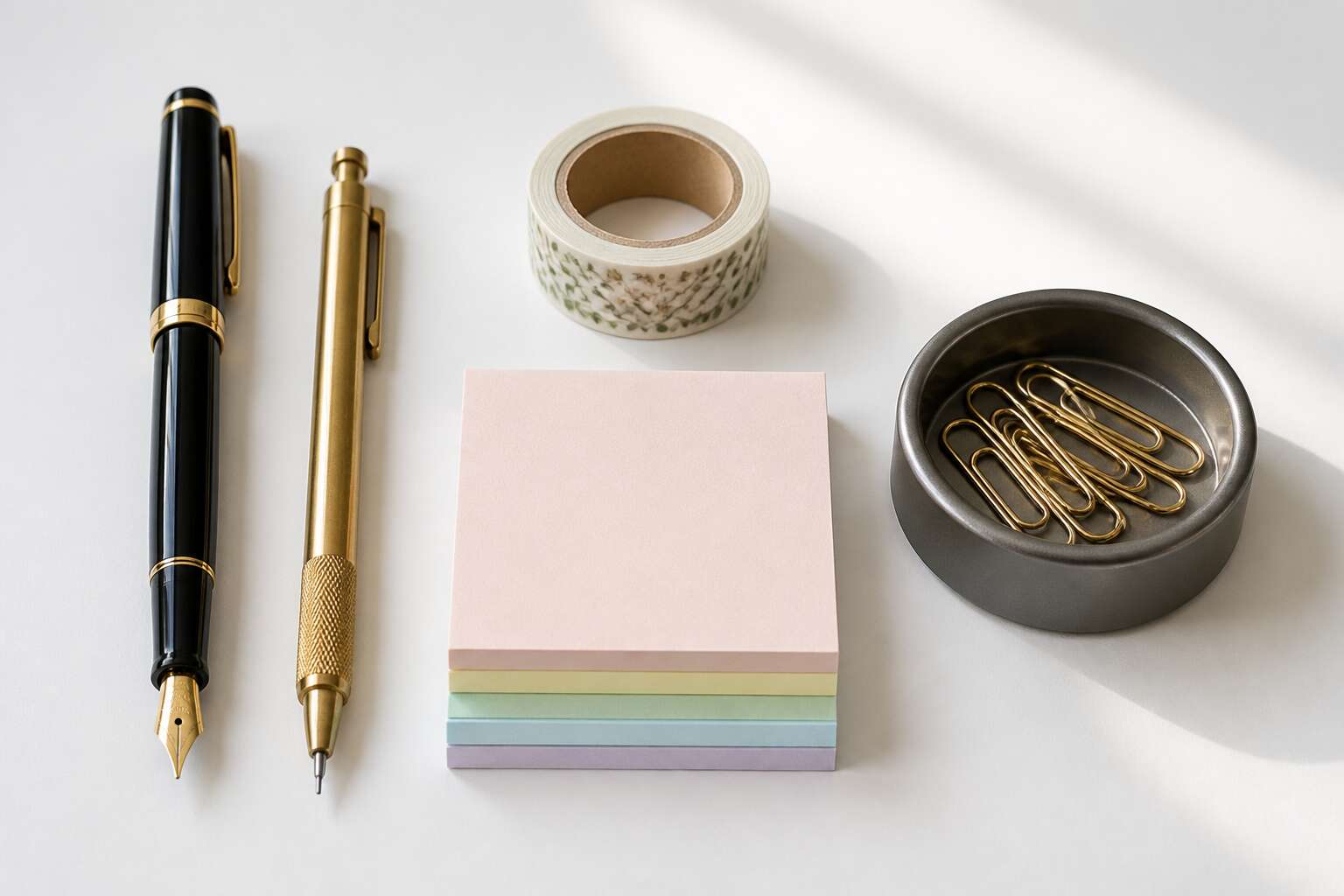
Essential Writing Instruments
Ballpoint Pens and Their Everyday Versatility
The quiet authority of a ballpoint pen is undeniable. In a country buzzing with digital pings and notifications, this humblest of tools remains a steadfast companion, ready to capture a signature or a sudden thought. Its everyday versatility spans the boardroom and the busy classroom, proving that traditional writing instruments hold their own in our high-speed world. There is a tactile satisfaction in the click and glide, a small moment of focus that a screen rarely offers.
For many, the ballpoint is the first tool of a daily ritual. It is the instrument for jotting down hours on a job card or annotating a dog-eared novel. Its oil based ink dries quickly, making it a reliable partner for left handed writers who often battle smudges. When you consider the spectrum of available options, the choices are practical and personal.
– The classic disposable biro for everyday economics.
– Refillable models with a heavier, more durable barrel.
– Multi pens that combine blue, black, and red ink in one body.
This adaptability makes the ballpoint a vital part of any list of 5 stationery items for the pragmatic professional. It does not demand the ceremony of a fountain pen or the precision of a technical pen. Instead, it offers a dependable immediacy. On a humid Durban afternoon, or in a frosty Johannesburg morning, the ballpoint performs without complaint, ensuring your words are never delayed by the weather or the mechanism. It is the silent workhorse of the modern desk, holding the power to sign agreements that shape destinies, one smooth stroke at a time.
Gel Pens for Smooth Ink Flow
Gel pens rival the ballpoint with a liquid ink supply. Their pigment based ink flows freely, leaving a dense, unbroken trail on almost any paper. I have used them for signing contracts and sketching margins, and the result is always the same: vivid lines that dry fast enough to avoid smudging.
The range is surprisingly broad:
- Bright pigmented gels for highlighted thoughts.
- Softer pastel tones for creative layouts.
- Quick drying formulas for left handed writers.
Each one relies on that same smooth mechanism. In our review of 5 stationery items, the gel pen offers the most consistent ink flow for daily use.
Graphite Pencils and Woodless Variants
Graphite pencils carry a raw, elemental presence. The conventional pencil wraps its core in cedar, while the woodless variant abandons the casing entirely, offering a solid rod of pigment for a denser, more immediate stroke. I have used both in studio work and field notes, and the difference is felt in the hand immediately.
Among the 5 stationery items in this review, the graphite pencil holds the most direct relationship with the hand. The woodless form is heavier, more deliberate, and it rewards pressure with an unbroken trail of dark mineral. The graded range dictates the character of every mark:
- 2B creates a soft, smudged line.
- HB sits neutral and controlled.
- 6B presses deep into the tooth of the page.
Each grade changes the texture, and the woodless variant amplifies that distinction.
Mechanical Pencils with Refillable Lead
The mechanical pencil runs cold in the hand. It does not whittle itself away with use. Its heart is a slender lead sleeve, a metal collar that holds the pigment steady while you press each mark into the page. There is no ritual of sharpening, only the small, deliberate click of the mechanism as you advance fresh lead.
Of the 5 stationery items in this review, the mechanical pencil is the one I trust to hold its line. Control replaces expression. The lead does not soften or surrender to pressure. Consider the standard sizes:
- 0.3mm cuts a hairline fit for marginalia.
- 0.5mm suits a steady, unbroken script.
- 0.7mm carries weight without drama.
- 0.9mm approaches the presence of a graphite stick.
Refillable lead means the instrument outlasts any single idea. You exhaust one length, you feed it another. The body remains. It endures beyond the thought that drove you!
Highlighters and Pastel Markers
The highlighter is the only tool in this collection that asks you to read twice. Once to see the words, once to decide which ones matter. In a working life filled with screens, a bright stroke of pigment still carries an irreplaceable weight.
Pastel markers feel different. Their dry, chalky finish softens the page and turns note-taking into a quieter act. I keep a set of six on my desk for weekly planning. The pale pink marks personal tasks, the mint green names deadlines, and the lavender handles anything uncertain.
- Fluorescent highlighters for dense legal texts and academic papers.
- Pastel markers for habit tracking and gentle category mapping.
- Water-based formulas that do not bleed through standard 80gsm paper.
Across these 5 stationery items, the highlighter and pastel marker occupy a distinct role. They do not create the message. They decide which message survives your own forgetfulness.
Paper Products That Stand the Test of Time
Spiral Notebooks and Notepads
Paper remains stubbornly relevant. While screens multiply and clouds fill up, the spiral notebook holds its place on desks from Sandton to Stellenbosch. The reasons are practical. Paper offers zero lag time, no battery anxiety, and it never interrupts you with a software update. A notepad captures a thought while the thought still exists. For many South Africans, flipping a page has replaced unlocking a phone.
These 5 stationery items, the spiral notebook and the notepad among them, carry real weight in any workspace. The distinct formats:
- A hardcover spiral notebook stores long form notes that survive years of use
- A pocket notepad keeps ideas accessible without a device
- A ruled A4 pad organises meeting notes into tidy rows
Each format serves a purpose that apps have not matched. No permissions, no syncing, no subscriptions. Just paper.
Sticky Notes for Quick Reminders
Sticky notes hold a strange kind of power. They are small, cheap, and slightly absurd in their simplicity. They connect memory to action. A stack costs less than a coffee, and one can turn a fleeting thought into a visible commitment.
Consider the South African office during load shedding. Screens go dark. Wifi drops. But that yellow square on your monitor still carries the morning’s priority. Among the 5 stationery items in a desk kit, sticky notes earn their place.
- They stick to any clean surface: walls, monitors, file folders.
- They come in dozens of colours for coding tasks.
- They peel off without leaving residue.
Sticky notes force honesty. When you write a reminder by hand, you cannot delete it with a swipe. You have to face it. Of these 5 stationery items, the sticky note is the only one you can reposition mid-thought without losing the thread.
Index Cards and Study Aids
In 1932, psychologist C.C. Guthrie used index cards to track conditioning in cats. The cards worked so well he wrote a book about it. Paper products like these endure because they enforce a specific discipline.
For study aids, index cards remain unmatched. You write one idea per side, then sort. The physical act of flipping and reordering builds memory. Screens cannot copy that. Among the 5 stationery items in a desk kit, index cards are the only ones that require physical sorting.
- Write prompts in blue, answers in black.
- Shuffle weekly to test long-term recall.
South African students feel this during load shedding. The laptop dies, but a stack of cards still works. No battery. No excuses. Just you and the pile.
Loose-Leaf Paper and Refills
The hole punch changed how we arrange our thoughts. Loose-leaf paper and refills let you remove a page, replace it, or move it elsewhere without tearing apart an entire notebook. That flexibility matters when meeting notes evolve into project plans. Among the 5 stationery items in a desk kit, this is the one that forgives mistakes.
South African offices stock refill pads by the box. A4, ruled, punched for standard binders. The paper waits in a drawer until needed. You write, file, retrieve. No wasted leaves. Students and administrators buy these in bulk, a habit that speaks to the format’s endurance.
Some prefer perforated edges. Others want reinforced holes. Both work. What remains is the format’s quiet logic: keep what matters, discard the rest, rearrange when the time calls.
Organization Tools for a Tidy Workspace
Folders and Expanding Files
Paperwork never stops arriving, and dust covers everything. Folders and expanding files bring order out of that sprawl. Their design needs no power and no charging!
I keep an expanding file with thirteen pockets for municipal statements. Each pocket has a label, so a January bill never hides inside May’s stack. A sturdy folder with prongs holds the active lease agreement. These two stationery tools work differently but serve the same purpose.
Among the 5 stationery items that support my daily work, this pair never fails.
Binder Clips and Paper Clips
A cluttered desk costs South African professionals hours each week. Binder clips and paper clips keep documents accessible without complex systems. I keep a jar of binder clips within arm’s reach. They grip thick stacks of contracts without tearing the paper. Paper clips slide off when you need them, leaving no permanent mark. For a tidy workspace, these two tools handle the daily shuffle of paperwork.
My approach is straightforward. Binder clips hold together active project files. Paper clips mark pages for quick reference. Neither requires electricity or charging. They work instantly, and they work quietly.
These tools are among the 5 stationery items that keep my office functioning. Without them, every task would start with a hunt for a lost document. That is the real cost of disorder.
Staplers and Staple Removers
Staplers and staple removers are the quiet arbiters of order in any office. A single staple converts a scattered pile of invoices into a coherent record. The remover, often ignored, grants the ability to correct errors without collateral damage. I have watched colleagues wrestle with bent staples, and the right tool makes all the difference.
My own workspace relies on these two implements daily. A sturdy stapler sits beside my keyboard, ready for contracts and reports. The remover stays in the drawer, waiting for the inevitable moment of revision. Together, they form part of the 5 stationery items that sustain my productivity. No charged battery is needed. No interface to learn. They simply work, and that is their enduring value.
Hole Punches and Binding Supplies
A tidy workspace depends on the tools that manage paper. Hole punches and binding supplies transform single sheets into durable documents. I prefer a lever-action punch for thicker stacks. Binding combs allow quick revisions while wire coils offer permanent holds.
- Lever hole punch
- Plastic comb binding
- Wire spiral coils
These organization tools form part of the 5 stationery items that keep my desk functional. They remove the chaos of loose paper. No cables or updates, just reliable mechanics. That is why they remain essential.
Desk Trays and Letter Racks
Desk trays and letter racks turn a cluttered surface into a controlled system. I use a stackable tray set to separate urgent papers from those that can wait. A slanted letter rack keeps envelopes within reach without burying my keyboard. These tools do not demand attention; they simply absorb the daily paper flow.
They deserve a place in the 5 stationery items that keep my workspace sane. The trays offer vertical storage, while the letter rack provides a dedicated landing spot for mail. Neither needs an update or a charge. That quiet reliability is why they persist.
- Stackable trays for layered sorting
- Letter racks with angled compartments
Once everything has a home, the desk stays visible and ready.
Desk Essentials for Precision and Repairs
Rulers and Measuring Tools
Precision work demands tools that measure true. A flimsy ruler slips mid-cut and ruins the job. Steel rulers hold their edge. They resist warping and give clean, straight lines when paired with a sharp craft knife.
For repairs and layout, a set square handles right angles, while a tape measure covers larger dimensions. Both earn their place next to a pencil.
- Steel ruler for straight cuts
- Set square for accurate angles
- Tape measure for broader measurements
These 5 stationery items, chosen properly, save time and material. Accuracy beats brand names every time. A compact kit of honest tools outworks a drawer full of unreliable gadgets.
Erasers, Correction Tape, and Fluid
Mistakes are not failures, they are edits. A single slip of a fountain pen can leave an ugly mark. That is where the trio of erasers, correction tape, and fluid proves essential. These three tools handle erasure and concealment, allowing a document to be corrected. A kneaded eraser lifts graphite without tearing paper fibres. Correction tape glides over ballpoint marks, drying instantly. Correction fluid covers stubborn smudges, though it requires patience.
For quick fixes, I keep all three within reach. Each serves a distinct purpose:
- Kneaded eraser for pencil smudges and light shading
- Correction tape for ink errors on clean paper
- Correction fluid for textured paper or dense marks
These 5 stationery items, when assembled with intention, reduce wasted sheets and preserve good work. A reliable set of correctors, alongside your ruler, ensures precision in measuring and mending.
Pencil Sharpeners, Manual and Electric
A dull pencil point ruins the cleanest line. In a workshop or a home office, a dependable sharpener is a quiet workhorse. Manual sharpeners offer a compact solution for quick touch-ups on the go. Electric models, however, save time when facing a pile of work. Both belong in the essential 5 stationery items for any precise task.
Here is how they differ:
1. Manual sharpeners need no power and fit in a pocket.
2. Electric sharpeners deliver a perfect point in seconds.
A sharp edge keeps measurements true and sketches accurate. Choose a model that matches your pace. A good sharpener respects the pencil, reducing breakage and waste.
Scissors and Cutting Blades
There is a particular silence in the act of cutting. It is the point where intention becomes division, and in the realm of the workshop, it is the only honest magic. A dull blade merely crushes; a sharp one decides. These instruments do not suggest, they sever. For the hands that restore and the eyes that measure, the cut line is the final verdict, a promise kept in the material.
The true artisan knows the blade’s temperament. Lightweight shears gliding through paper whisper, but a heavy pair of scissors, wielded with pressure, delivers a decisive snap. For the repair of cloth or the opening of stubborn packaging, the tool must feel balanced in the palm. Precision here is not a luxury, it is the difference between a clean seam and a frayed disaster.
– Heavy-duty scissors for fabric and thick cardstock
– A retractable craft knife for detailed work
– A self-healing mat to protect the surface beneath
This particular collection of 5 stationery items proves its worth in the repair. When a strap snaps or a box resists, the response is a swift, clean slice. The blade requires respect and routine care, a wipe of the edge and a secure place to rest. In the quiet of the office, the sound of its action is a small, satisfying click. It prepares the line from the pencil and the measure from the ruler, giving them a final, unalterable form.
Adhesive Tapes and Glue Sticks
A blade separates; a strip of tape binds. The scissors make the clean edge, and then the adhesive takes over, pulling torn pieces back into a usable whole. In any working desk, the 5 stationery items prove themselves in repair. A glue stick answers a ripped page with a smooth, silent pass. A roll of adhesive tape handles the heavier task, sealing a split cover or holding a detached hinge in place.
On a farm office desk, these quiet materials earn their keep. A repaired ledger survives the season. A labeled jar keeps its identity through harvest. Repairs made with the right tape and glue hold firm.
- Double-sided tape for mounting notices and photos
- Acid-free glue sticks that will not yellow a page
- Masking tape for temporary holds and painted lines
Within the 5 stationery items listed in this guide, the adhesives are the ones that return order to a scattered workspace.
Rubber Bands and Fastening Aids
Rubber bands often sit forgotten in a drawer. Yet they are among the most reliable 5 stationery items for quick fixes. They grip rolled plans, hold fabric swatches, and keep a split folder from spilling. For precision, a thin band can act as a temporary marker on a ruler. For repairs, a band stretched around a cracked pen grip gives new life.
Fastening aids go beyond the familiar clip. Brass fasteners punch through paper and spread their legs to hold reports. Treasury tags thread through holes and cinch bundles. Binder rings offer a reusable way to group documents without a hole punch. These small tools let you rearrange, remove, or replace pages in seconds.
- Keep a band around a notepad to stop pages from catching.
- Use a brass fastener to secure a loose map to a display board.
- Thread a treasury tag through a set of invoices for a temporary record.
The 5 stationery items that include rubber bands and fastening aids earn their space on any desk. They bring order without noise or electricity.
Creative and Specialty Stationery Add-Ons
Washi Tape and Decorative Trims
A roll of washi tape costs less than a cappuccino, yet it can transform a plain folder into something worth noticing. This Japanese paper tape is gentle, removable, and kind to most surfaces. Decorative trims add texture, with woven edges or subtle sheen, for those who prefer a bolder statement.
In a shared workspace, manners matter. Using these add-ons to mark your own notebooks, without defacing company property, shows consideration. A neat strip along the spine signals order. A patterned trim on a divider suggests care.
In any well considered set of 5 stationery items, washi tape deserves a place. Its modest price and cheerful patterns suit it to labelling, sealing, and adding character to a desk that might otherwise remain rather plain.
Rubber Stamps and Ink Pads
Rubber stamps and ink pads carry a tactile ritual that typing cannot match. A steady press, a careful lift, and the paper holds a permanent statement. This is why artists, small business owners, and office managers still keep them close. In South Africa, postal services and courier offices accept hand-stamped return addresses without hesitation.
Ink pads divide into two families. Dye inks dry fast and work on ordinary paper. Pigment inks stay wet longer, producing a denser colour that resists fading. For everyday desk use, a dye pad with a wooden stamp is dependable.
- Select a stamp that matches your daily tasks, such as a date stamp or a small motif
- Keep the pad face down in a sealed container when idle
- Clean the stamp surface with a damp cloth after heavy use
These accessories deserve a place in any 5 stationery items collection because they bridge function and personality.
Calligraphy Pens and Brush Lettering Sets
Calligraphy pens and brush lettering sets deliver something keyboards erase: deliberate, human line work. A flexible nib responds to pressure, widening strokes where you press harder and thinning them where you ease off. The effect is immediate and unforgiving, which is exactly why it draws attention.
In South Africa, craft markets and wedding stationers rely on these tools for envelopes, place cards, and signage. Brush pens bridge the gap between casual writing and formal script, making them accessible even if you never studied calligraphy.
A complete set usually includes:
- Nib holders with several tip widths
- A straight pen for broad strokes
- A pointed pen for fine detail
These add-ons expand any 5 stationery items collection because they turn routine correspondence into something worth keeping.
Stickers, Labels, and Washi Sticker Packs
Stickers, labels, and washi sticker packs shift correspondence from ordinary to memorable. In South Africa, small businesses use custom die-cut labels to seal kraft parcels and coffee bags. Stationery collectors trade imported washi rolls online. A single adhesive sheet can transform a plain notebook cover into a personalised keepsake.
These add-ons serve decorative and practical purposes. Labels keep pantry jars identifiable in Cape Town homes. Washi tape marks document sections without damaging paper. Sticker packs provide a visual index for bullet journals. They all slot into a broader 5 stationery items setup.
A considered starter assortment might include:
- Matte paper labels for addressing wedding invitations
- Washi sticker packs in geometric or botanical patterns
- Foil-stamped decals for gift wrapping
The tactile quality of a sticker, its peel, placement, and press, adds a finishing layer that pens and paper cannot produce alone. A 5 stationery items collection with these pieces gains texture, colour, and surprise.

0 Comments