
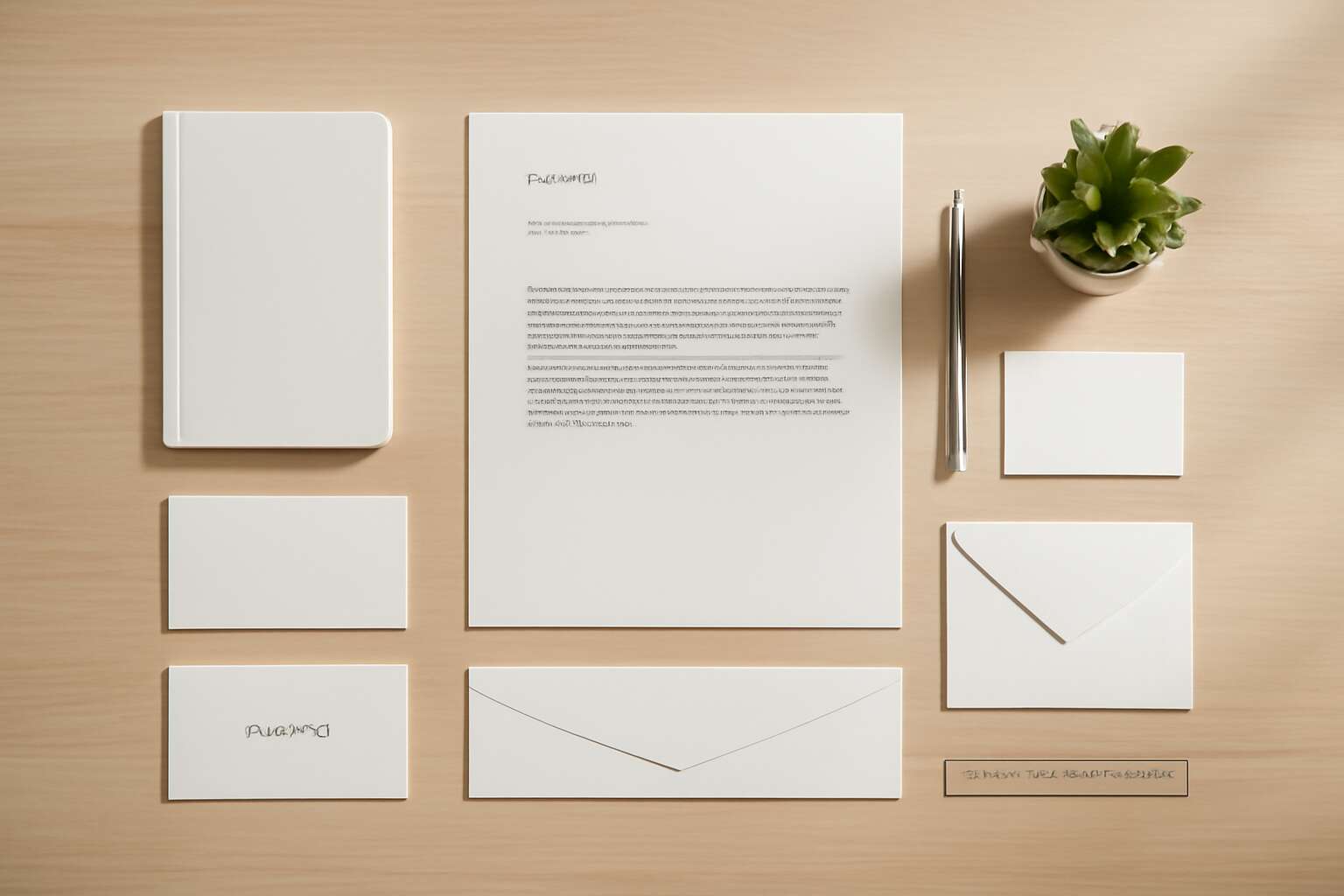
Foundations of stationery design visuals
What is a design mockup for stationery
In three seconds, a first impression is formed, and stationery is the frame that holds it. In South Africa’s diverse business landscape, a thoughtful layout can turn a simple card into a lasting handshake! A well-tuned design starts with a clear identity, and a stationery mockup lets you preview how typography, color, and paper choices speak before ink ever hits stock.
Foundations of stationery design visuals hinge on balance and readability. The essentials you test in a mockup include tactile weight, color consistency, and typographic hierarchy that stays legible from a distance.
- Paper stock and finish
- Color palette and contrast
- Typography and hierarchy
- Layout, margins, and alignment
When these elements align in a mockup, the brand feels deliberate rather than accidental, a quiet badge of credibility in every envelope and card.
Why use digital previews for branding
In South Africa’s bustling business scene, first impressions are formed in three seconds, a moment that can steer deals or disappoint. A well-made stationery mockup lets you preview typography, color, and paper choices before ink ever hits stock, turning a simple card into a confident handshake.
Foundations of stationery design visuals hinge on balance and readability. Digital previews reveal how tactile weight, color consistency, and typographic hierarchy perform at a glance, ensuring your brand feels deliberate, not accidental.
- Consistency across cards, envelopes, and branded touchpoints
- Rapid iteration cycles that suit local teams
- Clear typographic rhythm that remains legible from a distance
- Cost-effective testing that catches issues before production
By embracing digital previews, brands in SA can align every print piece with their identity—from the envelope liner to the corner of a card—before a single sheet leaves the printer.
Common formats and templates for stationery previews
Foundations of stationery design visuals hinge on balance, readability, and tactile rhythm. A crisp stationery mockup lets you test how typography, color, and margins behave in real light and in real hands, so your brand’s voice stays deliberate even before ink hits stock.
To preview these foundations in action, here are the common formats and templates for stationery previews:
- Business cards (front and back) with typographic hierarchy and consistent color
- Letterheads and mastheads that reveal margins, line length, and logo treatment
- Envelope designs (outer stock, inner liner, address block) for alignment checks
- Notepads, sticky notes, and compliment slips to test rhythm across desk touchpoints
Templates let South African brands swap papers, ink densities, and finishes without a single sheet wasted. A well-crafted stationery mockup clarifies how the brand travels from envelope to corner of a card, ensuring legibility from a distance and cohesion across pieces.
Key terminology for product previews
In South Africa’s branding landscape, a well-made statistic hums in the background: studies show that professional stationery can lift perceived credibility by up to 40%. Foundations of stationery design visuals orient the brand’s voice toward balance, readability, and tactile rhythm, letting real light and real hands reveal truth before ink ever meets stock.
Foundations of stationery design visuals are not abstract; they are the map for product previews. Key terms—typography hierarchy, color density, margins, and logo treatment—shape how a brand travels from envelope to card corner.
- Typography hierarchy
- Color density
- Margin rhythm
- Logo treatment
A stationery mockup makes these terms concrete: swap papers, adjust ink, and test legibility at distance. The format is gentle and exact, guiding decisions with elegance and grit, so every piece speaks in one cohesive voice!
Choosing and sourcing mock assets
Free versus premium mockup collections
First impressions form in seven seconds, and a well-lit, thoughtfully styled stationery mockup can do more than turn heads—it can tell your story before a client reads a single line.
Choosing between free and premium mockup collections hinges on licensing, realism, and color fidelity. Consider these factors:
- Free collections offer breadth but license restrictions and variable quality.
- Premium sets deliver consistent lighting, texture fidelity, and clear commercial licenses.
- Check compatibility with your design software and color profiles to keep the stationery mockup true to life.
In South Africa’s design scene, value, timing, and storytelling converge when selecting assets—your choices shape how brands feel to local audiences.
Assessing realism and resolution
Seven seconds—that’s all a client needs to size up your pitch. The right visuals do more than look sleek; they whisper your story before a single line is read. A well-lit stationery mockup can carry tone and intent into the room.
In South Africa’s crowded design scene, sourcing assets means balancing mood with practicality. I assess realism and resolution like a jeweler checking facets: does the linen texture read? Do shadows align with a chosen color profile? I chase fidelity that travels from screen to print.
- Resolution that holds up in a stationery mockup at print sizes and zooms
- Realism of lighting, texture, and subtle embossing
- Clear licenses and usage rights for commercial work
From Cape Town to Joburg, local brands crave clarity and warmth. When assets are chosen with care, the branding feels inevitable—confident, ready to resonate with South African audiences.
Licensing and usage rights for mockups
In the SA design trenches, a crisp stationery mockup is a pitch accelerator. A glance at a header card cues tone faster than a thousand words. I treat asset selection like a jewel-hunt: does the linen read, do shadows align, does the embossing whisper? The right stationery mockup travels from screen to print with fidelity.
Licensing and usage rights are the quiet backbone. Without clear permissions, a confident mood can collapse in print. I demand licenses that cover commercial work, defined uses, and any limits on redistribution—because a brand in Cape Town won’t be judged by flair alone.
Licensing terms—commercial use, attribution, redistribution—shape the project as much as mood.
From Cape Town to Joburg, right assets align with warmth and clarity, letting brands speak South African volumes without shouting. Thoughtful sourcing makes the stationery mockup feel inevitable—confident, ready to resonate with local audiences.
Where to discover reputable providers
In the branding trenches, a crisp stationery mockup can decide a deal before the ink dries. The linen reads true, shadows align, and the emboss whispers—it’s a quiet, almost supernatural signal that cuts through clutter and sets the mood in a heartbeat.
Where to discover reputable providers? Start with trusted design marketplaces and SA-focused studios that offer licensing transparency and print-ready fidelity. Look for high resolution, accurate colour profiles, and samples that match your print workflow. Consider these sources:
- South African design studios with clear licensing
- Reputable global mockup libraries and vendors
- Indie asset shops offering reliable support
From Cape Town to Joburg, the right asset makes the moment inevitable—confident, locally resonant, and ready to translate from screen to print without drama.
Designing realistic previews
Templates and layout strategies for stationery
Across South Africa’s rural towns, a single image can shape trust in seconds. A well-crafted stationery mockup makes paper texture and ink depth feel real, not digital. It bridges idea and feeling, especially for local makers who pour heart into every line and fold.
Templates and layout strategies matter for both farmer-turned-designer and city studio. Use formats that mirror real products—letterhead, cards, and envelopes—on a clean grid with consistent margins. Pair honest typography with restrained colour and believable shadows so the scene reads well at any size.
Consider these layout priorities:
- Grid alignment guides the eye smoothly
- Texture layering suggests weight and finish
- Realistic lighting avoids harsh glare
- Brand colours stay harmonious across items
Authenticity travels from screen to print.
Lighting, shadows, and perspective considerations
Across South Africa’s rural desks, first impressions are made in less than a heartbeat—62% of viewers decide within half a second when they glimpse a brand. A realistic stationery mockup isn’t vanity; it’s the doorway from idea to feeling. Lighting should mirror real conditions: gentle, directional light that reveals texture and ink depth without washing color away.
Consider these details for lighting, shadows, and perspective:
- Direction and falloff match the scene—soft morning sun, friendly tone
- Shadow depth grounds the paper and ink without harsh halos
- Perspective stays consistent across items to avoid a floaty look
Done well, the preview invites touch and trust—the texture layering and believable shadows speak to the hands that craft at home and in town. For local makers who pour heart into every line and fold, a carefully lit stationery mockup translates care into perception, from screen to print, with clarity and grace.
Color accuracy and brand alignment
Across a quiet South African desk, a stationery mockup becomes a whisper of your brand’s future. With 62% of viewers deciding in under half a second, color accuracy and brand alignment must speak first—ink depth, texture, and tone harmonizing at dawn-lit clarity.
To harmonize accuracy with alignment, consider these elements:
- Color space consistency across print and web
- Calibrated profiles to reduce drift
- Soft proofing for ink and paper feel
- Brand guidelines reflected in typography and logos
- Texture and light maintain legibility
When the preview lands, the stationery mockup carries the story with quiet authority—screen to print, in balance and grace.
Typography legibility in previews
In a split second, 62% of viewers decide—so typography must win the moment. On a quiet South African desk, letters become the first handshake of brand storytelling, longer before color or texture reveals itself.
Designing realistic previews means typography legibility across screens and prints. Choose sturdy typefaces, tune kerning, and set leading to breathe; simulate ink depth and paper tone under dawn light to preserve intent from screen to card, envelope, and memo.
- Characters stay readable at small sizes on business cards and envelopes
- Line length and rhythm hold when paper stock shifts
When the preview lands, the stationery mockup carries a quiet authority, a bridge from screen to print that keeps the brand honest.
Branding across different stationery types
First impressions land in a split second, and a sharp stationery mockup can seal the moment. In South Africa’s daylight-lit studios, the first handshake of brand storytelling happens in the margins, long before color or texture reveal themselves.
Designing realistic previews across different stationery types means typography, leading, and substrate cues travel intact. Every line length and ink depth should breathe as if the sheet were already in dawn light, preserving intent from screen to card, envelope, and memo.
- Business cards
- Letterheads
- Envelopes
- Notepads
- Folders
When the preview lands, the brand carries quiet authority—a bridge from screen to print that keeps the identity honest across textures and formats.
Optimizing mockups for SEO and marketing
File optimization for web and social sharing
Visuals conquer the scroll: a recent study revealed that articles with strong imagery increase shareable engagement by up to 94%. In the realm of stationery, a well-crafted stationery mockup becomes a beacon—drawing buyers, editors, and clients into your brand’s story.
To optimize for SEO and marketing, align file naming, alt text, and compression with your brand narrative. A nimble mockup loads quickly on mobile, travels smoothly across social feeds, and whispers the right keywords to search engines without shouting them.
- Use clear, brand-led file names that reflect the scene
- Craft alt text that describes the arrangement and mood
- Choose web-friendly formats that preserve detail while staying light
Guardians of visibility know that metadata and social tags expand reach; meta descriptions, Open Graph, and consistent color space keep your stationery mockup true to the original. In the hands of SA audiences, beauty and clarity travel far.
Alt text, captions, and on-page SEO practices
Images cut through the noise, and studies show visuals lift shareable engagement by up to 94%. In the realm of stationery mockup, your visuals become a beacon—drawing buyers, editors, and clients into your brand’s story. To optimize for SEO and marketing, align file naming, alt text, and captions with your brand narrative, and choose web-friendly formats that preserve detail while staying light.
- Alt text describes the arrangement and mood
- Captions translate brand story into observable detail
- On-page metadata and Open Graph tags reinforce reach
Guard color fidelity across devices and feeds; metadata and social tags keep your work faithful to the original, resonating with South Africa’s audiences where clarity travels far.
Showcasing in portfolios and case studies
Visuals lift shareable engagement by up to 94%, and in stationery mockup storytelling that first glance is your brand’s handshake. Optimizing for SEO and marketing means weaving naming, metadata, and social-sharing cues into a single brand narrative, while keeping file sizes friendly and color fidelity intact.
Showcasing in portfolios and case studies is where the magic travels. Let each piece tell a mini story—context, challenge, and the metrics your client cares about—without drowning in jargon.
- Contextual storytelling that aligns with your brand
- Metrics-forward narratives hinting at outcomes
- Brand-consistent visuals across stationery types
For South Africa’s audiences, crisp visuals travel far; local color sensibilities and straightforward typography win the day across web and social feeds.
A/B testing and analytics for image performance
Images in digital corridors speak first. A stationery mockup acts as a candle amid the clutter, guiding eyes toward brand truth. When framed with speed, clarity, and color intention, it becomes a beacon for SEO and storytelling, turning impressions into intention and data into action!
To harvest this power, treat every mockup as a testbed for performance. A/B test the main shot, thumbnail, and a lifestyle variant to reveal which framing earns clicks and trust.
- Load time and display consistency
- Color accuracy across devices
- Background context and branding cues
For South Africa’s feeds, crisp visuals and direct typography win the day; lean file sizes keep pace on mobile, and it travels further, faster.
0 Comments