
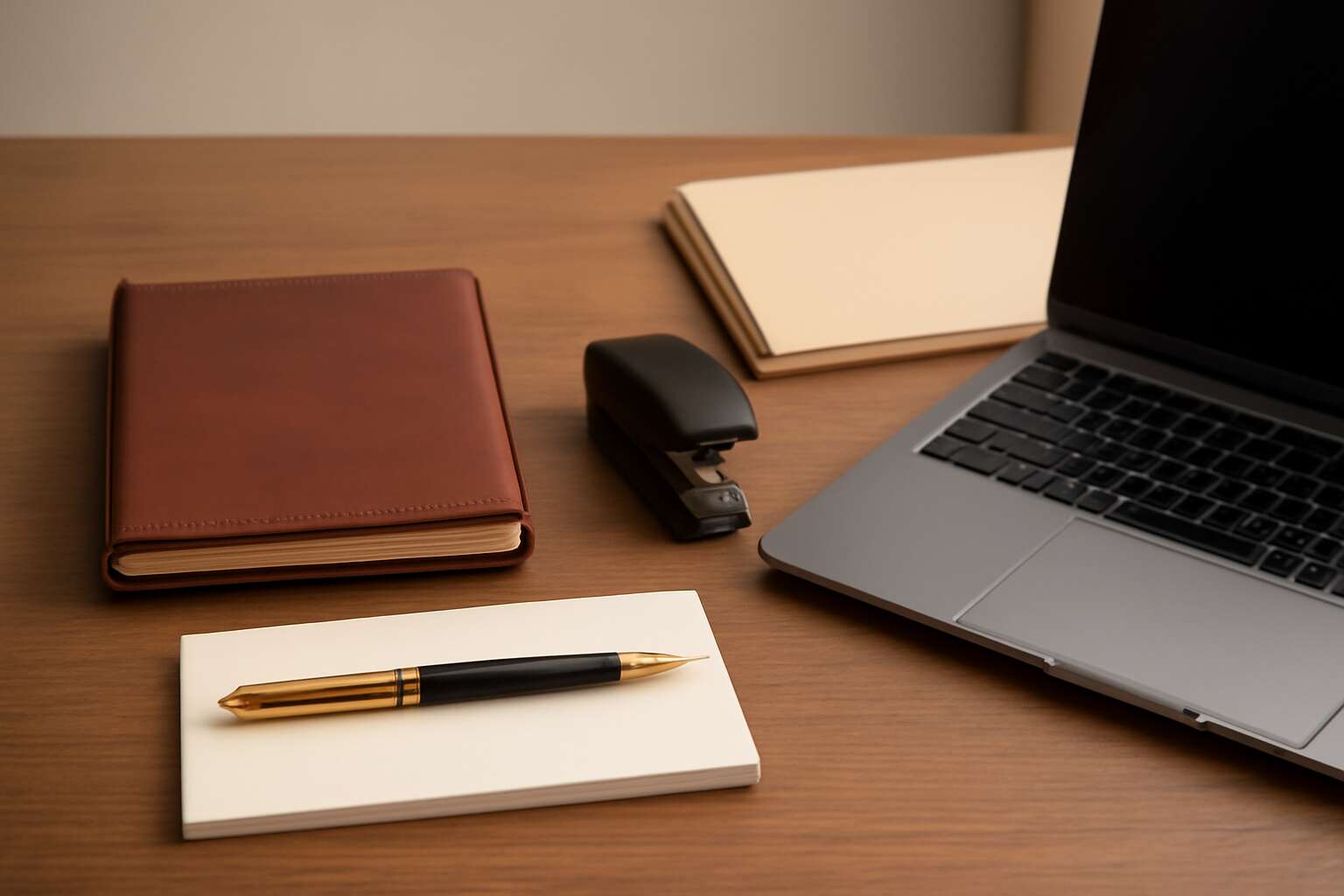
Business stationery essentials and trends
Overview of stationery categories for business communications
In the realm of business, the right stationery for business quietly stamps your intent before you speak. A crisp letterhead, a tactile notebook, a sealed envelope—these are not mere tools but promises in ink. A South African founder once said, “First impressions are inked in margins,” and I’ve seen that to be true in every pitch.
Trends converge on sustainability, smart branding, and tactile luxury. The core categories for business communications include letterheads, envelopes, notepads, business cards, presentation folders, and desk accessories, all designed to harmonize with your brand and environment.
- Branded business cards
- Letterheads and envelopes
- Presentation folders
I’ve watched teams respond to well-branded paper with more confident conversations. Quality stationery becomes a quiet advocate for your professionalism, a mirror in an age of rapid digital messages. In SA markets, that care is noticed—and it matters!
Brand identity and the role of stationery
Two seconds to impress—it’s enough time for a reader to sense your story in the grain of the paper. In South Africa, tangible stationery still outpaces buzzwords in the room, and that truth guides every pitch.
Brand identity isn’t merely a logo; it’s the texture, type, and tone carried by your stationery for business. When color, typography, and finish align with your brand, the message lands with confidence.
- Color palette that matches your brand
- Typography with legibility and character
- Finish and weight that convey quality
Trends lean into sustainability, smart branding, and tactile luxury—recycled stock, soy inks, debossing, and premium textures. These cues whisper credibility to SA clients and partners.
A cohesive suite of stationery for business becomes a silent partner in negotiations.
Quality indicators for professional paper and envelopes
Paper is a sentry in SA boardrooms—a quiet, decisive presence. The grain of your stock can outlive the buzz of emails, and a well-chosen letterhead speaks before you do. In the realm of stationery for business, texture, weight, and finish carry your brand’s voice with measured, confident gravity.
- Paper weight: 90–120 gsm for letterheads; 110–170 gsm for envelopes
- Finish and brightness: matte, laid, or linen with appropriate contrast to your inks
- Materials: acid-free, archival quality, recycled content, soy inks
Trends whisper of sustainability and tactile luxury: recycled stock, soy inks, debossing, and premium textures. When color, typography, and finish align with your story, a cohesive stationery suite becomes a silent partner in negotiations across SA markets.
Common pitfalls in selecting business stationery
In the theatre of commerce, business stationery essentials for South Africa go beyond aesthetics. A well-curated suite speaks in a single voice—letterheads, envelopes, and presentation sheets that carry brand authority with quiet precision. Trends are whispering of sustainability and tactile luxury: recycled stock, soy inks, and debossing or premium textures that reward hands as well as eyes. When color, typography, and finish align with your story, every page and envelope becomes a confident handshake in meetings across SA markets.
- Overloading designs with color or busy typography that clash with ink legibility
- Choosing premium looks without validating archival quality or ink compatibility
- Underestimating lead times or supplier reliability during peak cycles
For stationery for business, coherence across touchpoints matters. Seek suppliers who understand local printing realities—lead times, stockholding, and the cadence of approvals. With careful selection, the suite becomes a quiet diplomat, guiding conversations and sealing trust long after the first impression.
Choosing paper stock, inks, and formats for professional communication
Paper stock options and finishes
First impressions travel fast, and 72% of executives decide a brand’s trust the moment a page is touched. That is the power of stationery for business—a tactile handshake from boardroom to kitchen table.
Paper stock options span smooth uncoated, textured cotton, and recycled kraft. Weight matters: 90–120 gsm for letters; 180–300 gsm for headers. Finishes—matte, eggshell, or laid—alter readability and tone; in South Africa, FSC-certified options support stewardship.
- Weight, opacity, and how it feels in hand—preserve legibility with presence.
- Finish and texture—matte for readability, laid for subtle prestige.
- Ink compatibility and color fidelity—pigment inks for longevity, dye inks for vivid imagery.
Formats for professional communication pair well with the right ink and layout, crafting letterheads, envelopes, and notepads that speak calmly and clearly—like a reliable rural voice carried across desks.
Printer compatibility and file formats for print-ready collateral
“A page you touch is a handshake with your brand,” a designer once told me. The proverb clings to paper as it travels from desk to desk, turning first impressions into lasting trust.
Choosing paper stock becomes a quiet act of faith for stationery for business—weight, opacity, and finish shape legibility and tone. Inks, too, decide longevity and mood, while formats determine how your message travels on press or screen.
- PDF/X-4 for print-ready documents
- CMYK color profiles with embedded fonts
- Vector logos in EPS or PDF
Printer compatibility and file formats align with your brand cadence, ensuring letters, envelopes, and notepads retain clarity across South Africa’s diverse printing environments.
Designing business cards and letterhead templates
A compelling first impression travels on the surface of a card. In South Africa’s bustling business corridors, a well-made business card and letterhead speak before the email arrives. The craft of stationery for business becomes a silent ambassador, shaping trust with every touch and imprint.
Choosing paper stock becomes a quiet act of faith: weight, opacity, and finish shape legibility and tone. Inks decide longevity and mood—rich velvet blacks or bright, focused color—while formats determine how the message travels on press or screen.
- Weight and opacity relative to print method
- Finish options: matte, satin, or textured
- Sustainability: recycled or FSC-certified stocks
Your stationery for business templates anchor your cadence: a logo alignment, a confident margin, and typography that remains legible across devices and papers. The format you choose—whether a compact card or a generous letterhead—must harmonize with digital touchpoints and in-person negotiations, keeping the message unmistakably yours.
Notebooks, folders, and envelopes for corporate use
Two-thirds of first impressions fade in seven seconds, and in South Africa’s boardrooms, stationery for business still seals the deal before a word is spoken. Choosing paper stock, inks, and formats governs tone as surely as a voice does.
- Weight and opacity relative to print method
- Finish options: matte, satin, or textured
- Sustainability: recycled or FSC-certified stocks
For Notebooks, folders, and envelopes for corporate use, formats must travel well—from client proposals to boardroom binders—while preserving legibility across devices and surfaces.
Eco-friendly materials and sustainability certifications
Two-thirds of first impressions fade in seven seconds, yet a well-chosen sheet can outlast a handshake. Choosing paper stock, inks, and formats for professional communication shapes tone before a word is spoken.
Eco-friendly materials and sustainability certifications aren’t window dressing—they signal integrity in South Africa’s boardrooms. Favor recycled or FSC-certified stocks and low-VOC inks to align with responsible business.
- FSC-certified stock
- Recycled fibre content
- Vegetable-based inks (soy or corn)
- Water-based finishes and coatings
This approach reinforces stationery for business, keeping boards and proposals legible from meeting rooms to inboxes.
Weight and opacity, chosen with print method in mind, and finishes—from matte to textured—shape tone without distraction, ensuring professional communication travels smoothly across formats.
Brand consistency through corporate stationery
Logo usage and color management on stationery
Brand consistency isn’t optional—it’s 80% more recognizable across markets. When logos appear in the same size, margin, and color on every item, that consistency translates into trust. Logo usage and color management on stationery safeguard a single voice for your brand, whether in emails, envelopes, or notepads. That is the power of stationery for business.
As clients flick through a folder or open a branded notebook, your identity should feel effortless, not decorative. The look travels with every page, shaping perception and credibility across South Africa’s business landscape.
Typography and layout guidelines for consistency
Brand consistency through corporate stationery is the quiet grammar of trust. A disciplined typographic system acts as a metronome, guiding eyes across envelopes, notepads, and forms. The rule is simple: a primary typeface for headlines and a secondary for body, with fixed sizes and respectful leading. When the grid governs margins and line lengths, the eye travels with ease and messages land with clarity. For stationery for business, this typography becomes a single voice across South Africa’s markets.
- Adopt a two-font system for headings and body, ensuring consistent weights.
- Lock typography to a modular grid with uniform margins and line lengths.
- Maintain precise leading, tracking, and kerning to preserve legibility and rhythm.
Across South Africa’s diverse business landscape, legible typography travels with every page, shaping credibility without shouting. In other words, it becomes a quiet ambassador.
Templates and kit assembly for departments
Brand consistency is the quiet handshake that travels from desk to desk, a measure of trust as tangible as ink on a page. In corporate stationery templates, and through disciplined kit assembly for departments, the message stays unmistakably coherent across every touchpoint.
When brands invest in the right kits, every department speaks with one voice. A well-curated template set and its accompanying assets reduce noise and preserve credibility. In the realm of stationery for business, precision in layout and color keeps momentum steady, even across South Africa’s diverse markets.
- Brand-approved letterheads, envelopes, and business cards that share a single rhythm
- Department-specific folders, notepads, and templates for internal memos
- Digital brand assets packaged for print and presentation use
Ultimately, this approach is a living promise—elegant, efficient, and unmistakably yours.
Procurement, budgeting, and operations of stationery programs
Sourcing strategies: suppliers, bulk discounts, and negotiations
Procurement is the quiet engine of an efficient office. A clean plan, realistic budgeting, and steady operations turn stationery into a backbone of daily work. Across South Africa, many firms watch budgets drift when orders arrive late or duplicate shipments. That’s why a disciplined program matters for stationery for business.
Key sourcing strategies keep costs honest. Consider suppliers, bulk discounts, and negotiations that reflect total value, not headline prices.
- Reliable supplier relationships with consistent quality
- Volume-driven discounts and reordering security
- Transparent, outcome-focused negotiations
Operations then knit procurement into policy, inventory, and approvals, ensuring consistency across departments and brands.
Pricing models and total cost of ownership for office stationery
One late order can stall a boardroom deadline. In SA offices, procurement now means pricing models that reflect true value, not just headline prices. Stationery for business relies on budgets that are watched, reviewed, and adjusted daily.
Budgeting anchors operations. A central budget with clear approvals keeps departments aligned and avoids overstock and waste. A simple, consistent total cost of ownership view helps compare ink, paper, and staples across brands, capturing the true cost of ownership beyond unit price. That’s the point!
- Transparent pricing and reordering costs
- Vendor-managed inventory options
- Lifecycle cost tracking across brands
Operations knit procurement into policy: standardized approvals, inventory thresholds, and routine audits. These steps keep cost predictable and the stationery program audit-friendly across South Africa’s offices.
Lead times, proofs, and approval workflows
South African offices are waking up to the fact that procurement is about value, not simply headline prices. Nearly a quarter of stationery orders stall because proofs and approvals lag, turning a routine reprint into a boardroom cliffhanger. That’s the drama behind stationery for business.
Budgeting anchors operations. A central budget with clear approvals keeps departments aligned and avoids overstock and waste. Lead times, proofs, and approval workflows shape predictable delivery across all SKUs used in daily business. I’ve seen this approach turn frantic reorder emails into quiet, orderly shipments!
- Lead times are standardized across categories
- Proofs go through versioned approvals with traceable timestamps
- Reorder workflows trigger alerts at inventory thresholds
Operations knit procurement into policy with routine audits, ensuring a transparent, audit-friendly workflow across South Africa’s offices.
Inventory management and reordering processes
In the quiet hum of a busy office, procurement becomes a patient curator of value. Budgeting anchors operations, a central fund that keeps departments singing in harmony. In stationery for business, disciplined spend turns routine restocks into predictable rhythm, and quiet, orderly shipments replace daily scramble.
- Inventory threshold alerts that trigger automatic reorders
- Versioned, timestamped approvals for every reorder
- Regular audits that map spend to the central budget across South Africa’s offices
Inventory management and reordering become an invisible spine, supporting every desk, every meeting, and every signature in the South African corporate landscape.
Compliance and regulatory considerations in correspondence
Strategic procurement in South Africa’s offices trades volume for tempo. A seasoned voice once said, ‘Compliance is not a gate—it’s the foundation.’ That truth threads through every stationery for business decision, keeping meetings punctual and signatures flowing.
Procurement, budgeting, and the operations of stationery programs hinge on clarity: a single central spend, transparent approvals, and real-time visibility across locations. Budgeting anchors cadence, aligning spend with department needs and corporate goals, turning replenishments into dependable throughput while guarding budget creep.
- POPIA compliance for data handling in supplier contracts
- BBBEE and ethical supplier selection for procurement
- Tax invoices, VAT, and auditable receipts for finance and governance
Compliance and regulatory considerations in correspondence demand vigilance. Secure data handling, auditable trails, and proper documentation transform everyday mail into governance instruments amid audits and legal requests.
Sustainability practices from procurement to disposal
Procurement, budgeting, and the everyday dance of stationery programs hinge on clarity: a single central spend, transparent approvals, and real-time visibility across locations. With such discipline, replenishments align with department needs and corporate goals, turning orders into a steady throughput while defending the budget from creep. Sustainable procurement becomes a baseline—favoring recycled paper, durable goods, and local suppliers to cut transport emissions while keeping offices well stocked. In this way, stationery for business becomes a quiet engine of efficiency and responsibility.
From procurement to disposal, sustainability guides every choice. Small shifts add up—prefer durable, repairable items, arrange recycling stations, and track packaging waste across sites!
- Sustainable sourcing and supplier due diligence
- On-site recycling programs and responsible disposal
- Lifecycle tracking and returnable packaging

0 Comments