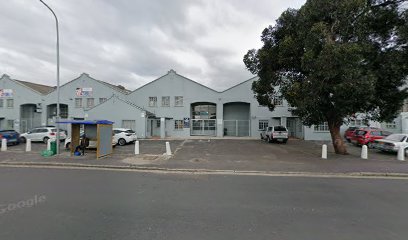
Label and Print Technologies is a Custom label printer establishment in Cape Town, Western Cape, South Africa
Label and Print Technologies: Expert Self-Adhesive Solutions in Cape Town
Label and Print Technologies (LPT) presents itself as a specialist supplier focused on self-adhesive solutions, offering a broad range of products and services tailored to the needs of businesses requiring durable labels and reliable printing equipment. Operating from Cape Town, Western Cape, the company emphasises fast lead times, friendly service, and a willingness to support customers from startup status through to established blue-chip operations. The core offerings centre on full colour digital and flexo label printing, thermal transfer printers, and blank labels and ribbons compatible with thermal printing technology.
The business highlights an award-winning reputation and a track record spanning more than two decades. Its portfolio includes:
- Full colour digital and flexo printed self-adhesive labels
- Thermal transfer printers, notably Argox and Godex brands
- Premium quality thermal transfer ribbons and blank labels manufactured in Cape Town
Industry reach is multi-sectoral, spanning wine, spices, retail, manufacturing, fish, cosmetics, coffee, tea, packaging, textiles, nuts, pets and dairy. This diversity is presented as evidence of capability to handle varied label requirements and volumes, with a positioning that blends competitive pricing with responsive sales and support.
Customer experience is framed by several practical touchpoints. A dedicated demo room is available for prospective buyers to view printers and printed labels, enabling informed decision-making before purchase. Support is described as friendly and readily accessible, with technical assistance for both printers and consumables. The company promotes direct communication channels, emphasising human interaction via WhatsApp for quick responses, which suggests a commitment to prompt, personalised service rather than automated messaging.
Service and product workflows are described through explicit lead times and project options. The stated turnaround times are:
- Blank labels: 3–5 working days
- Digital printed full-colour labels: 1–3 working days
- Flexo printed full-colour labels: 6–8 working days
- Print bureau (1-colour black, thermal transfer): 1–3 working days
- Ribbon supply: same-day
For small-scale or startup customers, LPT promotes flexible options such as a Print Bureau for budget monochrome labels and a Digital Bureau for high-resolution, full-colour labels. These pathways underscore a willingness to accommodate lower volumes while maintaining quality and speed, providing a bridge between entry-level needs and larger production runs. The firm distinguishes between digital and flexo printing, outlining cost considerations and suitability: digital for small runs with high resolution, flexo for larger runs with lower unit costs but higher setup (plate) costs.
Product and service detail extends to the technical dimensions of finishing and compatibility. Finishing capabilities include hot foil, high build (raised resin), and embossing/debossing to enhance label appearance, particularly in wine and spirit sectors. Ribbons are offered in three grades—Premium Wax, Wax Resin, and Resin—each varying in abrasion resistance and substrate compatibility. The equipment ecosystem features entry-level and industrial printers, with clear guidance on quantities and printability assumptions to help customers select appropriate hardware.
Customers are informed about design file requirements, with a preference for high-resolution PDFs or AI files to ensure print quality. The company maintains a stance that visiting the offices is welcome and beneficial, noting the existence of a demonstration room and the availability of support staff to address specific requirements.
Practical tips for potential customers include: preparing high-resolution design files (PDFs with converted curves or AI files) to maximise print quality; considering run length and label size to choose between digital and flexo options; leveraging the demo room to compare printers and finished labels before committing; and using the WhatsApp channel for fast, human-led responses. For ongoing needs, planning for lead times in line with the requested service (e.g., 1–3 days for digital labels, up to 6–8 days for flexo) helps in scheduling production and delivery efficiently.
Location-wise, the operation is positioned in Cape Town, with Cape Town-based production for blank labels and ribbons, indicating a preference for local manufacturing alignment with short supply chains. The range of services suggests suitability for organisations across Western Cape and beyond that require reliable self-adhesive labels, with optional in-house printing capabilities and a responsive support network to assist with both equipment and consumables.
Helpful considerations for customers
- Assess print quantity and label size to decide between digital (better for small runs and high-quality colour) and flexo (cost-effective for larger runs).
- Leverage the demo room to compare printer performance and label outcomes in practical scenarios.
- Prepare design files properly to protect print resolution and colour fidelity.
- Explore finishing enhancements (hot foil, high build, emboss/deboss) for premium label styling.
- Use WhatsApp for quick, human-assisted queries and fast replies.
Cape Town
Western Cape
South Africa
Sorry, no records were found. Please adjust your search criteria and try again.
Sorry, unable to load the Maps API.
Custom Label Printer Services in Cape Town, Western Cape
<pCustom label printer services in Cape Town offer a range of solutions for businesses seeking durable, compliant, and visually distinctive labels. In the Western Cape, printers typically cater to industries such as retail, manufacturing, logistics, hospitality, and healthcare, delivering labels for products, packaging, asset tracking, price tagging, and instructional use. The offer generally extends beyond basic sheet or roll labels to include specialised formats, such as barcodes, QR codes, shrink sleeves, thermal transfer, and moulded or curved surfaces, depending on the application.
<pIn practice, customers can expect a consultative approach to determine label requirements. Initial discussions usually cover the intended use, environment, and lifespan of the label, the type of material required (permanent or removable adhesive, paper or synthetic substrates, weather resistance, UV stability, and chemical resistance), as well as finish options (matte, gloss, or tactile finishes). Printing technologies commonly employed include digital presses for short runs and rapid turnaround, alongside traditional flexographic or lithographic methods for larger quantities. Where compliance matters, assistance with standard code formats, regulatory markings, and traceability features is often available.
<pA typical project workflow progresses through several stages. First, artwork and technical specifications are reviewed, with guidance provided on file formats, colour management, and safe margins. Next, a physical proof or digital proof is produced to verify design accuracy, followed by production run initiation. After printing, labels may undergo finishing processes such as lamination, varnishing, die-cutting, perforation, or overlamination to protect surfaces and ensure durability. Quality control procedures are commonly employed to check colour consistency, legibility of codes, and adherence to dimensional tolerances before shipment or collection.
<pClients in Cape Town should consider practical aspects when selecting a label printing provider. Lead times may vary with order size and complexity, so early engagement is beneficial for new branding or compliance updates. Local printers often provide warehousing or inventory management options for reordering labels, which helps minimise downtime in fast-moving operations. It is common for suppliers to offer both on-site installation guidance and revised artwork reviews if packaging lines or product layouts change. Environmental considerations, such as recyclable substrates and chemical-free coatings, are increasingly important and may influence material choice.
<pPrices for custom label printing are influenced by volume, substrate selection, print method, and finishing requirements. While it is not unusual to encounter setup charges for complex jobs, many projects benefit from reduced costs as volumes increase. Some providers may advertise digital for quick, short runs and flexibility, with larger runs supported by traditional methods for efficiency and consistency. Delivery options often include local courier services across the greater Cape Town metro area, with safe packaging to prevent damage during transit.
<pFor organisations seeking dependable label solutions, a credible Cape Town printer will typically emphasise clear communication, transparent timelines, and appropriate certifications or standards relevant to the intended market. It is prudent to request portfolio samples, references, and a detailed quote that itemises material costs, production steps, proofs, and delivery terms. By focusing on compatibility with products, storage conditions, and regulatory compliance, businesses can secure label printing services that support brand integrity and operational efficiency in the Western Cape.