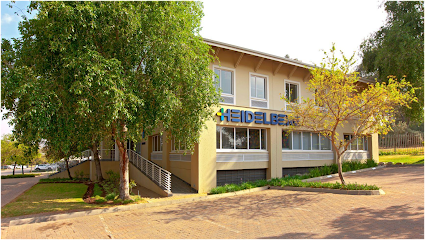
Heidelberg Graphic Systems Southern Africa (Pty) Ltd. is a Machining manufacturer establishment in Sandton, Gauteng, South Africa
Heidelberg Graphic Systems Southern Africa (Pty) Ltd — Machining Manufacturer in Sandton, Gauteng
Heidelberg Graphic Systems Southern Africa (Pty) Ltd operates in the South African market as a regional branch of Heidelberg, offering a suite of services centred on modern printing and workflow technologies. Based in Gauteng’s Sandton area, the company presents itself as a partner for print production professionals seeking integrated solutions that span hardware, software, service and training. The emphasis appears to be on enabling efficient, data‑driven production through a combination of digital printing capabilities, automated workflows and responsive service support.
One of the core elements highlighted by Heidelberg Southern Africa is digital printing technology. The catalogue references the Jetfire 75 as a featured solution, accompanied by promotional material such as videos and product pages. This focus suggests a capability to support contemporary print production with high‑quality digital output, scalable for varying product runs and fast changeovers. In practice, customers can expect access to modern digital press options designed to integrate with a broader production ecosystem rather than relying on standalone machines alone.
Workflow management and automation are presented as a key differentiator. The supplier promotes Prinect as a comprehensive workflow platform capable of coordinating the entire print production process. The messaging emphasises automated printing operations, colour and quality control, and data analytics for operational insight. For customers, this implies a single source of truth for production planning, real‑time monitoring, and performance reporting, aimed at reducing bottlenecks and improving consistency across jobs and shifts.
Training and skills development form another pillar of the offering. The Prinect Performance Lab training series is highlighted as a new initiative designed for local print professionals. The programme purportedly covers foundational topics such as Printing 101 and advances towards more sophisticated workflow utilization. This educational component indicates a commitment to helping customers maximise the return on their Heidelberg technology through practical, hands‑on learning and improved operator competence.
Service, parts and remote support are repeatedly referenced as important aspects of the customer experience. The company’s materials point to a helpdesk capable of providing competent answers and remote services enabling technicians to resolve issues directly on production systems. This approach aligns with business expectations for reduced downtime and quicker problem resolution, particularly in environments where print production runs are time‑sensitive and cost‑driven.
In terms of typical job types and industries, the available content suggests engagements related to modern print production workflows, including digital print jobs that benefit from automation, colour management, and performance analytics. While specifics about industry sectors are not detailed in the provided content, the integration of hardware, software and training points toward clients in publishing, packaging, marketing collateral and other print‑intensive sectors requiring reliable operations and measurable output quality.
Requests and interactions with Heidelberg Southern Africa typically revolve around machine specifications, service parts, consumables, and expert advice, with direct contact channels advertised on the company site. The presence of remote diagnostics and service expertise indicates a preference for proactive maintenance and rapid response, which can be advantageous for businesses seeking to minimise unplanned downtime and maintain production schedules.
Practical tips for customers planning engagements with Heidelberg Southern Africa include considering the broader production ecosystem when specifying equipment. Integrating digital printing with a coordinated Prinect workflow can streamline processes from order intake to final output and analysis. Taking advantage of the Prinect Performance Lab training opportunities may help operators understand how to optimise automation, maintain quality standards, and leverage data for continual improvement. When contemplating service support, it is sensible to utilise remote diagnostics where appropriate to troubleshoot issues quickly before on‑site visits are arranged.
Business hours and visiting details are not explicitly stated in the provided content, but the organisation serves the South Africa market and operates from a Sandton base. Prospective clients in Gauteng and surrounding areas can expect to access regional support, product information, and training programmes designed to enhance production efficiency and workflow visibility.
In summary, Heidelberg Graphic Systems Southern Africa positions itself as a local hub for integrated print production solutions, combining digital printing capability, end‑to‑end workflow automation, practical training pathways, and responsive service. For organisations aiming to upgrade their printing technology and outcomes, the emphasis appears to be on a cohesive ecosystem that supports both hardware and software, backed by knowledge sharing and reliable service infrastructure.
Sandton
Gauteng
South Africa
Sorry, no records were found. Please adjust your search criteria and try again.
Sorry, unable to load the Maps API.
Machining Manufacturer Services in Sandton, Gauteng
In the business hub of Sandton, Gauteng, machining manufacturers provide a range of essential manufacturing services that support engineering, construction, and maintenance sectors across South Africa. These operations typically specialise in turning, milling, and other precision processes that transform raw materials into finished components suitable for assembly into larger systems. The emphasis is on accuracy, reliability, and flexible capacity to accommodate diverse project requirements.
Common offerings include CNC turning and CNC milling, which use computer-controlled machines to shape metal and sometimes plastic workpieces with tight tolerances. In Sandton, manufacturers often work with materials such as aluminium, stainless steel, steel alloys, and specialised polymers. The work might involve producing functional parts for mechanical assemblies, agricultural or mining equipment, automotive components, and industrial machinery. Finished items may require secondary operations such as drilling, tapping, threading, deburring, or surface finishing to meet exact specifications.
Machining services in this area typically begin with consultation and design review, where engineers or technicians assess drawings and specifications. If necessary, tolerance requirements, material suitability, and surface finishes are discussed to determine feasible production methods. Once a plan is established, pieces are programmed for machining, inspected with calibrated equipment, and produced in controlled batches. Quality assurance processes are often integral, with measurements recorded at various stages to ensure consistency and traceability.
Customers can expect several practical aspects when engaging a Sandton-based machining manufacturer. Lead times vary with project scope, machine availability, and backlog, but many operations aim to provide realistic timelines for prototyping, short runs, and larger production runs. Small-batch work may be completed more quickly, while complex components with stringent tolerances might require additional setup time and testing. Storage and logistics considerations are addressed, including packaging, labelling, and delivery arrangements within Gauteng and beyond when required.
Capable facilities in Sandton frequently house a mix of vertical and horizontal milling machines, precision lathes, drill machines, and automation-enabled CNC equipment. Some workshops may also offer secondary machining operations, such as wire erosion, grinding, or surface finishing, to achieve desired finishes and dimensional accuracy. Hybrid capabilities, combining machining with manual operations, can be advantageous for projects needing customised fixturing or rapid iteration during development stages.
Industries served by Machining manufacturers in this region encompass a broad spectrum, from automotive and aerospace to consumer goods and infrastructure. The ability to interpret technical drawings, 3D models, or CAD files is highly valued, along with a collaborative approach to problem-solving. Clients typically seek reliable throughput, consistent quality, and clear communication about status, potential design constraints, and any recommended design adjustments to improve manufacturability.
Some practical considerations include compliance with local safety and environmental standards, the handling of hazardous materials where applicable, and the maintenance of equipment to prevent unexpected downtime. Organisations often prefer suppliers with a demonstrated track record of quality and on-time delivery, supported by transparent documentation such as test reports or job cards. While pricing can vary, a focus on value—balancing cost against precision, durability, and lead times—helps guide procurement decisions in the Sandton market.
Overall, machining manufacturer services in Sandton, Gauteng, offer a robust combination of technical capability and regional accessibility. For engineers and procurement professionals, engaging a local supplier can mean shorter communication chains, faster iteration, and smoother coordination for projects that require swift responsiveness and dependable execution.